
Monolophosaurus — Middle Jurassic crested theropod from China
Monolophosaurus, a medium-sized crested theropod from Middle Jurassic China, is known from a nearly complete skull and partial skeleton and provides key evidence about early tetanuran evolution and anatomy.
Overview
Monolophosaurus is a medium-sized carnivorous dinosaur from Middle Jurassic deposits in what is now northern China. It is best known for a single prominent bony crest that runs along the midline of the snout and skull roof, a feature that distinguishes it from most other named theropods. The holotype preserves an unusually complete skull with associated postcranial material, making Monolophosaurus an important taxon for understanding early evolution within the large tetanuran branch of theropods.
Image gallery
10 Images


Anatomy and distinctive features
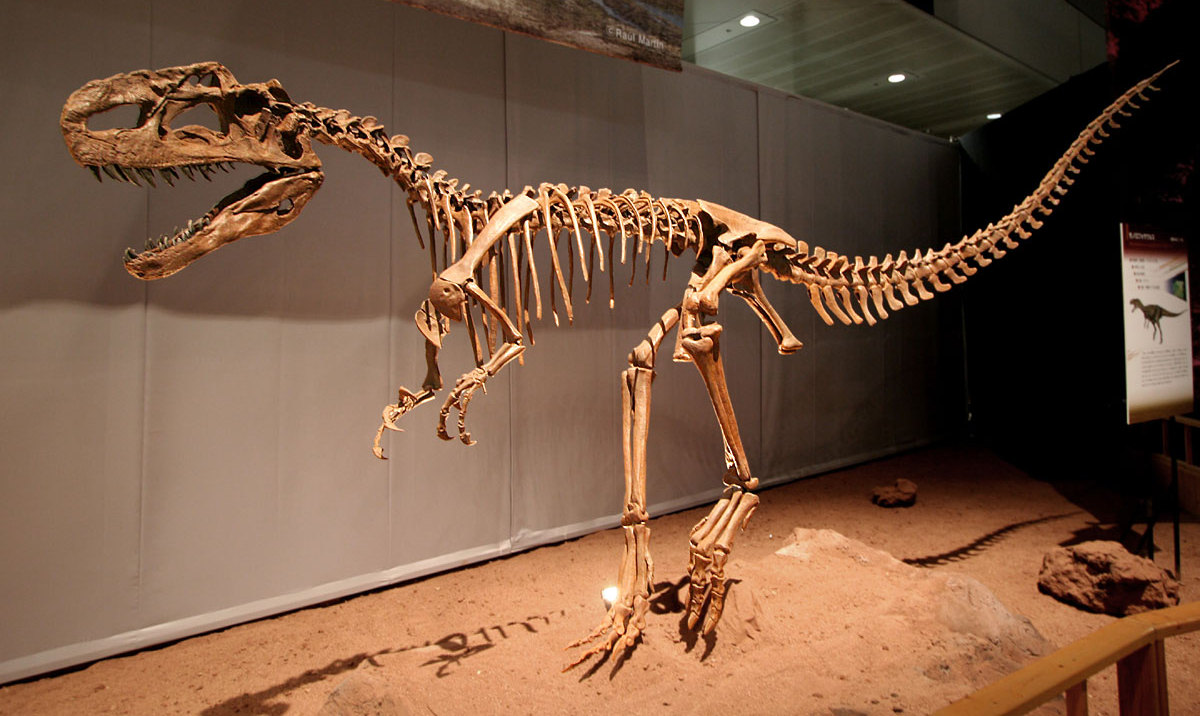
Key anatomical features include the unpaired midline crest, a relatively well-preserved cranial skeleton showing details of the jaws and dentition, and portions of the vertebral column and limbs. The crest is a low, elongate ridge of bone extending from the nasal region onto the skull roof. It is commonly interpreted as a structure used in visual display or species recognition rather than as a weapon. Dental and jaw morphology indicate a meat-eating diet, with teeth suited for slicing flesh rather than specialized bone-crushing.
Size and build
Monolophosaurus is commonly reconstructed as a moderately sized predator, often estimated at around five metres in total body length. These reconstructions portray a gracile but muscular animal with long hind limbs adapted for active locomotion. Partial limb and vertebral remains allow reasonable inferences about posture and gait, suggesting an agile, bipedal hunter capable of pursuing smaller vertebrate prey.
Discovery and geological context
The known specimen comes from Middle Jurassic sediments in China and includes one of the most complete theropod skulls from that interval and region. The surrounding rocks show evidence of intermittent water influence — such as floodplain or nearshore deposits — indicating Monolophosaurus may have frequented riverbanks, lakeshores or seasonally wet lowlands. Such depositional settings preserve a variety of terrestrial and aquatic organisms, helping reconstruct the broader ecosystem.
Classification and scientific significance
Monolophosaurus is generally considered a basal tetanuran, a grade of theropods that gave rise to later groups including the well-known allosauroids and coelurosaurs. Its combination of primitive and derived features has produced differing placements in phylogenetic analyses, and it has been used in many studies that aim to clarify early tetanuran relationships. Because Middle Jurassic theropod fossils are relatively scarce in many regions, this taxon is valuable for filling anatomical and evolutionary gaps.
Paleobiology and behavior
Based on skull and limb anatomy, Monolophosaurus was an active predator that likely hunted smaller vertebrates and scavenged when opportunities arose. The cranial crest may have supported soft-tissue display or served as a visual signal in social interactions such as mate attraction or territory recognition. Like many theropods, it probably relied on keen vision and agile movement to capture prey.
Comparisons and notable points
Monolophosaurus differs from other crested theropods such as Dilophosaurus, which bears paired crests; the single unpaired midline ridge of Monolophosaurus is unusual among named meat-eating dinosaurs. Its relatively complete skull makes it a frequent reference in comparative studies of cranial evolution among early tetanurans and helps paleontologists interpret fragmentary material from similar ages.
Research and resources
Ongoing research refines its phylogenetic position as new methods and comparative datasets become available. For broader context on related topics, see general resources on theropods, regional geology and fossil records in China, and the Jurassic time scale. Details on the holotype and its description can be consulted via museum and specimen catalog entries under type specimen records. For discussions of its placement as a basal tetanuran, refer to recent review articles and cladistic studies that treat Middle Jurassic theropod diversity.
Related articles
Author
AlegsaOnline.com Monolophosaurus — Middle Jurassic crested theropod from China Leandro Alegsa
URL: https://en.alegsaonline.com/art/66108
Sources
- articles.latimes.com : "2nd creature was meat-eater: fossil remains of huge dinosaur found in China"
- doc.rero.ch : "A large crested theropod from the Jurassic of Xinjiang, People's Republic of China"
- ui.adsabs.harvard.edu : 1993CaJES..30.2027Z
- doi.org : 10.1139/e93-178