
Primate (order Primates)
Overview of primates: their classification, anatomy, senses, behaviour, conservation and health risks related to close contact with humans.
Overview
Primates belong to the biological order of mammals and form one of the most familiar groups within mammals. This order includes a wide range of species such as lemurs, various monkeys, the great and lesser apes, and humans. Many primates live in or near tropical forest habitats and display adaptations for life in trees, although some have widened their range to savannahs and temperate regions. The group is defined by a mixture of anatomical, sensory and behavioural traits rather than a single unique feature.
Image gallery
10 Images




Diversity and classification
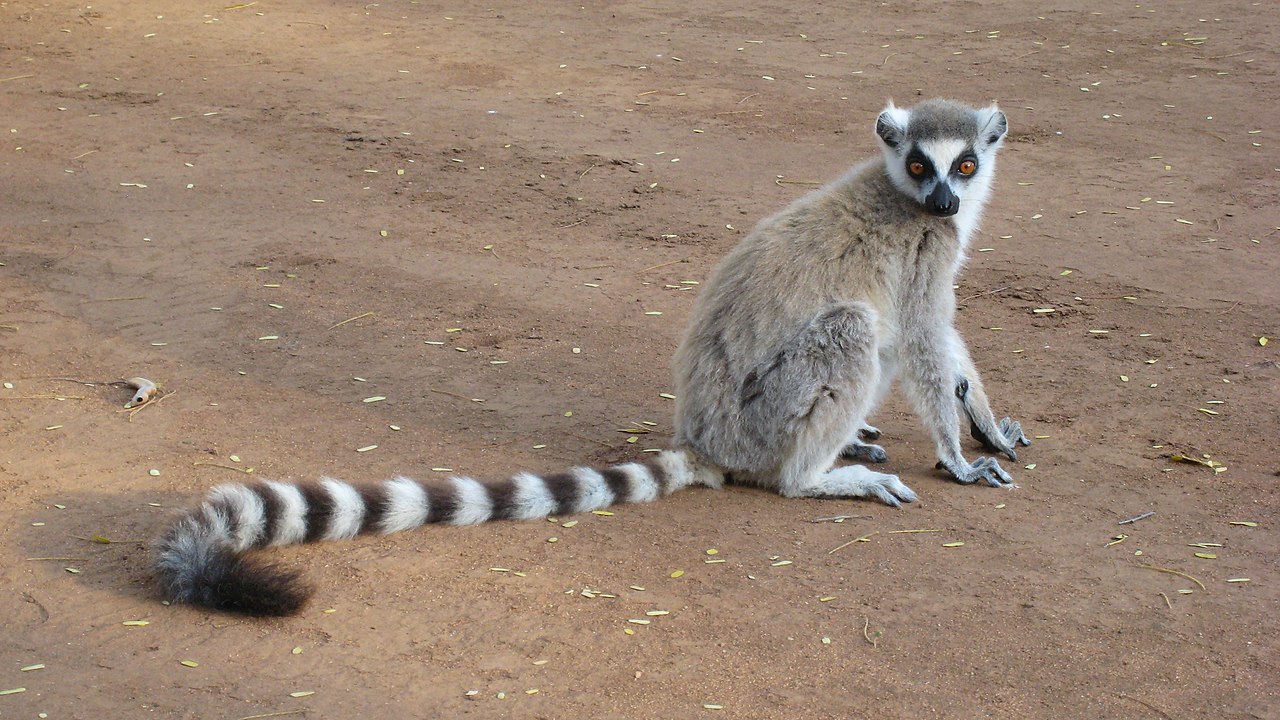
There are roughly several hundred recognized species of primates, organized into familiar lineages. Modern taxonomy commonly divides the order into two major subgroups: Strepsirrhini, which includes many of the more ancient and often nocturnal lineages, and Haplorhini, which contains tarsiers, monkeys and apes. Examples of taxa found in these groups are tarsiers, lorises, small nocturnal galagos (bush babies) and distinctive species such as the aye-aye. Classification reflects evolutionary history inferred from anatomy, behaviour and genetic data.
Anatomy and senses
Primates share several characteristic anatomical traits: grasping hands and feet with opposable thumbs or big toes are common, and most species have five digits often described simply as five fingers. Unlike many other mammal groups, primates usually have flattened nails instead of prominent claws, which facilitates fine manipulation. Fur or hair covers most of the body in non-human primates; humans are an exception in having reduced body hair. Vision plays a central role for most primates — many species evolved full trichromatic colour vision independently — a capability that helps in tasks such as selecting ripe fruit and detecting social signals. Nonetheless, birds and some other groups retain superior colour discrimination.
Behaviour, cognition and communication
Primates display diverse social systems, from solitary foragers to large, complex groups. Cognitive abilities are generally well developed relative to other mammals: problem solving, learning, social planning and, in some species, use of simple tools are documented. Non-human primates communicate through combinations of vocalizations, facial expressions and gestures, but only humans have fully developed syntactic language as it is defined in human linguistics. Studies of primate behaviour are central to fields such as comparative psychology, anthropology and behavioural ecology.
Human interactions, health and conservation
Close contact between people and other primates creates both scientific opportunities and risks. Wild populations face threats from habitat loss, hunting and the pet trade, which drives conservation concern worldwide. There are also public-health considerations: primates can transmit zoonotic diseases, many of which are caused by viruses. Documented viral transmissions between primates and humans include infections with agents such as herpes, measles, ebola, rabies and certain forms of viral hepatitis. Because of these risks and conservation status, interactions are increasingly managed by guidelines for research, ecotourism and wildlife trade.
Notable facts and distinctions
- Primates show a range of locomotor specializations: many are arboreal, while others are adapted to ground living.
- Social complexity tends to correlate with dietary variety and brain size across the order.
- Re-evolution of full colour vision in some primates illustrates how sensory systems can change when lineages move from nocturnal to diurnal lifestyles.
For readers seeking further summaries and technical treatments, introductory resources describe primate anatomy, fossil history and current conservation status; more specialized literature covers genetics, endocrinology, and behaviour in depth. Representative educational and scientific links can be followed via reference markers in this article: order, mammals, lemurs, monkeys, apes, humans, forest, species, language, five fingers, claws, Strepsirrhini, Haplorhini, tarsiers, lorises, galagos, aye-aye, colour vision, zoonotic diseases, virus, herpes, measles, ebola, rabies, and hepatitis.
Questions and answers
Q: What is the order of mammals that includes primates?
A: Primates are an order of mammals.
Q: How many species of primates are there?
A: There are about 400 species of primates.
Q: What advantage do humans have over other primates?
A: Humans have the advantage of language, which other primates lack.
Q: What physical characteristics do all primates share?
A: All primates have hands with five fingers and flat fingernails, and they are covered with fur (hair).
Q: How is human body hair different from other primates?
A: Human body hair is only noticeable in two places - on the head and around the genitals - whereas other primate body hair is more visible.
Q: How did colour vision re-evolve in mammals?
A: Colour vision was lost in mammals during the long period when dinosaurs ruled the Earth, but it re-evolved when mammals became mainly small nocturnal animals.
Q: What diseases can be transmitted to humans through contact with non-human primates?
A: Virus diseases that can be transmitted to humans through contact with non-human primates include herpes, measles, ebola, rabies, and hepatitis.
Related articles
Author
AlegsaOnline.com Primate (order Primates) Leandro Alegsa
URL: https://en.alegsaonline.com/art/79030