
Physics
Articles about matter, energy, forces and physical laws.
Articles in this category
 Gravity (Gravitation)
Gravity
Gravity is the universal attraction between masses. Described by Newton's inverse-square law for orbits and by Einstein's curvature of spacetime, it shapes motion from falling appl…
Gravity (Gravitation)
Gravity
Gravity is the universal attraction between masses. Described by Newton's inverse-square law for orbits and by Einstein's curvature of spacetime, it shapes motion from falling appl…
 Group velocity: speed of a wave packet and its physical significance
Group velocity
Group velocity is the rate at which a wave packet's envelope—and often energy or information—propagates. It differs from phase velocity and is central to dispersion, pulse spreadin…
Group velocity: speed of a wave packet and its physical significance
Group velocity
Group velocity is the rate at which a wave packet's envelope—and often energy or information—propagates. It differs from phase velocity and is central to dispersion, pulse spreadin…
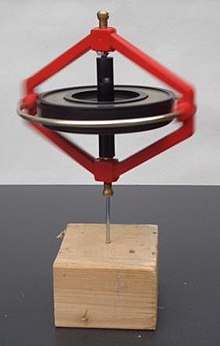 Gyroscope: principles, types, history and applications
Gyroscope
A gyroscope is a device that measures or preserves orientation using a spinning rotor and angular momentum. This article explains how gyroscopes work, their types, history, uses, a…
Gyroscope: principles, types, history and applications
Gyroscope
A gyroscope is a device that measures or preserves orientation using a spinning rotor and angular momentum. This article explains how gyroscopes work, their types, history, uses, a…
 Hadron: composite particles of quarks and the strong interaction
Hadron
Hadrons are composite subatomic particles made of quarks and bound by the strong interaction. This article explains their structure, classification, history, examples, and signific…
Hadron: composite particles of quarks and the strong interaction
Hadron
Hadrons are composite subatomic particles made of quarks and bound by the strong interaction. This article explains their structure, classification, history, examples, and signific…
.jpg) Heat (thermal energy): definition, transfer, measurement, and uses
Heat
Heat is energy transferred between bodies due to temperature differences. This article explains what heat is, how it moves, how it is measured, its role in thermodynamics and commo…
Heat (thermal energy): definition, transfer, measurement, and uses
Heat
Heat is energy transferred between bodies due to temperature differences. This article explains what heat is, how it moves, how it is measured, its role in thermodynamics and commo…
 Impulse (physics)
Impulse is the time integral of force that produces a change in momentum. It links force and motion, with applications from collisions to rocketry and safety design.
Impulse (physics)
Impulse is the time integral of force that produces a change in momentum. It links force and motion, with applications from collisions to rocketry and safety design.