
Heat transfer: modes, principles, history and practical applications
Heat transfer is the movement of thermal energy between systems. This article explains the modes (conduction, convection, radiation), governing principles, history, and common applications and distinctions.
Heat transfer is the process by which thermal energy moves from one body or region to another. In science and engineering the term heat denotes energy transferred because of a temperature difference. That transfer requires two things: a temperature difference and a path between the parts of the physical system so energy can flow. The controlling scalar is temperature; heat flows from higher to lower temperature, a concept often referenced simply as temperature driven transport.
Image gallery
10 Images
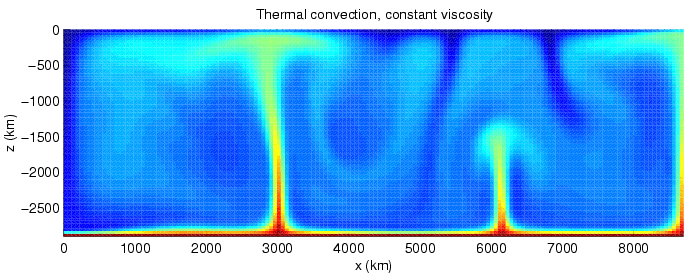


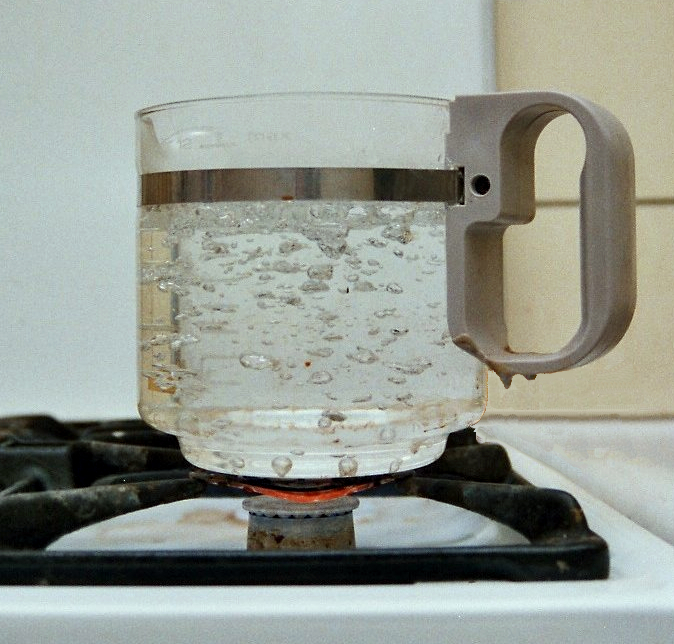
Primary modes
- Conduction – microscopic transfer of energy by particle interactions or lattice vibrations; dominant in solids and across thin layers.
- Convection – bulk motion of a fluid (liquid or gas) carries heat; natural (buoyancy-driven) and forced (pump- or fan-driven) convection are distinguished.
- Radiation – energy emitted as electromagnetic waves; does not require a material medium and can transfer heat across vacuum.
These modes occur in materials in different states: solids (solid), liquids (liquid) and gases (gaseous), and they often act together in real systems.
Principles and useful relations
At the macroscopic level, heat transfer is described by simple empirical and theoretical relations. Conduction is commonly modeled by Fourier's law, which relates heat flux to the gradient of temperature and the material's thermal conductivity. Convection is often treated with Newton's law of cooling, expressing heat flux proportional to the temperature difference via a convective coefficient. Thermal radiation is characterized by the Stefan–Boltzmann relationship and surface emissivity, which set the radiative power emitted by bodies as a function of absolute temperature.
History and development
Humans observed heat flow in everyday life long before formal theory. Mathematical treatments emerged in the 18th and 19th centuries: early empirical laws were refined into the analytical framework by investigators such as Fourier, and later contributions linked thermodynamics and electromagnetism to radiative transfer. These developments created the basis for modern heat-transfer engineering and modeling techniques.
Applications and notable examples
- Building insulation, thermal comfort and HVAC design.
- Heat exchangers in power plants, refrigeration and chemical industries.
- Electronics cooling and thermal management of batteries and devices.
- Everyday cooking, metalworking and thermal treatments.
Important distinctions include steady versus transient heat transfer, coupled modes (for example, conduction plus radiation in furnaces), and scale-dependent behavior: at micro- and nanoscale sizes classical continuum descriptions sometimes need modification. Understanding the governing mechanisms and appropriate models is essential for efficient design, safety and energy management in engineering and scientific practice.
Related articles
Author
AlegsaOnline.com Heat transfer: modes, principles, history and practical applications Leandro Alegsa
URL: https://en.alegsaonline.com/art/43106