
Gravity wave (fluid dynamics)
A gravity wave is a fluid wave restored by gravity or buoyancy, occurring on surfaces or within stratified fluids such as the ocean or atmosphere. Distinct from gravitational waves in relativity.
Overview
A gravity wave is a disturbance in a fluid or at the interface between two fluids whose primary restoring force is gravity or buoyancy. These waves occur widely in nature — on the sea surface and inside stratified layers of the atmosphere and ocean — and are a central topic in fluid dynamics. They are not to be confused with the astrophysical gravitational wave of general relativity.
Image gallery
5 Images

Characteristics
Gravity waves can travel along a free surface (surface gravity waves) or within a fluid where density changes with height (internal gravity waves). Their behavior depends on wavelength, depth, and density stratification. In shallow water long waves behave differently from short waves; in strongly stratified fluids internal waves can have large vertical displacement while propagating horizontally.
Types and examples
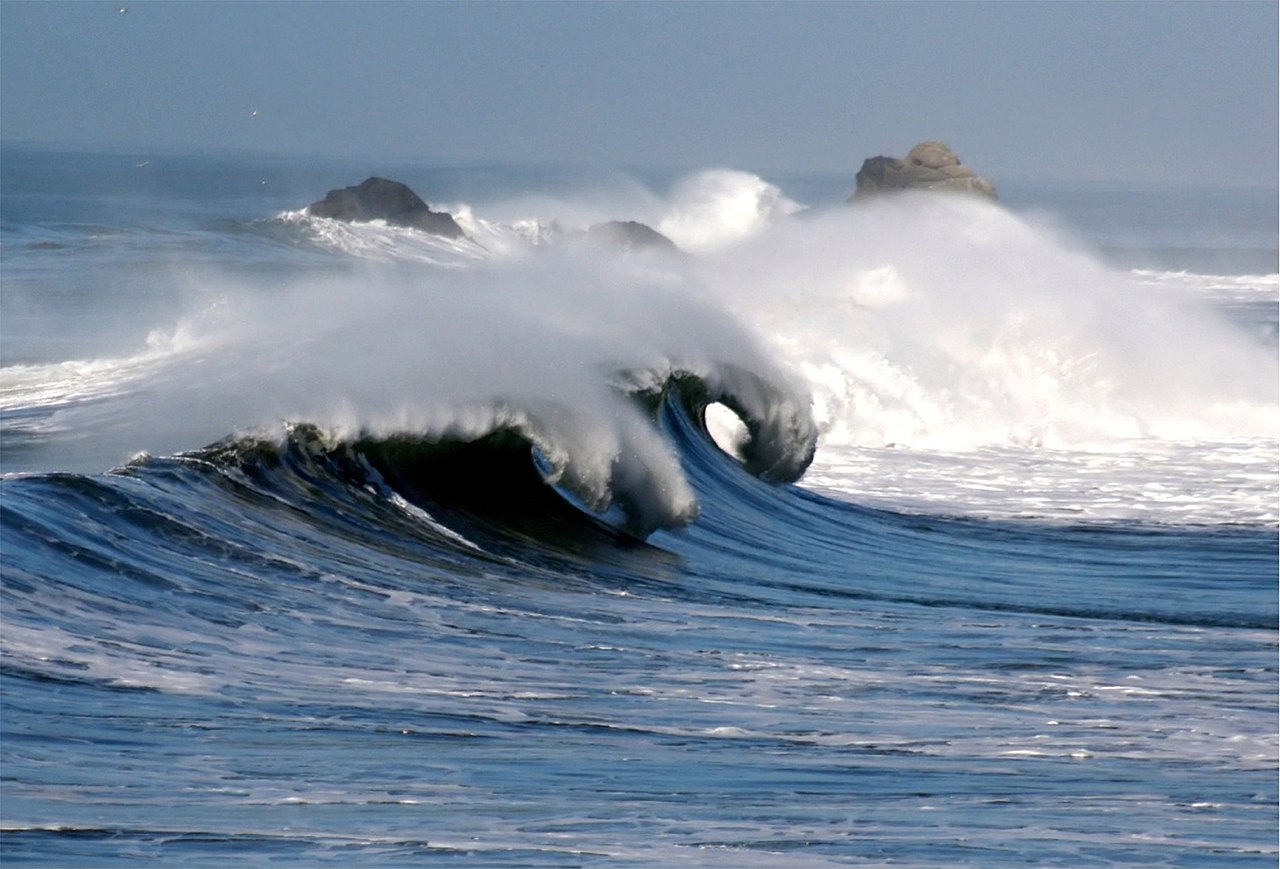
- Surface gravity waves: wind-driven waves visible on the ocean surface and on lakes.
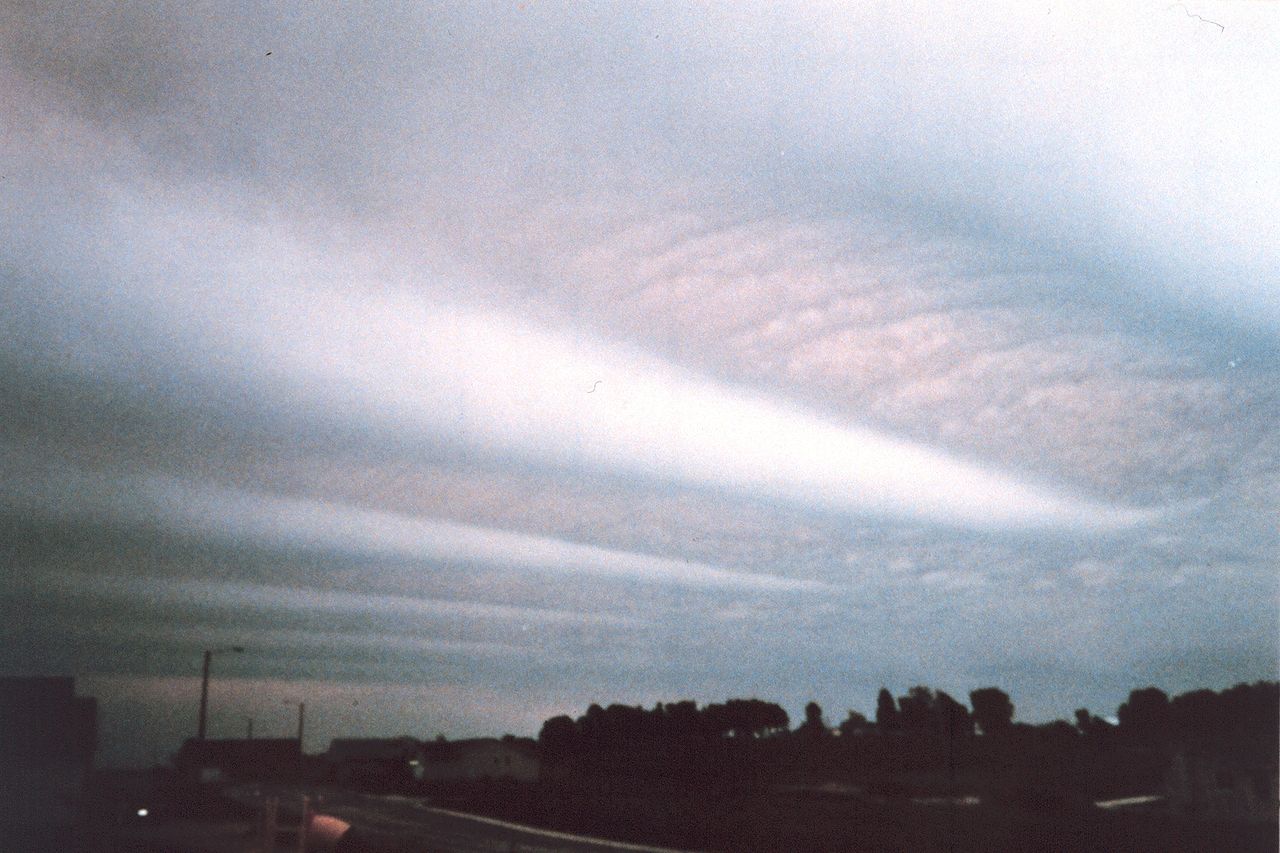
- Internal waves: oscillations within a stratified fluid medium, often beneath a surface layer.
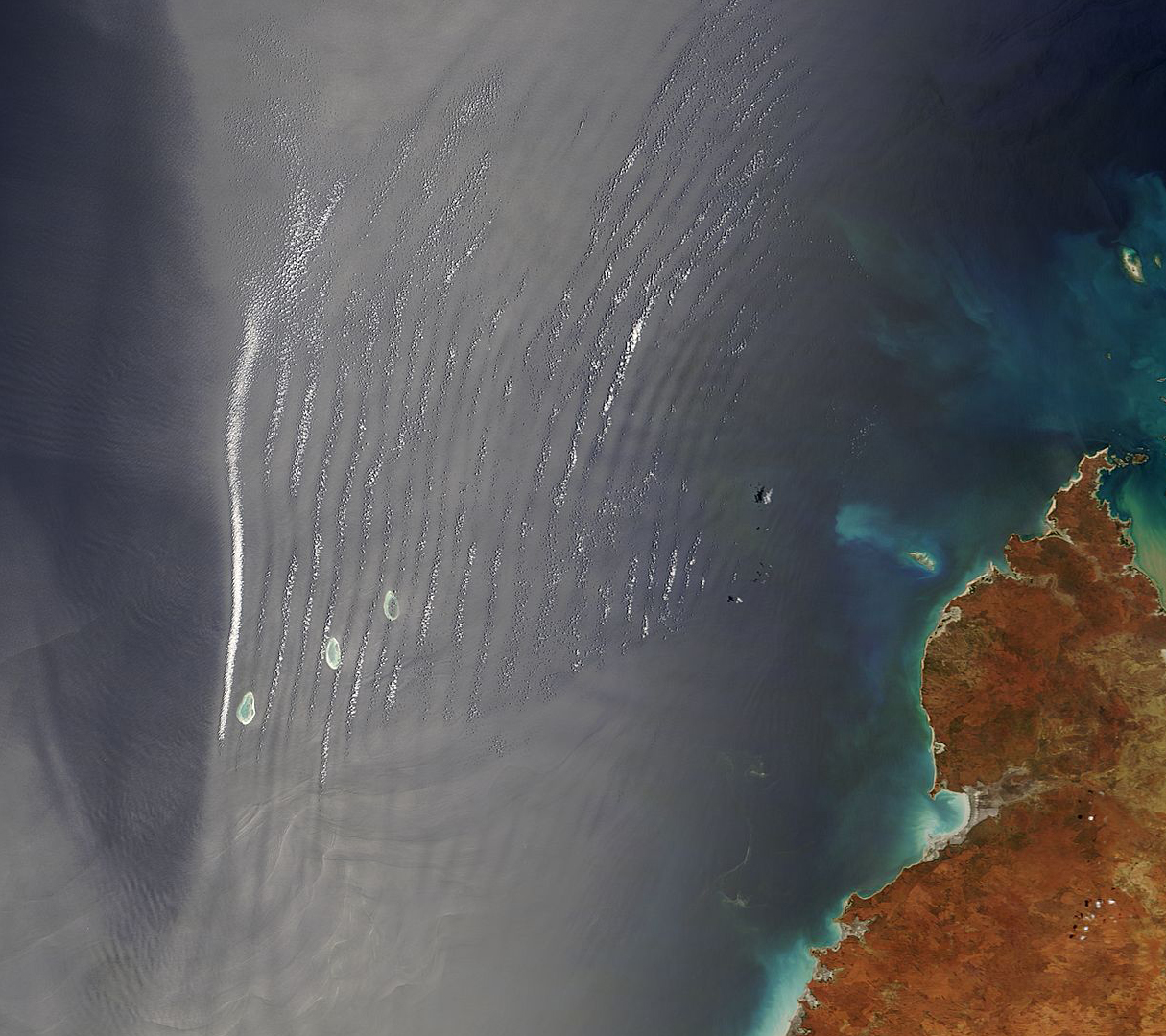
- Atmospheric gravity waves: formed when flow is disturbed by mountains or convection in the atmosphere or ocean, producing lee waves and ripple patterns.
- Long-period gravity waves: tides and some tsunamis are large-scale examples where gravity dominates the restoring force.
History, theory and importance
Theoretical descriptions of gravity waves arise from the equations of motion for fluids and from linear wave theory, refined since the 19th century. They matter in weather forecasting, ocean mixing, sediment transport, and engineering design, and are observed by in situ instruments, remote sensing and laboratory experiments.
Notable distinctions
Gravity waves should be distinguished from capillary waves, whose primary restoring force is surface tension, and from other large-scale phenomena like Rossby waves that are governed by planetary rotation. Understanding their dispersion, energy transport, and interaction with mean flows remains important across geophysics and applied fluid mechanics.
Related articles
Author
AlegsaOnline.com Gravity wave (fluid dynamics) Leandro Alegsa
URL: https://en.alegsaonline.com/art/40412