
Graviton: the hypothetical quantum of the gravitational field
A concise, neutral overview of the graviton: its theoretical role as a quantum mediator of gravity, main properties, history of ideas, experimental challenges, and significance for unification.
Overview
The graviton is a proposed elementary particle that would mediate the force of gravity in a quantum description of spacetime. It is a hypothetical gauge boson postulated by attempts to reconcile the principles of quantum mechanics with the observed effects of gravity. The idea of a graviton provides a particle-based picture of gravitational interaction, analogous to how the photon is the quantum carrier of the electromagnetic force (photon) and how other forces are mediated by their gauge bosons (gauge boson). The graviton remains unobserved; its existence is a theoretical prediction rather than an experimentally confirmed fact (graviton).
Image gallery
1 Image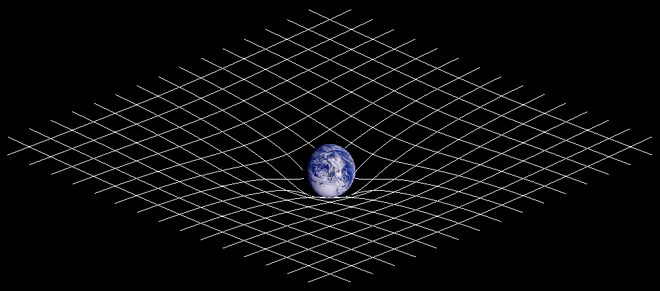
Key properties and theoretical role
- Spin and type: In mainstream theoretical treatments the graviton is taken to be a massless, spin-2 boson. That spin assignment follows from linearizing Einstein's theory of general relativity and identifying the quantum excitations of the metric as a rank-2 field.
- Coupling: Unlike charges in other forces, gravity couples universally to energy and momentum (the energy–momentum tensor). This universality distinguishes the hypothetical graviton from vector gauge bosons such as the photon or the gluon (gluon, W and Z).
- Mass: Most simple quantum-gravity models treat the graviton as massless. The possibility of a very small mass has been studied in 'massive gravity' theories and is tightly constrained by observations of large-scale dynamics.
History and theoretical development
Concepts linking gravity to quanta arose soon after quantum field theory solidified in the 20th century. Early work used perturbative quantization of small fluctuations around flat spacetime, producing interactions that look as if mediated by a massless spin-2 particle. Over time this particle-picture was embedded into larger frameworks: in string theory the graviton appears naturally as one of the vibrational modes of a closed string; alternative approaches to quantum gravity, such as loop quantum gravity, emphasize different foundations and do not always present the graviton in the same way. Attempts to combine quantum mechanics (quantum mechanics) and general relativity (gravity) have driven much of the theoretical interest in the graviton.
Experimental status and detection challenges
No experiment has detected gravitons directly or indirectly. Practical detection is extraordinarily difficult because gravity is the weakest of the known forces: the interaction strength between a single graviton and ordinary matter is vanishingly small. Estimates by physicists indicate that any detector capable of registering single gravitons would have to be unrealistically large or sensitive, making direct detection effectively impossible with current technology.
Particle-collider experiments search for signatures that could be associated with gravitons in certain models with extra spatial dimensions. In those scenarios, higher-dimensional gravity can produce a tower of massive Kaluza–Klein excitations that might show up as apparent missing energy in collisions; such searches have been carried out at major facilities including the Large Hadron Collider. Other observational routes probe indirect consequences: for example, precise tests of gravitational laws and cosmological observations constrain modifications such as a graviton mass or extra-dimension models. Observations of gravitational waves by detectors like LIGO measure classical wave phenomena of spacetime rather than single quanta (graviton).
Uses, significance and open questions
Confirmation of a consistent quantum theory of gravity that includes a graviton would be a major step toward unifying the fundamental interactions and clarifying how gravity operates at the smallest scales. However, the existence of a graviton in a perturbative particle sense is not the only way to quantize gravity; some theories yield a particle-like graviton emergently, while others suggest radically different microscopic pictures. Resolving how gravity meshes with the quantum description of matter remains one of the central open problems in theoretical physics and motivates a wide range of research programs.
Notable distinctions and speculative ideas
- Because it would be a spin-2 mediator, the graviton differs qualitatively from spin-1 force carriers like the photon (photon) or gluon (gluon), and from the massive weak bosons (W and Z).
- Some speculative proposals recast macroscopic objects as condensates or collections of many gravitons; such ideas are outside mainstream consensus and remain controversial.
- If a graviton were confirmed, it would influence discussions of unification among the four recognized interactions (including electromagnetism, electromagnetism), but a detected graviton alone would not automatically provide a complete unified theory.
Research into the graviton sits at the intersection of experiment and deep theory. While it is a useful concept for framing quantum descriptions of gravity, its ultimate status—particle, emergent excitation, or something else—awaits further theoretical progress and observational insight (gravity, quantum mechanics, gauge bosons).
Related articles
Author
AlegsaOnline.com Graviton: the hypothetical quantum of the gravitational field Leandro Alegsa
URL: https://en.alegsaonline.com/art/40404
Sources
- curious.astro.cornell.edu : "What is a graviton?"