
Inductor (electrical component)
An inductor stores energy in a magnetic field created by electric current. Used in filters, chokes, power supplies and tuned circuits, inductors differ by core, winding and intended frequency range.
An inductor is a passive electrical component that stores energy in a magnetic field when electric current flows through it. It resists changes in current and is characterized by its inductance, measured in henries. Inductors are fundamental in electrical circuits for shaping signals, filtering noise and exchanging energy between magnetic fields and current. The basic physical effect responsible for inductors is electromagnetic induction and the formation of a magnetic field around a conductor.
Image gallery
10 Images

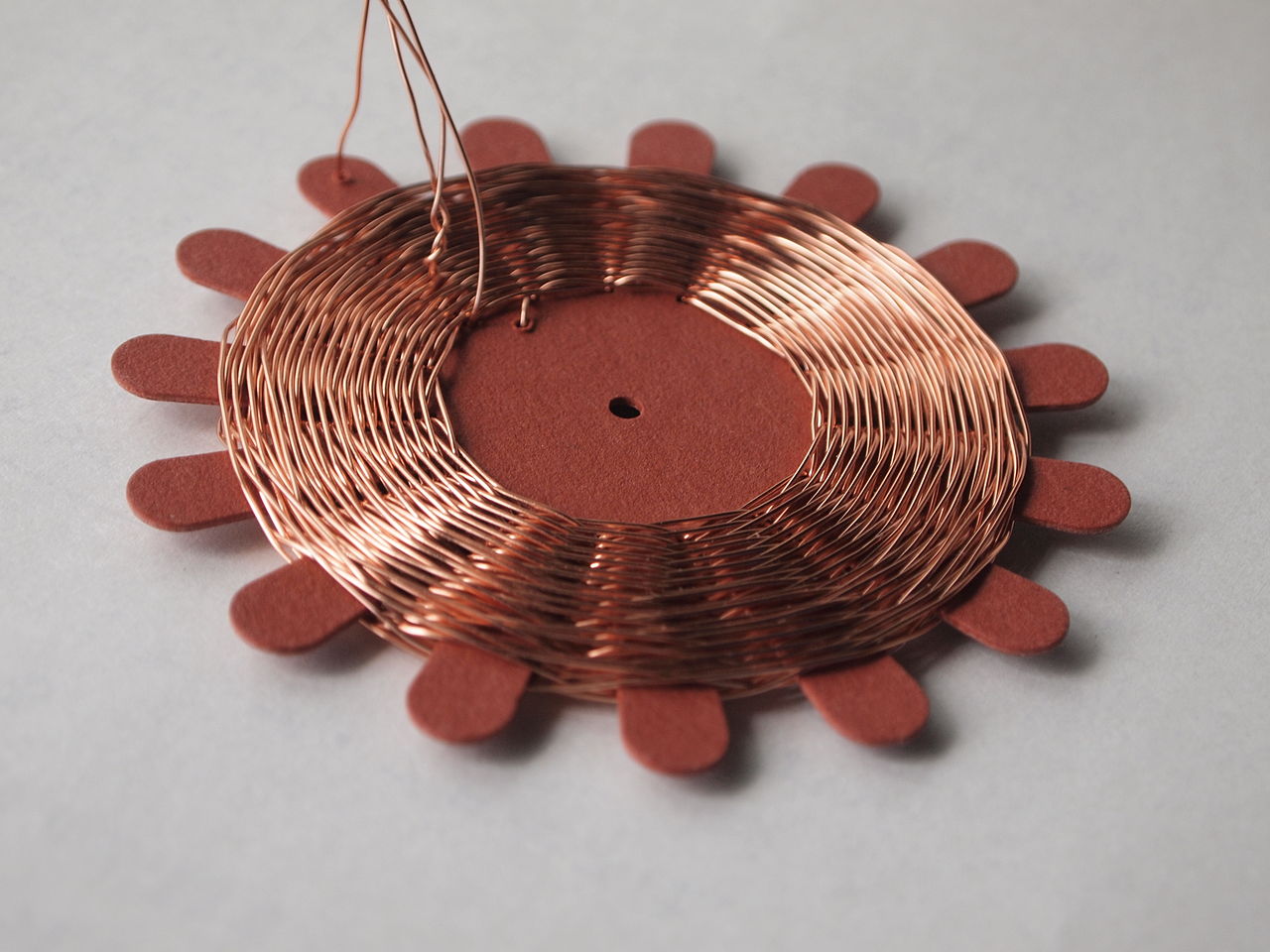


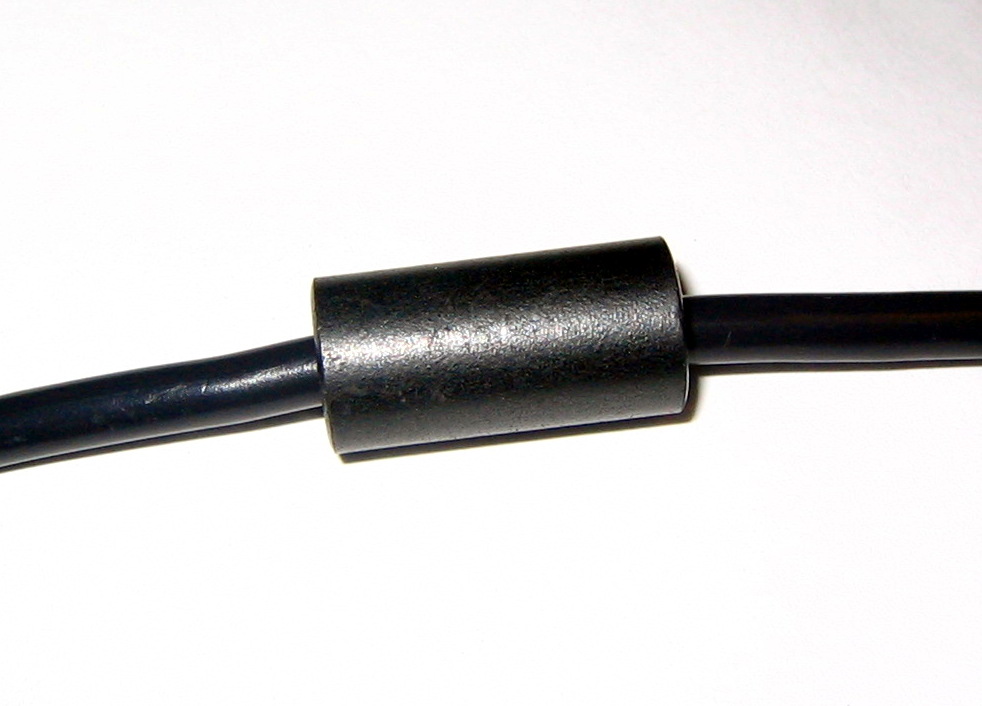


Construction and characteristics
Most inductors are coils of a conducting material, typically copper wire, wound on a former; the geometry of the winding and the core material determine its properties. Cores can be air, ferrite, powdered iron or other magnetic alloys. A ferromagnetic core concentrates magnetic flux and increases inductance but can introduce losses and saturation at high currents. Key parameters include inductance value, series resistance (DCR), self-resonant frequency, quality factor (Q) and current rating.
History and development
The principle behind inductors arises from early 19th-century discoveries in electromagnetism: changing currents produce magnetic effects that in turn influence conductors. Over time designs evolved from simple wound coils to precision components for radio, audio and power electronics. Modern microelectronics can implement small inductors directly on silicon integrated circuits using thin-film or spiral traces; such on-chip inductors are often made from aluminum or copper by standard fabrication techniques.
Uses and examples
- Power supplies: inductors smooth current, store energy in switching regulators and form chokes to block ripple.
- Signal processing: used in LC tuned circuits, filters and impedance matching for radios and audio equipment.
- EMI suppression: common-mode and differential chokes reduce electromagnetic interference in digital and power lines.
- Transformers and coupled inductors: related devices that transfer energy between windings through a shared magnetic core.
When selecting an inductor designers consider frequency range, required inductance, DC current, size and losses. Real inductors deviate from the ideal: they possess winding resistance and parasitic capacitance that produce a self-resonant frequency above which behavior changes from inductive to capacitive.
Notable distinctions include the difference between air-core and magnetic-core types, and between discrete wire-wound parts and integrated on-chip inductors. For many applications the trade-offs are between size, cost, efficiency and frequency performance, so the choice of core material and winding technique is central to component selection.
Further technical detail and component examples can be found in component datasheets and introductory texts on passive electronic components and circuit design.
Questions and answers
Q: What is an inductor?
A: An inductor is an electrical device used in electrical circuits because of magnetic charge.
Q: What is an inductor usually made from?
A: An inductor is usually made from a coil of conducting material, like copper wire.
Q: What is the core of an inductor made of?
A: The core of an inductor can be made from either air or a magnetic metal.
Q: How can a more magnetic material as the core affect the magnetic field around the inductor?
A: If you use a more magnetic material as the core, you can get the magnetic field around the inductor to be pushed in towards the inductor, giving it better inductance.
Q: Can small inductors be put onto integrated circuits?
A: Yes, small inductors can also be put onto integrated circuits using the same ways that are used to make transistors.
Q: What is usually used as the conducting material for small inductors on integrated circuits?
A: Aluminum is usually used as the conducting material in this case.
Q: What is the main function of an inductor in an electrical circuit?
A: The main function of an inductor in an electrical circuit is to store energy in a magnetic field.
Related articles
Author
AlegsaOnline.com Inductor (electrical component) Leandro Alegsa
URL: https://en.alegsaonline.com/art/47224
Sources
- newark.com : "Inductors 101"
- allaboutcircuits.com : Inductors and Calculus
- engineersblogsite.com : Inductor
- agilemagco.com : Highly Efficient Iron Core Inductors