
Harmonic: integer-multiple frequency components in waves and signals
A harmonic is a frequency component whose frequency is an integer multiple of a waveform's fundamental frequency. Article covers definition, math, acoustics, musical examples, interharmonics and engineering issues.
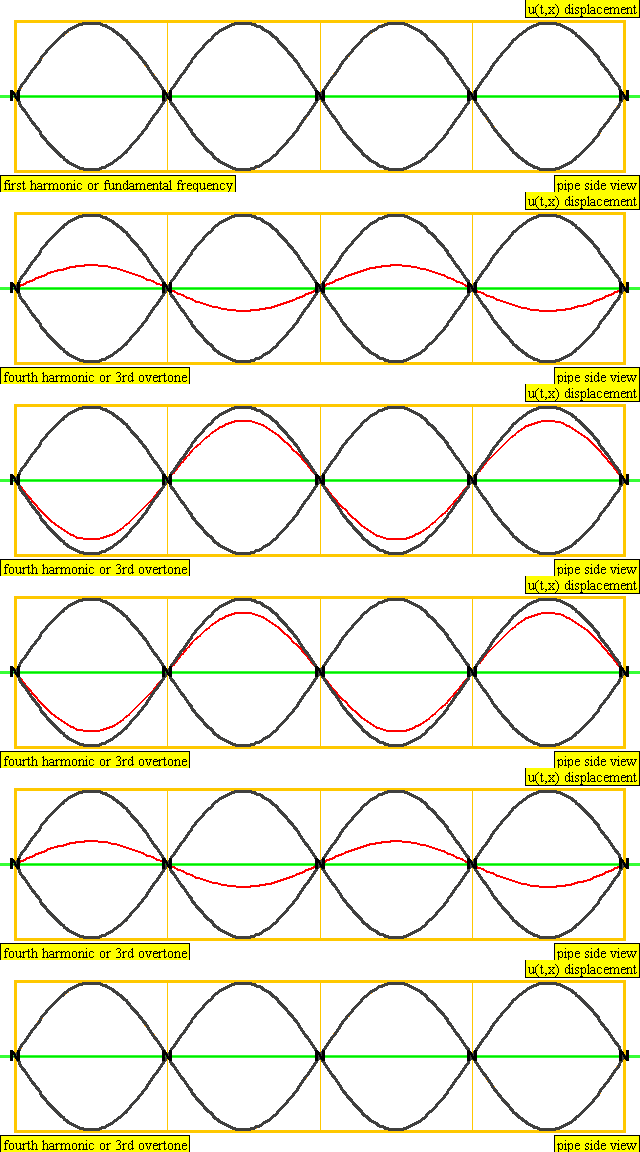
A harmonic is a component of a periodic wave or signal whose frequency is an integer multiple of the lowest repeating frequency, known as the fundamental frequency. If the fundamental is f, the harmonics occur at nf (2f, 3f, 4f, ...). These discrete spectral lines are a defining feature of many vibrating systems and of any waveform that repeats exactly in time.
Image gallery
10 Images




Definitions and relationships
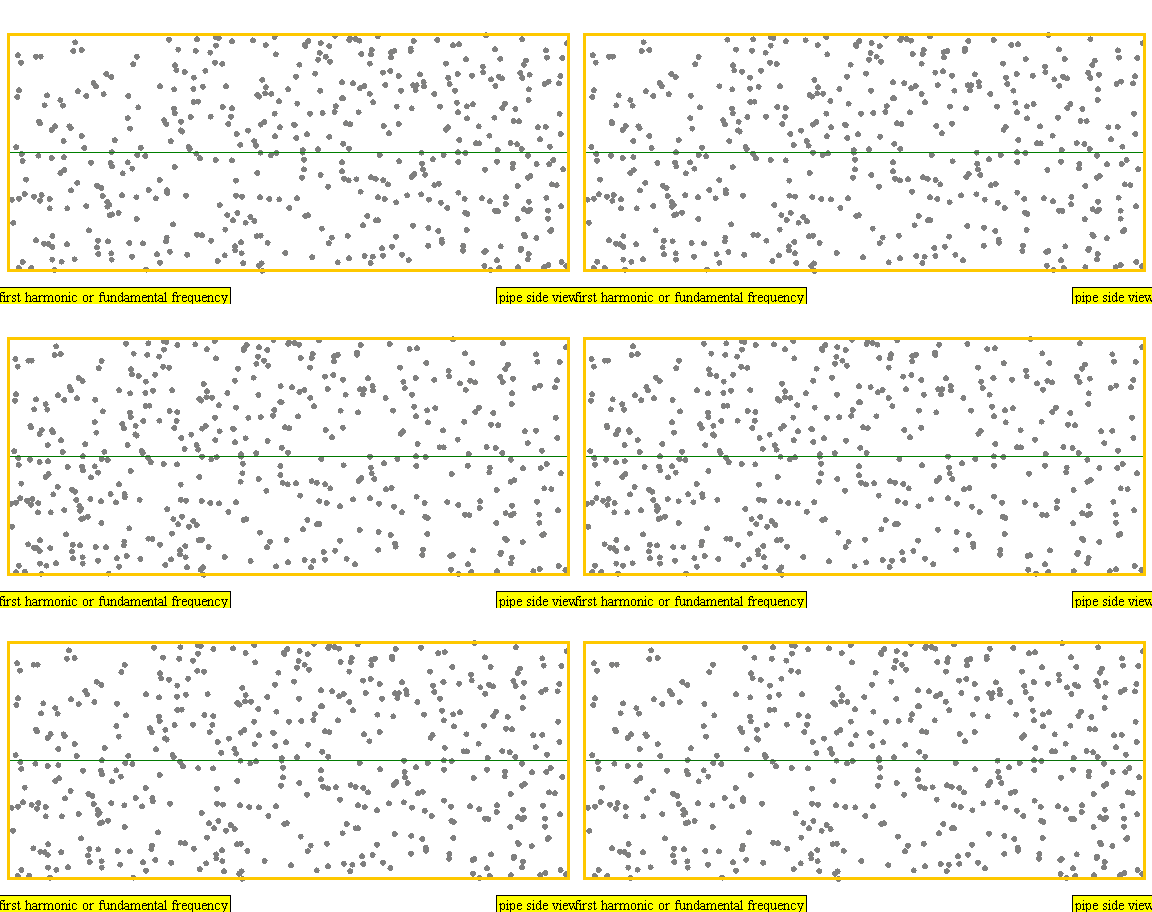
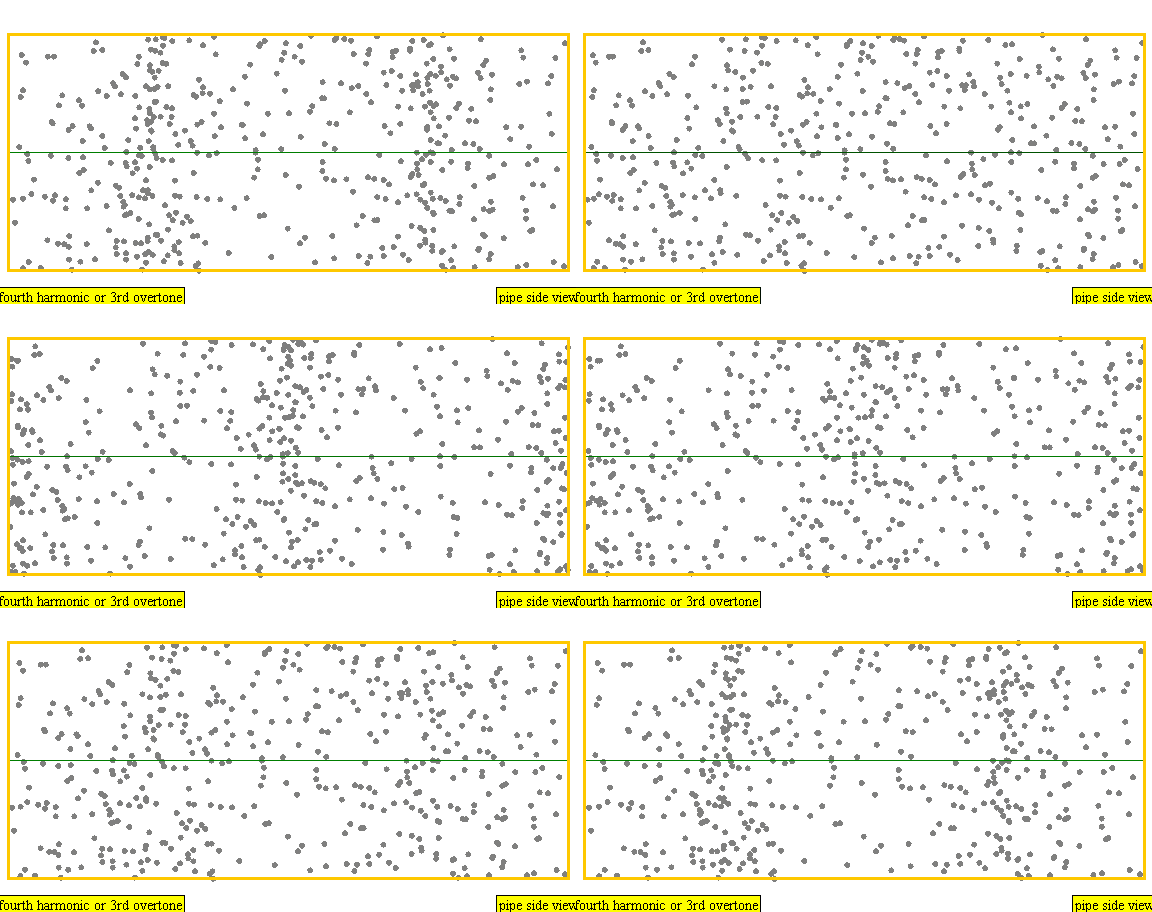
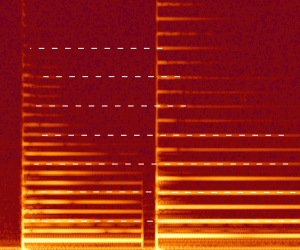
In technical usage, the nth harmonic has frequency n·f, where n is an integer. The fundamental (1f) is the lowest harmonic. Terms often encountered alongside "harmonic" include overtone and partial: overtones are higher frequencies above the fundamental, while partials are all spectral components whether they are exact integer multiples or not. When higher components are not integer multiples they are called inharmonic partials; frequencies between harmonics are called interharmonics.
Mathematical basis
A periodic waveform can be decomposed into a sum of sinusoidal terms by Fourier series. Each sinusoid has a frequency that is an integer multiple of the fundamental, and the relative amplitudes and phases of these harmonics determine the waveform's shape. This mathematical perspective shows why simple sine waves contain only a single harmonic (the fundamental) while other shapes—square, sawtooth or pulse trains—contain many harmonics with predictable amplitude patterns.
Acoustics and musical context
In acoustics and music, harmonics shape timbre, the quality that makes two instruments sound different when playing the same note. Plucked strings, wind columns and human voices produce spectra with strong harmonic structure: the ear tends to perceive the fundamental pitch while the harmonics contribute brightness or warmth. Some instruments and systems exhibit slight inharmonicity, where string stiffness or complex resonances shift overtones away from exact integer ratios, affecting tuning and perceived tone.
Electrical engineering and practical concerns
Harmonics also arise in electrical systems and other forms of energy. Nonlinear loads can inject harmonic currents and voltages that distort ideal sinusoidal mains, causing heating, interference and inefficiency. The industry introduced standardized terms and measurement practices for harmonics and acoustics-related phenomena in late twentieth-century standards; interharmonic categories became important for power-quality assessment and mitigation.
Examples, effects and mitigation
- Musical instruments: a vibrating string produces harmonics at integer multiples whose amplitudes depend on where and how the string is excited.
- Voice: formants and harmonics interact to create vowel sounds and timbre.
- Electronics: power converters and dimmers produce harmonics; filters or active correction reduce distortion.
Notable distinctions and measurements
Harmonic content is frequently quantified by measures such as total harmonic distortion (THD) or by spectrum analyzers that display amplitudes of individual harmonics. Distinguishing harmonics (exact integer multiples) from interharmonics and noise is important in audio engineering, instrument design and electrical power systems. For broader reading on wave analysis, signal processing and standards, see general references and technical documents via related resources and industry guidance such as standards or technical summaries at reference sites.
Understanding harmonics links simple physical intuition—vibrating strings and pipes—to rigorous tools in signal processing and electrical engineering. Their presence explains both the pleasing complexity of musical tones and the practical challenges of maintaining clean, efficient power and accurate measurements in modern systems. For more introductory material and examples, consult educational resources and applied texts that illustrate harmonics with sound samples and spectra: wave basics, signal analysis, frequency concepts, and acoustic demonstrations.
Related articles
Author
AlegsaOnline.com Harmonic: integer-multiple frequency components in waves and signals Leandro Alegsa
URL: https://en.alegsaonline.com/art/42494