
Hydrostatic equilibrium — balance of gravity and pressure
State in which gravity is exactly balanced by a pressure-gradient force in a fluid or gas; fundamental to liquids, atmospheres, planets and stars.
Overview
Hydrostatic equilibrium is the condition in which the downward pull of gravity is exactly countered by an upward force produced by a pressure gradient. In its simplest form it describes a fluid at rest (or in steady state) so that there is no net acceleration. The concept applies across scales: from a glass of water to the atmosphere surrounding a planet and to the internal structure of stars.
Image gallery
3 Images

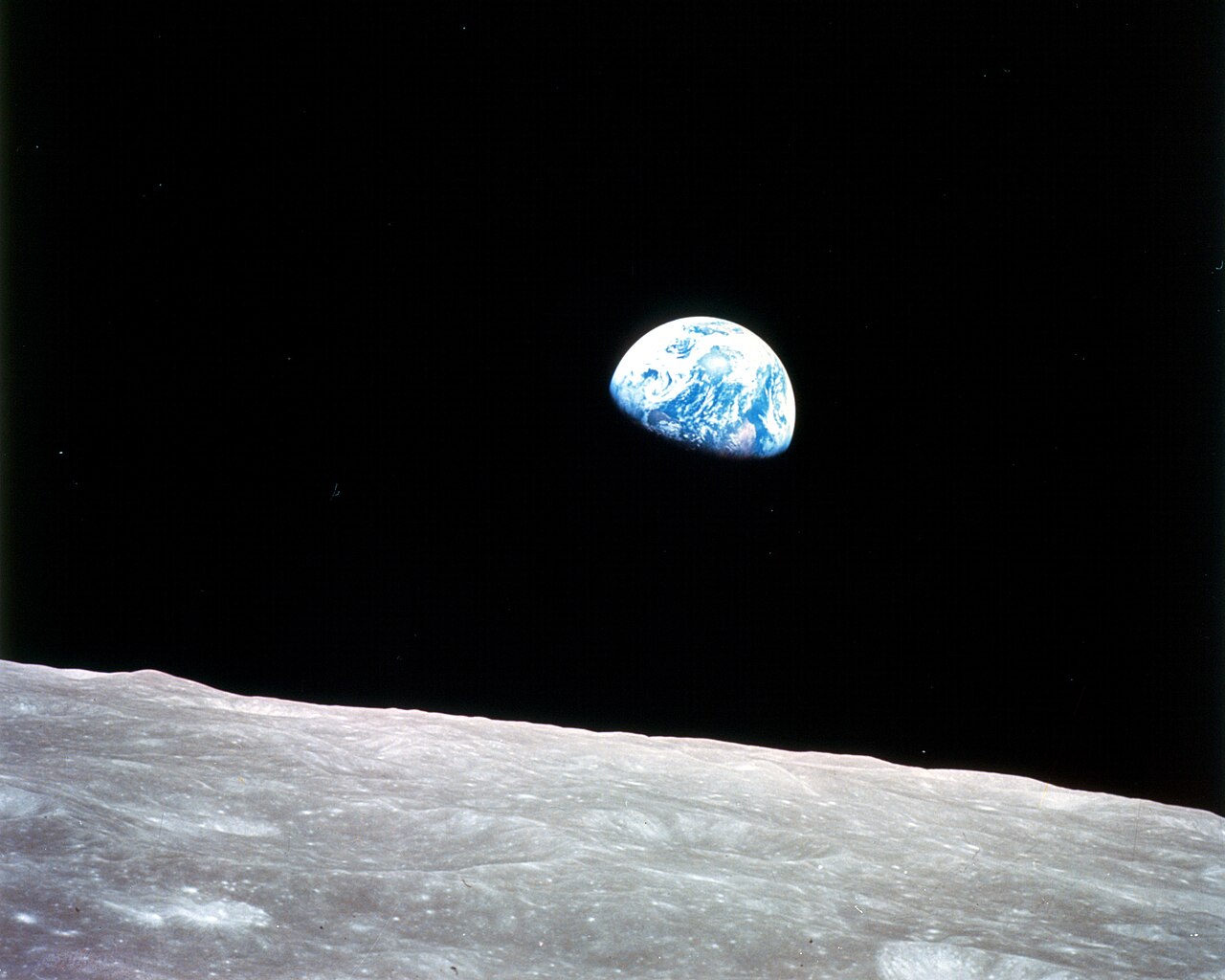
Core principle and equation
The balance can be expressed compactly by the hydrostatic equation, which relates the change in pressure with depth to the local weight of the fluid per unit volume. In words, pressure decreases with increasing height because each layer supports the weight of the layers above. The same idea is often summarized as pressure gradient force plus gravity equal zero. For an elementary discussion of the role of gravity and a description of the pressure gradient, see introductory resources.
Characteristics and assumptions
- Applies when acceleration of the fluid is negligible (steady or static situations).
- Assumes pressure is isotropic (same in all directions) and that viscous or turbulent forces are not dominant.
- In rotating systems an additional centrifugal term modifies the balance, so the simple vertical form must be generalized.
History and development
Understanding of hydrostatic balance grew from experiments and thought by early scientists studying fluids and pressure. The practical laws of hydrostatics were formulated during the 17th and 18th centuries and later extended into geophysics and astrophysics to model atmospheres, ocean columns, planetary interiors and stellar structure.
Applications and examples
Common applications include why the surface of a calm liquid is level, how atmospheric pressure falls with altitude, and why stars maintain a stable radius until other forces (fusion, radiation, degeneracy pressure) change their internal pressure. Engineers use hydrostatic concepts in dam design and submarine buoyancy, while meteorologists use the balance to interpret pressure readings and vertical profiles.
Notable distinctions and further points
Hydrostatic equilibrium differs from dynamic balance: when flows or rapid changes occur, full fluid dynamics is required. In planetary science and stellar physics the same basic principle is adapted to include temperature-dependent pressure, composition gradients, and additional forces. For more on surfaces and level fluids see surface phenomena and related entries.
Related articles
Author
AlegsaOnline.com Hydrostatic equilibrium — balance of gravity and pressure Leandro Alegsa
URL: https://en.alegsaonline.com/art/46123