
Spiny lobster (rock lobster): biology, behavior, fisheries and conservation
Spiny lobsters (family Palinuridae) are clawless, long‑antennaed crustaceans of warm seas. This article covers their anatomy, life cycle, behaviour, fisheries value and conservation concerns.
Overview
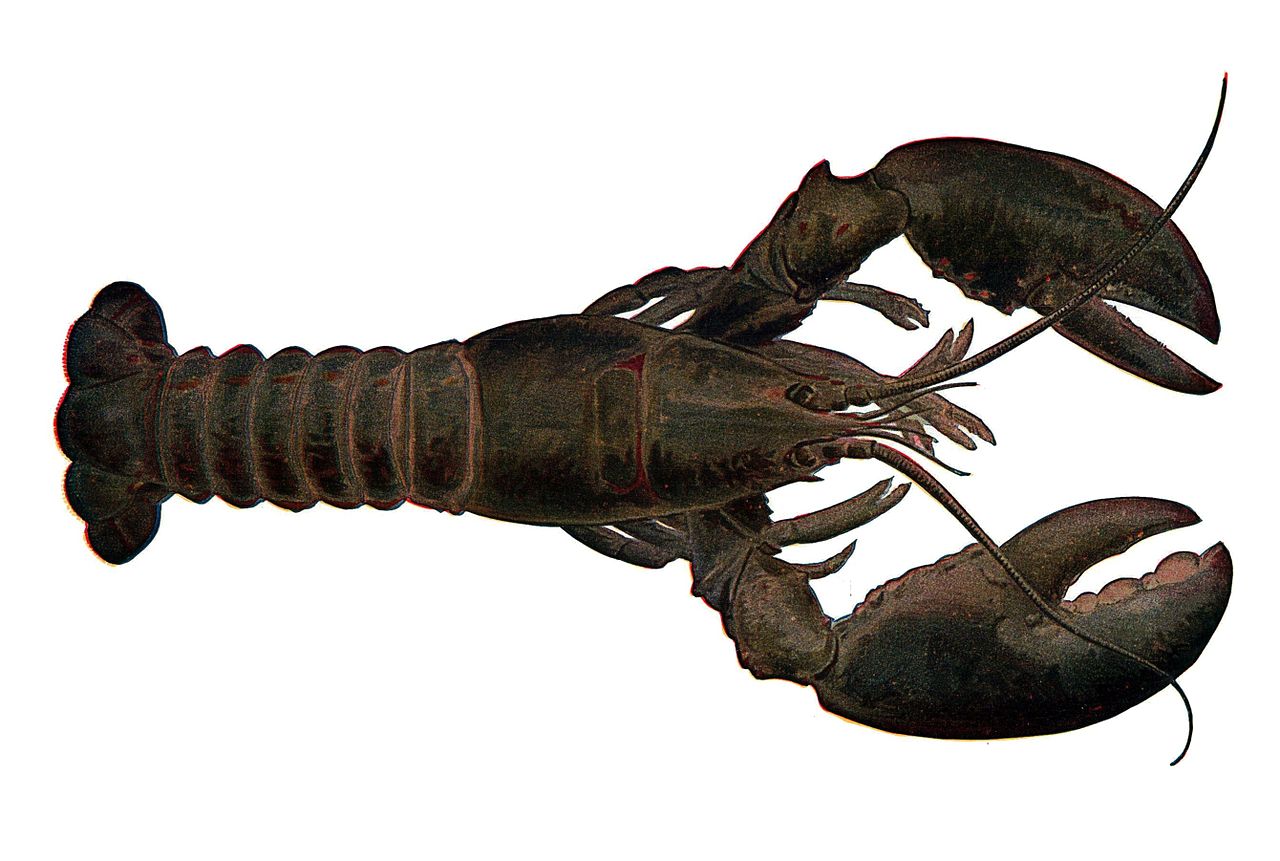
Spiny lobsters are marine crustaceans in the family Palinuridae, commonly called rock lobsters, sea crayfish or crayfish in some regions. The family contains about 45 recognized species distributed throughout warm and temperate seas worldwide. Although they resemble true lobsters in overall form, spiny lobsters belong to a different evolutionary group (the Achelata) and lack the large chelae — the prominent claws — that characterize true lobsters.
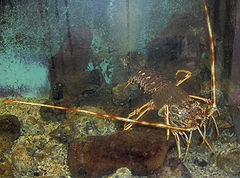
Image gallery
10 Images




Distinctive characteristics
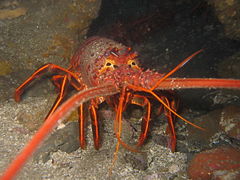
These animals are most easily identified by their very long, thick, and often spiny antennae, a robust hard carapace, and a segmented abdomen ending in a muscular tail. Instead of claws, the first pair of walking legs end with small, slender tips. Many species have pronounced spines on the carapace and legs that serve as protection. Spiny lobsters also produce a rasping or stridulating sound when disturbed by rubbing specialized parts of the antenna against the carapace, a behavior thought to deter predators.
- Body plan: hard exoskeleton with molting growth stages.
- Sensory features: well‑developed antennules and compound eyes.
- Feeding: nocturnal foragers eating mollusks, crustaceans, echinoderms and carrion.
- Movement: often shelter in crevices or reefs by day and emerge at night; some species form migratory columns.
Life cycle and behavior
Reproduction and early development in spiny lobsters are notable for a long, planktonic larval phase. Eggs are carried by females on the abdomen until hatching; the larvae hatch as flattened, transparent phyllosoma that drift in open water for weeks to months, feeding and developing through multiple stages. Eventually they metamorphose into a nonfeeding, more shrimp‑like puerulus that settles to the seabed and transforms into the benthic juvenile form. Adults typically live in rocky reefs, coral formations and similar habitats. Many species show complex social behavior: they may aggregate in dens, form single‑file migration lines and exhibit avoidance of diseased conspecifics.
Distribution, fisheries and culinary importance
Spiny lobsters inhabit most warm seas, including tropical and subtropical regions such as the Caribbean, parts of the Mediterranean, southern Africa and Australasia. Several species support important commercial and artisanal fisheries. They are taken by traps, nets, spearfishing and free‑diving; in some areas, night diving with hand captures is common. The firm tail muscle is the main edible portion and is prized in many cuisines. Fisheries provide livelihoods and export income, for example in island nations where lobster export is a major seafood commodity.
Conservation, management and notable facts
Because spiny lobsters are valuable, many fisheries have developed management measures such as size limits, seasonal closures, trap restrictions and quotas to prevent overharvest. Habitat degradation, climate change and disease outbreaks can also affect populations. Some species have localized declines where management is weak, while others are sustainably fished with active monitoring. A few species are remarkable for their size or behaviour; historical records note exceptionally large specimens and well‑documented mass migrations across the seafloor.
Further reading and resources
- Species checklist and taxonomy
- General crustacean biology references
- Regional names and common synonyms
- Comparison with true lobsters
- Exoskeleton and carapace structure
- Molting and growth in decapods
- Antennae and sensory adaptations
- Morphological differences from clawed lobsters
- Caribbean species and fisheries
- Records in the Mediterranean
- Australasian rock lobsters
- South African species profiles
- Maximum size records and measurements
- Weight records and specimen data
- Conversion and measurement notes
- Coral reef and rocky shore habitats
- Ecology of reef organisms
- Prey species and diet studies
- Feeding on bivalves and gastropods
- Interactions with other crustaceans
- Predation by and on echinoderms
- Scavenging and carrion feeding
- Cultural and historical references
If you need concise identification tips, fishery regulations or region‑specific guidance, consult local marine authorities or species guides linked above. This summary aims to present the biology, uses and conservation context for spiny lobsters in a single, accessible overview.
Related articles
Author
AlegsaOnline.com Spiny lobster (rock lobster): biology, behavior, fisheries and conservation Leandro Alegsa
URL: https://en.alegsaonline.com/art/92699
Sources
- internationalreports.net : "The 'spiny' focus of fisheries"
- pbs.org : "California spiny lobster Panulirus interruptus"
- news.nationalgeographic.com : "Decoding Spiny Lobsters' Violin-Like Screech"
- odu.edu : "Lobsters have innate way to stay healthy, ODU researchers say in Nature article"