
Spoonbill (wading bird)
Spoonbills are large, long-legged wading birds with distinctive spatulate bills. They feed by sweeping their bills through shallow water, nest in colonies, and occur in wetland habitats worldwide.
Overview
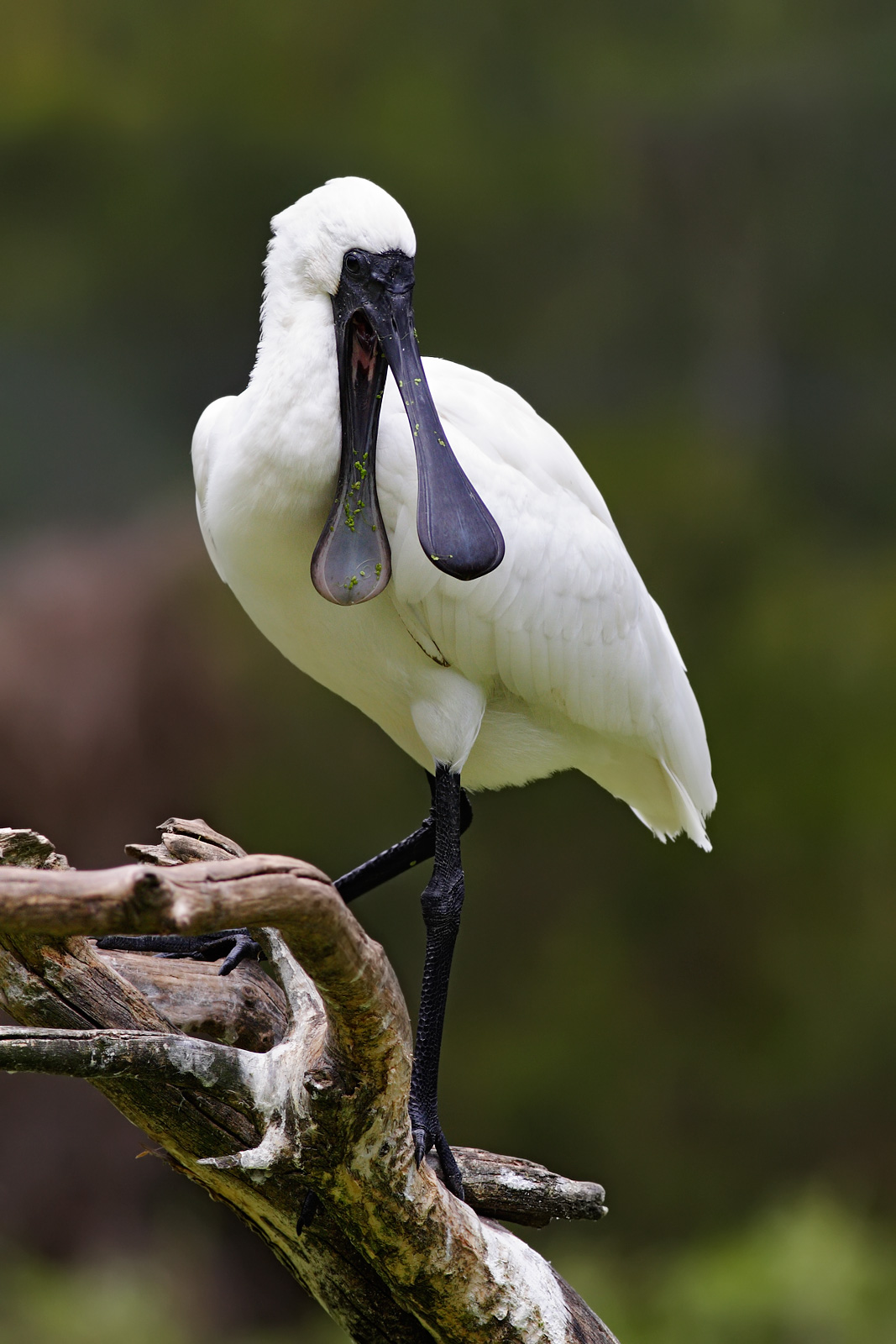
Spoonbills are distinctive wading birds in the family Threskiornithidae, closely related to the ibises. They are best known for their flattened, spoon-shaped bills and long legs, adaptations for foraging in shallow water. Spoonbills occur in a range of wetland habitats — freshwater marshes, estuaries, tidal flats and flooded fields — and are found in many parts of the world, with different species adapted to local climates and seasonal conditions.
Image gallery
10 Images


Physical characteristics and feeding
The most striking feature of a spoonbill is its spatulate bill. Spoonbills feed by wading with their partially open bills submerged and sweeping them from side to side. The bill is lined with sensitive receptors that detect contact with prey, so when small animals touch the bill it snaps shut. Their diet typically includes aquatic invertebrates such as insects and insect larvae, crustaceans, molluscs and small fish like the tiny fish found in shallow waters. Spoonbills may feed by day or night and generally spend many hours each day foraging to meet their energy needs.
Reproduction and social behaviour
Spoonbills are colonial nesters, often breeding in mixed colonies alongside herons and other waterbirds. Nests are typically built in trees, reed-beds or low shrubs, sometimes on islands or in flooded vegetation to reduce predation. Pairs are usually monogamous for the breeding season, and both parents share duties such as incubating eggs and feeding chicks. Young birds are fed by adults until they can feed independently; colonies may be noisy and active during the breeding season.
Species, distribution and habitat
There are several well-known spoonbill species with overlapping but distinct ranges. Examples include the Eurasian or common spoonbill, the roseate spoonbill of the Americas, the African spoonbill, and regionally restricted species such as the black-faced or yellow-billed spoonbills in parts of Asia and Australia. Some species are migratory, moving seasonally between breeding and feeding grounds, while others are resident where conditions remain suitable year-round. Spoonbills generally prefer shallow fresh water but are also commonly found in brackish and coastal environments and sometimes forage on mudflats and tidal areas.
Conservation and significance
Spoonbills play an important role in wetland ecosystems as predators of aquatic invertebrates and small vertebrates. They can serve as indicators of wetland health because they depend on abundant, shallow-water prey. Many populations are affected by habitat loss, wetland drainage, pollution and human disturbance. Some species, notably those with limited ranges, are of conservation concern and are the focus of protection and habitat restoration efforts. Spoonbills are also familiar and striking birds in parklands and nature reserves, where they often attract interest for birdwatching and environmental education.
Related birds and notable facts
- Spoonbills are closely related to ibises and often nest near herons.
- Feeding relies on tactile sensitivity; the bill closes reflexively when prey contacts it, allowing capture of hidden or mobile prey including insects, crustaceans and small fish.
- Human impacts on wetlands are the primary conservation threat; targeted protection and wetland management can help maintain local populations.
Related articles
Author
AlegsaOnline.com Spoonbill (wading bird) Leandro Alegsa
URL: https://en.alegsaonline.com/art/92785