
Carapace
The carapace is the dorsal shell or upper section of the protective outer covering found in several animal groups, notably crustaceans, chelicerates and turtles. This article explains structure, function and variation.
The term carapace refers to the upper, often hardened, part of an animal's protective covering. It is most commonly used for the dorsal shell of crustaceans (crabs, lobsters, shrimp), the fused dorsal shield of some chelicerates (for example horseshoe crabs), and the back shell of turtles. While the form and material differ between groups, the carapace serves a shared role in protection and support.
Image gallery
4 Images
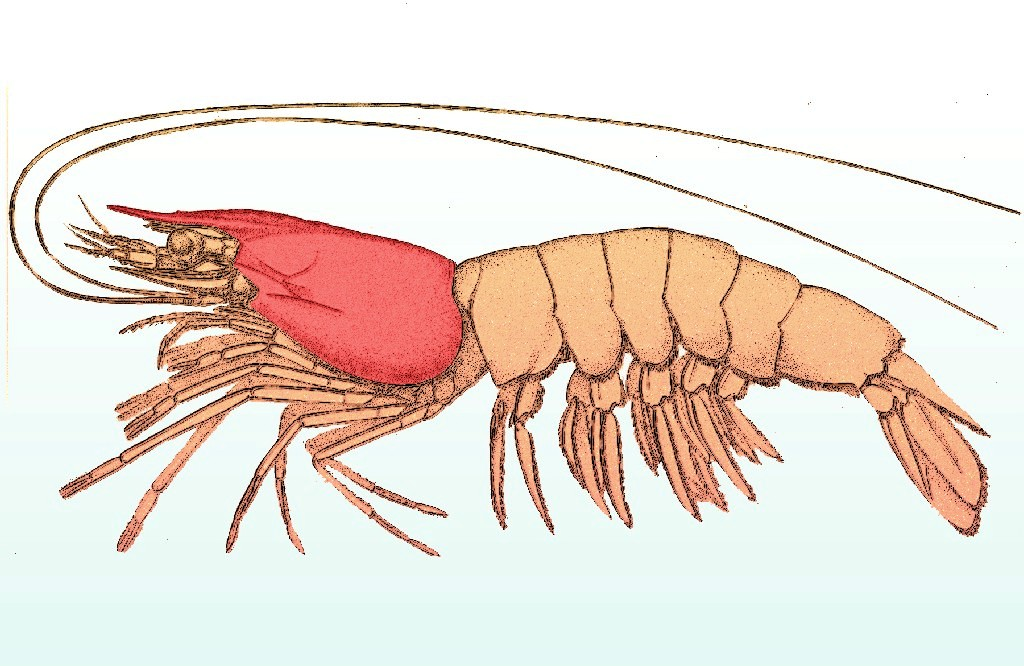


Characteristics and structure
In arthropods the carapace is typically part of the exoskeleton and may be composed of chitin reinforced with mineral deposits, such as calcium carbonate in many crustaceans. It often covers the cephalothorax and can bear spines, ridges or grooves. In turtles the carapace is anatomically distinct: it is formed from fused ribs and vertebrae overlaid by keratinous scutes or, in some species, skin, giving a rigid bony shell rather than an external cuticle.
Development and variation
How a carapace grows depends on the animal. Crustaceans replace or expand their carapace through molting (ecdysis), shedding the old exoskeleton and forming a new one. Turtles grow their bony carapace incrementally as the skeleton and scutes enlarge with age. Across species, carapace shape varies widely — flattened for burrowing or swimming, dome-shaped for defense, or elongated in armored predators — reflecting ecological adaptations.
Functions and ecological importance
- Protection against predators and environmental hazards.
- Structural support and sites for muscle attachment.
- Hydrodynamic or aerodynamic role in swimming or gliding species.
- Camouflage, display or species recognition through color and ornamentation.
Researchers use carapace features for taxonomy, age estimation and paleoecological reconstruction because ornamentation, thickness and growth patterns preserve well in the fossil record. For general background on the concept and related anatomical terms, see carapace.
Notable distinctions
The carapace should not be conflated with the plastron, which is the ventral (underside) part of a turtle's shell, nor with the term "exoskeleton" in its broadest sense: a carapace is a specific dorsal element of an animal's protective covering. In many arthropods the carapace overlays and integrates multiple body segments into a single protective shield, a key feature distinguishing it from smaller, segmental plates.
Related articles
Author
AlegsaOnline.com Carapace Leandro Alegsa
URL: https://en.alegsaonline.com/art/16852