
Exoskeleton: biological structures and powered suits
External skeletons that protect and support animals and engineered wearable systems. Covers biological structure, growth and molting, evolution, functions, and modern powered exoskeleton applications and challenges.
Overview
An exoskeleton is an external supportive and protective covering found in many animals and also a term used for wearable mechanical systems that augment or restore human movement. In biology, exoskeletons contrast with internal skeletons (endoskeletons) such as those of humans. The term applies broadly to hard outer parts like the shells of mollusks and, most commonly, to the articulated external skeletons of arthropods — groups including insects, spiders, myriapods and crustaceans. Biological exoskeletons evolved early in animal history and are often credited with influencing the diversification of body plans during the Cambrian explosion.
Image gallery
5 Images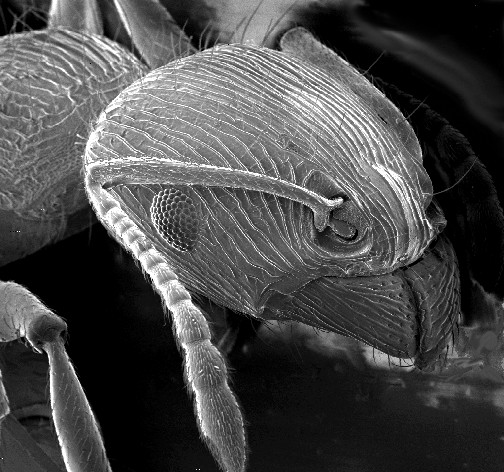



Structure and composition
Exoskeletons differ by taxon and function. In arthropods the exoskeleton (cuticle) typically consists of layered materials: an outer water-resistant epicuticle and inner protein–polysaccharide layers rich in chitin bound with structural proteins. Regions called sclerites are hardened by cross-linking (sclerotization) or mineral deposition. Molluscan shells are made primarily of calcium carbonate crystals in a protein matrix, producing nacreous or prismatic layers. Mechanical properties such as hardness, toughness and flexibility result from these composite structures and their microarchitecture.
Materials, mechanics and sensory roles
Beyond protection, exoskeletons are multifunctional composites. They provide sites for muscle attachment and transmit forces during locomotion. Many exoskeletons integrate sensory structures: hairs and setae couple mechanical stimuli to nerves, while pores and openings allow chemical sensing. The interplay of rigid plates and flexible joints permits articulation while maintaining a continuous barrier against predators and the environment.
Functions and ecological roles
- Protection: shielding internal organs from physical damage and predation.
- Support and locomotion: transmitting muscle forces and shaping appendages such as mandibles and claws.
- Desiccation barrier: limiting water loss for terrestrial species via waxy layers.
- Sensory integration: hosting mechanoreceptors and chemoreceptors for environmental information.
- Defense and feeding structures: forming armor, spines, beaks or radula-bearing plates used in feeding and competition.
Growth, molting and limitations
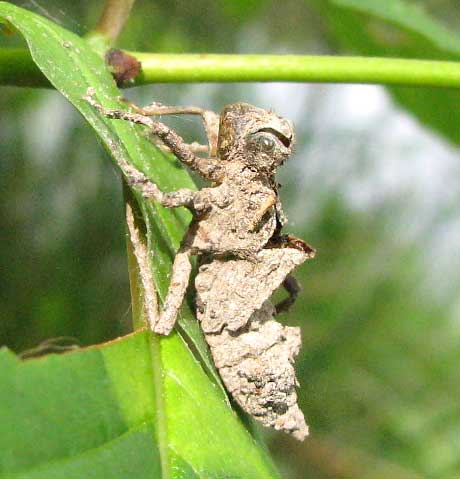
Because rigid exoskeletons do not expand, animals that possess them grow by periodically shedding and replacing the outer covering. In arthropods this process—ecdysis or molting—begins with production of a new cuticle under the old, separation (apolysis), enzymatic weakening of the old layer and behavioral shedding. Molting cycles require energy and hormonal control and leave animals temporarily vulnerable until the new cuticle hardens. These constraints affect life history patterns and can limit maximum body size, as mechanical support, respiration and the energetics of molting interact with environmental pressures.
Evolutionary significance and diversity
Fossil and comparative evidence suggests that mineralized and hardened outer skeletons arose more than 500 million years ago. The appearance of external armor coincided with novel predator–prey dynamics and promoted a wide range of morphological specializations. Arthropods, the most diverse animal phylum, exemplify how segmentation and a modular exoskeleton enabled varied limb specializations and ecological expansion into terrestrial, aerial and aquatic niches.
Engineered exoskeletons: design and applications
The term exoskeleton is also used for wearable devices that support, augment or restore movement. These systems range from passive braces to powered suits that use motors, hydraulics or soft actuators controlled by sensors and computers. Common applications include medical rehabilitation to assist gait recovery, industrial devices to reduce musculoskeletal strain during lifting, and experimental military or rescue systems aimed at increasing endurance and load carriage. Design trade-offs mirror biological constraints: weight, power supply, comfort, safety and the need for natural joint alignment.
Technologies, control and limitations
Modern exosuits integrate sensors (force, inertial, electromyographic) with control algorithms to time assistance with the user's movement. Power sources—batteries, tethered supplies or passive springs—affect endurance and portability. Challenges include ensuring intuitive control, preventing injury from misaligned forces, and adapting assistance to different body sizes and tasks. Research increasingly draws on biological principles—segmentation, compliant joints and distributed sensing—to improve efficiency and wearer comfort.
Societal, regulatory and research directions
As wearable exoskeletons move into clinical and workplace settings, regulatory oversight, safety standards and evidence of long-term benefits are active concerns. Ethical questions include equitable access, effects on employment, and the implications of augmenting healthy persons. Ongoing research explores lightweight materials, improved batteries, machine learning for adaptive control and bioinspired designs that emulate the passive–active balance found in animal exoskeletons.
Further reading and resources
For accessible introductions and detailed treatments, see general overviews and taxon-specific resources: general overview, comparisons with endoskeletons, accounts of molluscan shells, studies of arthropod cuticle, surveys of insect diversity and function, reviews of arachnid biology, descriptions of crustacean forms, and paleontological context for the Cambrian emergence of mineralized skeletons.
Questions and answers
Q: What is an exoskeleton?
A: An exoskeleton is a structure that supports and protects an animal's body from outside, unlike internal endoskeletons found in human beings.
Q: What animals have exoskeletons?
A: Invertebrate animals, such as shelled mollusks, have exoskeletons in the sense of external hard parts. However, arthropods (insects, spiders, myriapods, and crustaceans) are the primary group in which an exoskeleton is referred to.
Q: What functional roles do exoskeletons have?
A: Exoskeletons contain rigid and resistant components that fulfill a set of functional roles including protection, excretion, sensing, support, feeding, and acting as a barrier against desiccation (for terrestrial organisms).
Q: When did exoskeletons first appear in the fossil record?
A: Exoskeletons first appeared in the fossil record about 550 million years ago.
Q: What role has the evolution of exoskeletons played?
A: The evolution of exoskeletons has been seen as critical in driving the Cambrian explosion of animals that took place after 550 million years ago.
Q: What is an exoskeleton suit?
A: An exoskeleton suit is a device intended to restore the lost motion functions of a person or other living being. It also serves to increase human muscle strength and range of motion by means of an external skeleton and drive elements.
Q: How do exoskeletons differ from endoskeletons?
A: Exoskeletons support and protect an animal's body from outside, while endoskeletons such as those found in human beings support and protect the body from inside.
Related articles
Author
AlegsaOnline.com Exoskeleton: biological structures and powered suits Leandro Alegsa
URL: https://en.alegsaonline.com/art/32958