
Crustacean: biology, diversity, ecology, and human importance
Overview of crustaceans — a diverse subphylum of arthropods — covering anatomy, life cycle, ecology, evolution, and their role in fisheries and ecosystems.
The term subphylum Crustacea refers to a major group of arthropods that includes roughly about 67,000 described species. Familiar animals such as crabs, lobsters, crayfish, shrimp, krill and barnacles belong here. Crustaceans are part of the larger arthropod lineage and are closely related to insects; in some classifications the arthropods are treated as a superphylum, with crustaceans and insects occupying neighboring ranks among the animal phyla. The group has an extensive fossil record extending back to the Cambrian period.
Image gallery
10 Images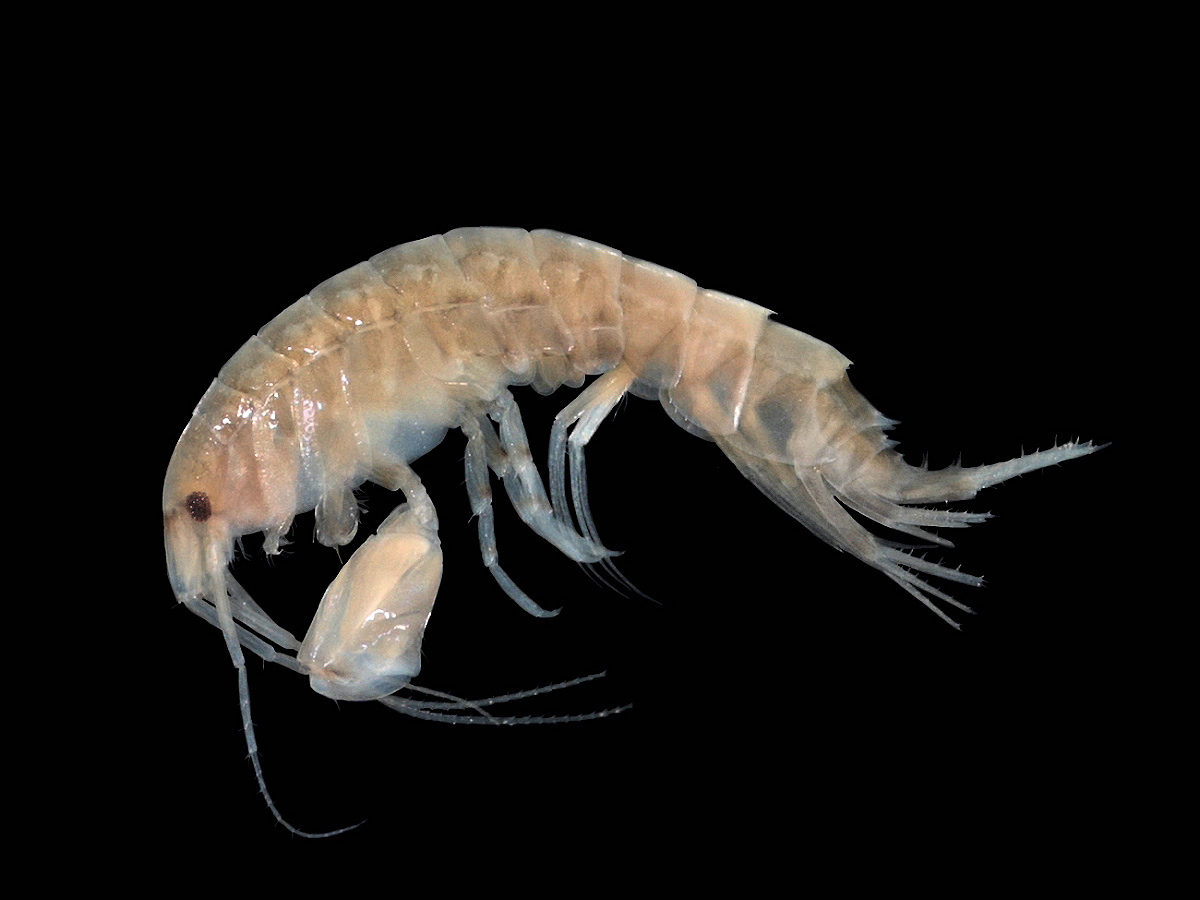




Anatomy and physiology
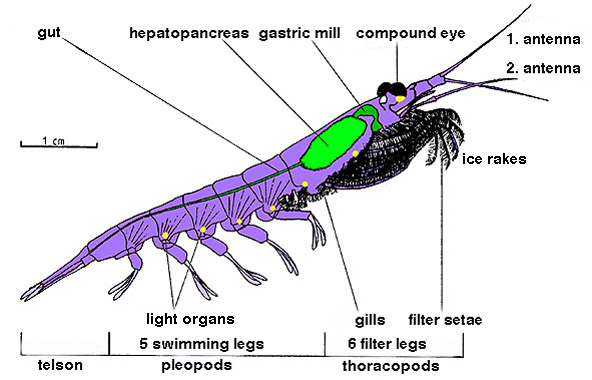
Crustaceans share the typical arthropod features of a hard exoskeleton, segmented body, and jointed appendages. The body is commonly divided into head, thorax and abdomen, although many taxa show fusion of regions. They characteristically bear two pairs of antennae and mandible-equipped mouths; the mouthparts include mandibles and other modified appendages. Eyes are often compound (eyes) and, in aquatic species, respiration usually occurs through gills. Some terrestrial lineages, such as certain land crabs, have evolved respiratory modifications that serve a similar function to lungs. Growth is achieved by moulting the exoskeleton periodically.
Life cycle and reproduction
Most crustaceans have separate sexes, though some species are hermaphroditic. Females commonly brood eggs which hatch into free-living larval stages, often planktonic and morphologically distinct from the adult. Larval development may include several recognizable stages before metamorphosis into a juvenile. In many groups the young disperse widely as plankton; in others the juvenile settles quickly and adopts a benthic or sessile lifestyle, as happens with barnacles. Several crustaceans are parasitic in habit — for example some species known as fish lice attach to hosts — and these species can show highly modified life cycles.
Size and form across crustaceans vary dramatically. Tiny ectoparasites and planktonic copepods may measure a fraction of a millimetre, while large decapods reach impressive dimensions: the Japanese spider crab has one of the longest leg spans among living arthropods. Other common groups include isopods, amphipods, and the abundant marine copepods. A short list of representative taxa illustrates the group’s variety:
- Crabs — typically benthic, often with broad carapaces.
- Lobsters — large decapods prized in fisheries.
- Crayfish — freshwater relatives of lobsters.
- Shrimp and prawns — important swimmers and fishery species.
- Krill — small, swarming crustaceans crucial to marine food webs.
- Barnacles — sessile, attached to hard substrata.
Ecology, behaviour and habitats
Most crustaceans are aquatic, and the majority are marine, occupying habitats from intertidal zones to the deep sea. Many are benthic, walking on or burrowing into sediments; others can swim and form important pelagic populations. Some groups have colonised land: terrestrial isopods (woodlice) and several species of land-dwelling crabs show adaptations to life away from water. Barnacles famously become fixed to rocks and other surfaces on the sea shore, while planktonic crustaceans such as krill and copepods represent a huge biomass that sustains many fish, birds and whales.
Human use, fisheries and conservation
Crustaceans are economically significant. More than ten million tonnes are harvested or produced by aquaculture annually, with most of that yield comprising shrimp and prawns — products of global fishery and farming industries. Beyond food, crustaceans serve as model organisms in research, as indicators of environmental change, and as vectors or hosts in disease cycles. Overexploitation, habitat loss and climate-driven changes to ocean chemistry threaten many populations, prompting management and conservation measures worldwide.
From an evolutionary perspective crustaceans preserve an informative fossil record that helps reconstruct the early diversification of arthropods, tracing back to the Cambrian. Debates about higher-level classification continue, but the fossil and molecular evidence together underline the long and varied history of this successful group of animals within the broader arthropod and superphylum discussions among the world’s animal phyla.
Questions and answers
Q: What is a Crustacea?
A: A Crustacea is a subphylum of arthropods with 67,000 described species. They are part of the phylum Arthropoda and include crabs, lobsters, crayfish, shrimp, krill and barnacles.
Q: How many species of Crustacea are there?
A: There are 67,000 described species of Crustaceans.
Q: Are all Crustaceans aquatic?
A: Most crustaceans are aquatic and mostly marine but some have moved onto land permanently including some crabs and woodlice.
Q: What body parts do most Crustaceans have?
A: Most crustaceans have three major body parts which are head, thorax and abdomen. They also have two pairs of antennae and two eyes with a mouth that has two mandibles.
Q: How do most Crustaceans breathe?
A: Most crustaceans breathe with gills although some land crabs have developed lungs.
Q: Do all adult crustaceans moult their shells as they grow in size?
A: Yes, most adult crustacean moult their shells as they grow in size.
Q: How much animal biomass do Krill and Copepods form on the planet? A: Krill and Copepods form the greatest animal biomass on the planet and form a vital part of the food chain.
Related articles
Author
AlegsaOnline.com Crustacean: biology, diversity, ecology, and human importance Leandro Alegsa
URL: https://en.alegsaonline.com/art/24431
Sources
- crustacea.nhm.org : "Cephalon"
- crustacea.nhm.org : "Thorax"
- crustacea.nhm.org : "Abdomen"
- britannica.com : [[Encyclopædia Britannica]]
- thecanadianencyclopedia.com : "Crustacean"
- 1911encyclopedia.org : [[Encyclopædia Britannica Eleventh Edition]]
- sabella.mba.ac.uk : "Note on the function of the spines of the Crustacean zoœa"
- doi.org : 10.1017/S0025315400057994
- decapoda.nhm.org : Larvae of decapod crustacea