
Mediterranean Sea — geography, history and significance
A semi-enclosed sea between Europe, Africa and Asia. Covers ~2.5 million km², links major waterways, shaped ancient civilizations, supports rich marine life and intense modern shipping and tourism.
Overview
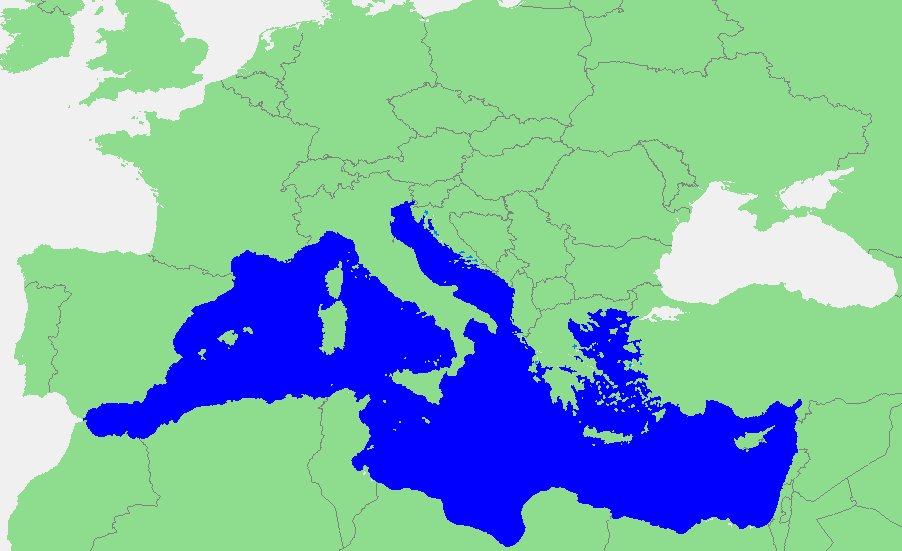
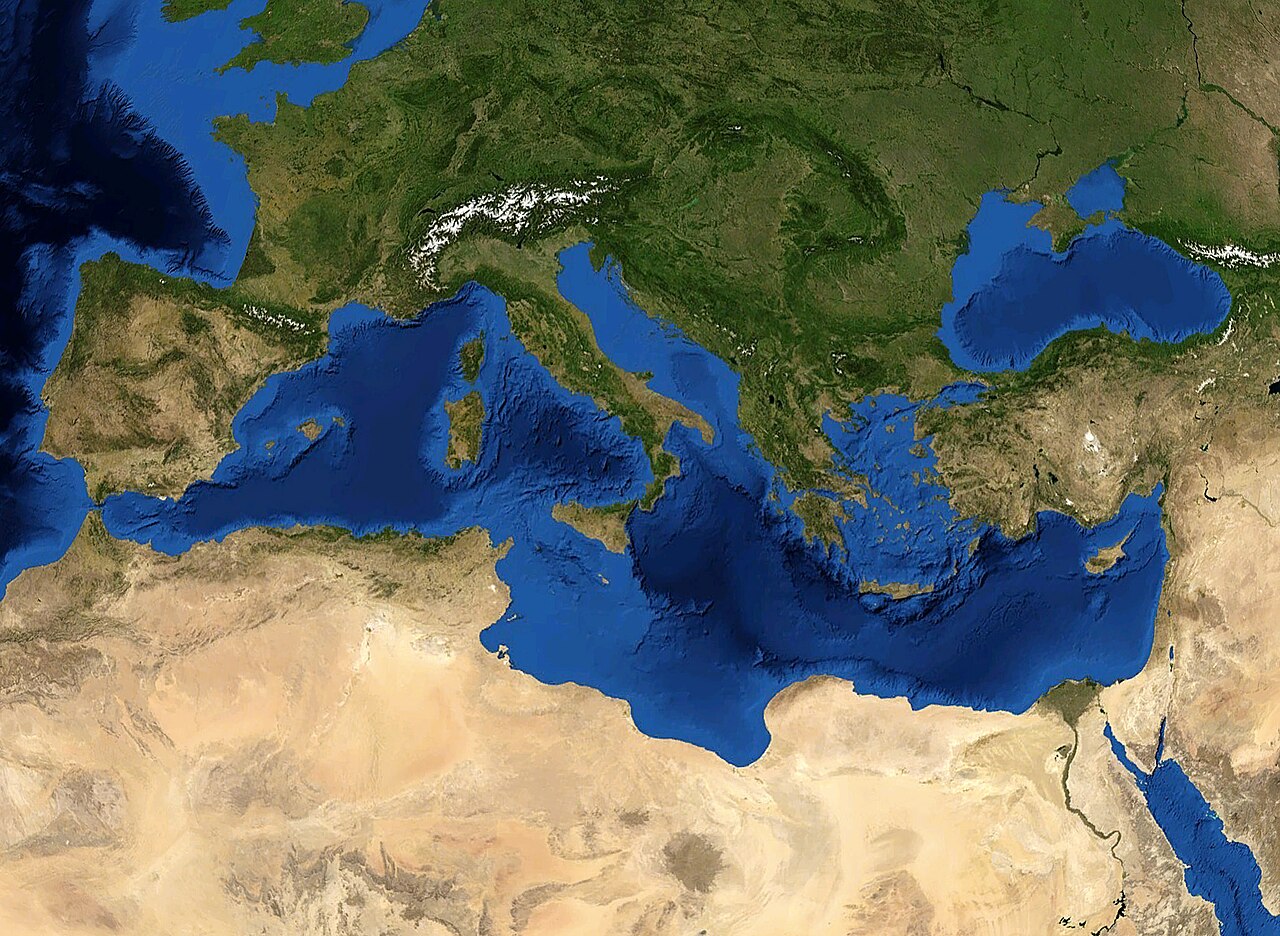
The Mediterranean Sea is a nearly enclosed body of water that lies between Europe, Africa and Asia. It occupies roughly 2.5 million square kilometres and has been a central route for trade, cultural exchange and migration for several millennia. The sea’s position between continents and its long coastline have given it outsized historical and ecological importance despite its modest area relative to the world’s oceans.
Image gallery
10 Images




Geography and connections
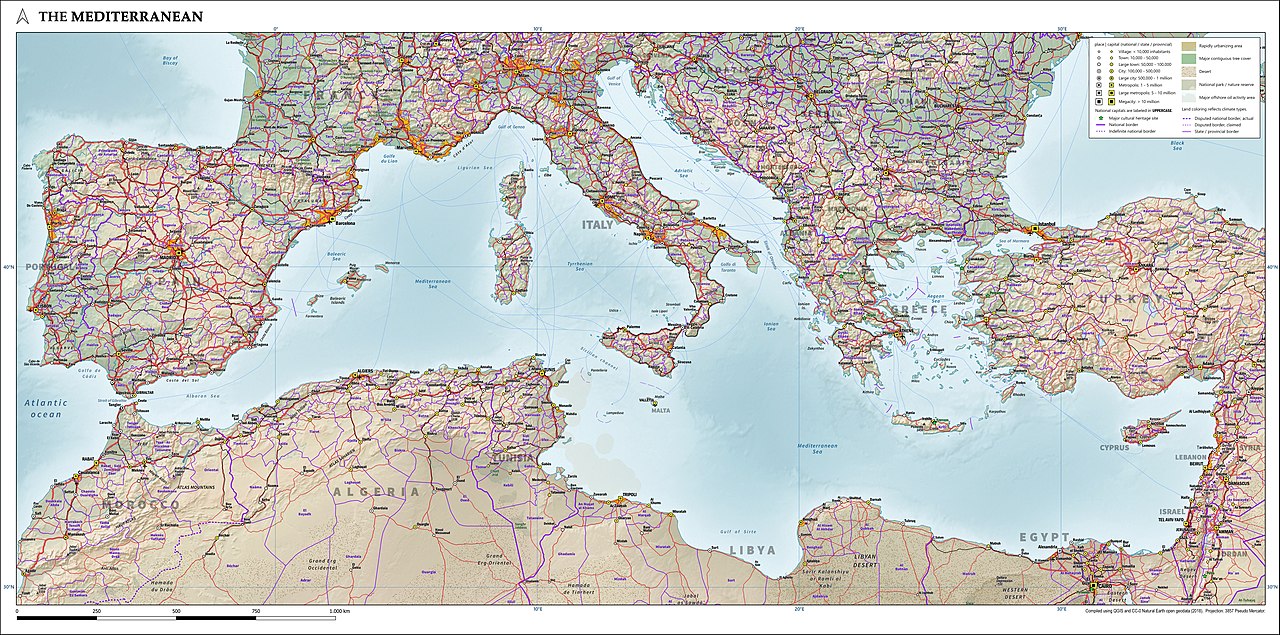
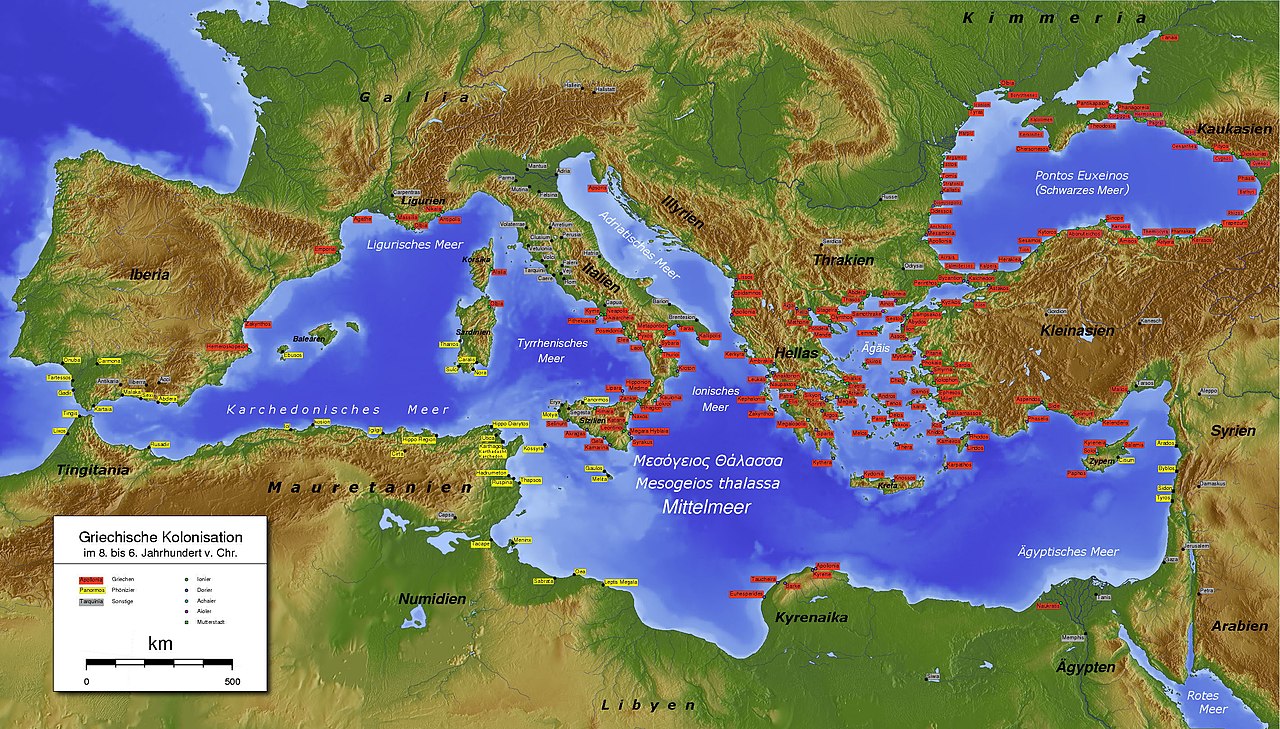
The Mediterranean communicates with the wider ocean system and neighboring seas by a few narrow passages. To the west it opens into the Atlantic Ocean through the Strait of Gibraltar. To the east it links to the Sea of Marmara and the Black Sea by the Dardanelles and the Bosporus. The artificial Suez Canal connects the Mediterranean to the Red Sea, passing between Egypt and the Sinai Peninsula, and thereby forming an intercontinental shipping link to the Indian Ocean. The canal was constructed in the 19th century by a French company, the Compagnie Universelle du Canal Maritime de Suez.
History and cultural significance
The name “Mediterranean” derives from Latin words meaning "in the middle of land" and became common in the early Middle Ages. For ancient peoples the sea was central: the Ancient Greeks called it simply “the Sea” or “the Great Sea.” Civilizations such as the Phoenicians, Greeks, Romans and various medieval states used its routes for commerce, colonization and military operations, leaving a dense archaeological and linguistic legacy along its shores.
Physical characteristics and ecology
The Mediterranean is semi-enclosed and has higher evaporation than precipitation and river input in many regions, which affects salinity and circulation. Exchanges through narrow straits create distinct water masses and relatively isolated deep basins. The sea hosts diverse habitats — from seagrass meadows and rocky reefs to deep canyons — and supports commercially important fisheries as well as many endemic species. Ecological pressures include habitat loss, pollution, and species introductions; the Suez Canal in particular has enabled migration of Red Sea species into the Mediterranean, altering native communities.
Human uses, economy and modern issues
Coastal states rely on the Mediterranean for shipping lanes, fishing, tourism and energy transport. Its ports link Europe, North Africa and western Asia, concentrating maritime traffic and economic activity. At the same time, intense use raises environmental and governance challenges: overfishing, coastal development, plastic pollution and competing claims over resources and maritime boundaries require multinational cooperation.
Borders and notable facts
- The sea is bordered by numerous countries, including Spain, France, Italy, Greece and Turkey in the north and by Egypt, Libya, Tunisia, Algeria and Morocco in the south.
- Its eastern waterways connect to the Black Sea through the Dardanelles and Bosporus, while the western outlet is the Strait of Gibraltar.
- The artificial Suez Canal (constructed by the Compagnie) links the Mediterranean to the Red Sea and beyond.
- The sea’s shores include regions commonly called the Middle East and North Africa, and the nearby Sinai Peninsula forms a land bridge between continents.
For further maps, historical timelines and ecological reports, see regional resources and maritime studies (Europe-focused, Africa-focused and Asia-focused materials).
Questions and answers
Q: What bodies of water does the Mediterranean Sea separate?
A: The Mediterranean Sea separates Europe, Africa, and Asia.
Q: How is the Mediterranean Sea connected to the Atlantic Ocean?
A: The Mediterranean Sea is connected to the Atlantic Ocean by a narrow passage called the Strait of Gibraltar.
Q: What areas of land surround the Mediterranean Sea?
A: The Mediterranean Sea is almost completely surrounded by land, on the north by Europe, on the south by North Africa, and on the east by the Middle East.
Q: What is the meaning behind the name Mediterranean?
A: The name Mediterranean originated from Latin words meaning "in the middle of land".
Q: What bodies of water are connected to the Mediterranean Sea on its eastern side?
A: On its eastern side, the Mediterranean Sea connects to the Sea of Marmara and the Black Sea, by the Dardanelles and the Bosporus.
Q: Is the Sea of Marmara considered part of the Mediterranean Sea?
A: The Sea of Marmara is rarely considered as a part of the Mediterranean Sea.
Q: What man-made canal connects the Mediterranean Sea to the Red Sea?
A: The 163 km long man-made Suez Canal connects the Mediterranean Sea to the Red Sea.
Tags
Related articles
Author
AlegsaOnline.com Mediterranean Sea — geography, history and significance Leandro Alegsa
URL: https://en.alegsaonline.com/art/63447
Sources
- tools.wmflabs.org : 35°N 18°E / 35°N 18°E / 35; 18