
Clam: biology, habitat, culinary uses, and ecological role
Clams are bivalve molluscs found in marine and freshwater environments. This article summarizes their anatomy, life cycle, habitats, ecological importance, human uses and differences from other shellfish.
Overview
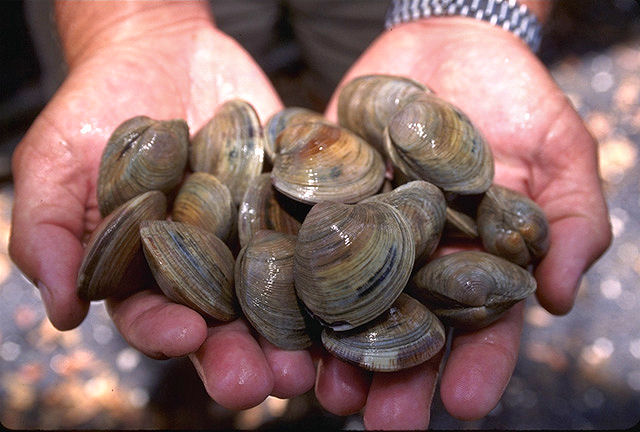
Clams are a common name for many species of edible and non-edible shellfish within the class Bivalvia of the phylum Mollusc. As bivalves they have two hinged shells (valves) and are found worldwide in both marine and freshwater settings. The term "clam" is broadly applied and does not correspond to a single taxonomic group; instead it describes a variety of burrowing bivalves that share similar lifestyles and forms.
Image gallery
9 Images



Anatomy and feeding
Clams possess a set of characteristic features adapted for a life partly buried in sediment. Common anatomical elements include:
- Two valves joined by a ligament and closed by one or more adductor muscles.
- Burrowing foot used to dig into sand or mud and to anchor the animal.
- Siphons in many species, tubular extensions that draw water into and out of the body for respiration and feeding.
- Gills that function for both gas exchange and filter feeding on microscopic plankton and organic particles.
The shell typically has three layers: an outer organic periostracum, a middle prismatic layer of calcium carbonate, and an inner nacreous layer often called mother-of-pearl. These layers protect the soft tissues and can vary in thickness and polish between species.
Habitat and distribution
Many clams live in shallow coastal zones and intertidal flats of the ocean, where they bury in sand or mud. Others inhabit estuaries, lagoons, and some inhabit lakes, rivers, and streams. Unlike oysters and mussels, which often attach to rocks, numerous clams spend most of their lives mobile within the substrate and are commonly harvested by digging or raking. Predators include shorebirds, crustaceans, fish and larger marine animals such as small sharks and squid.
Life cycle and reproduction
Reproductive strategies vary. Many marine clams release eggs and sperm into the water column, where external fertilization produces free-swimming larvae (veligers) that develop in plankton before settling and metamorphosing into juvenile clams. Some species brood young or follow seasonal spawning cycles. Freshwater species may show different timing and behaviors adapted to their environments.
Human uses and culinary traditions
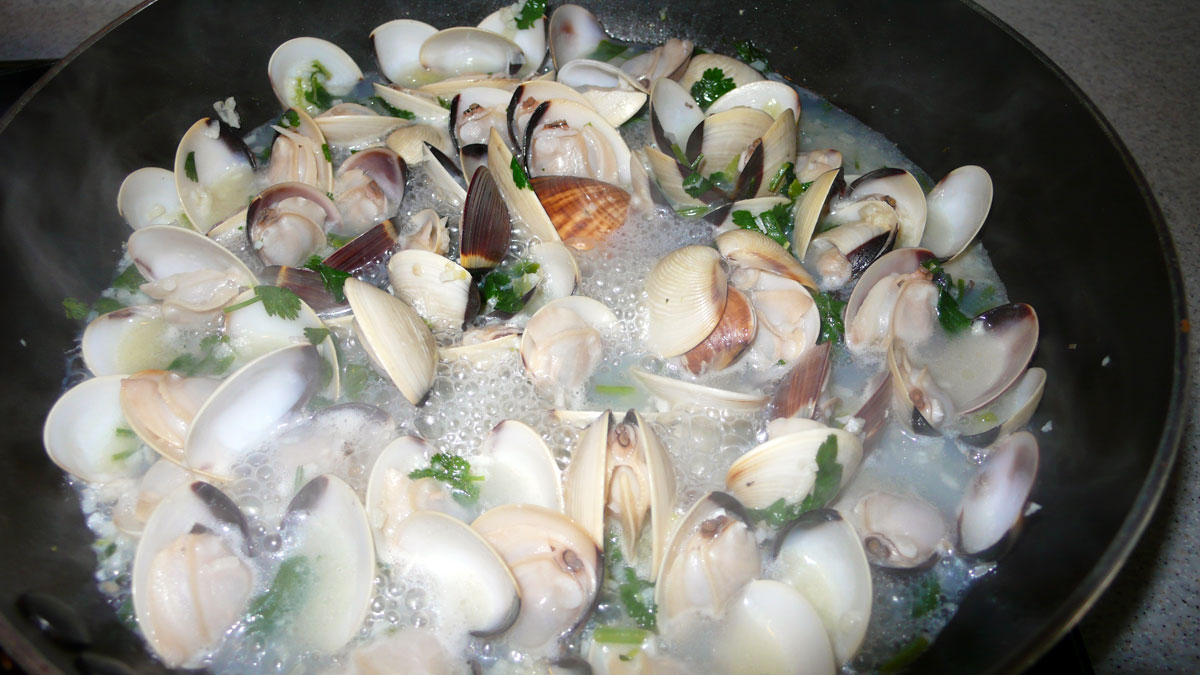
Clams are an important seafood resource and have been harvested by humans since prehistoric times, with evidence of shell middens at archaeological sites. Culinary uses range from stews and chowders to steamed or raw presentations, and different market names (such as littlenecks or quahogs) denote size and species. Clams used for cooking are typically those that live partially buried rather than attached to hard substrates, which distinguishes them from oysters and mussels. Commercial work includes wild harvesting and aquaculture, and clams feature on many seafood menus worldwide.
Ecological role and conservation
Clams function as benthic filter feeders and can improve water quality by removing suspended particles. In aquaria and managed water bodies, living freshwater clams are sometimes used to help filter water, although effectiveness varies. They also form an important link in food webs by converting plankton into biomass consumed by predators. Human impacts—pollution, habitat loss, overharvesting and invasive species—affect some clam populations, so management and sustainable harvesting practices are important for maintaining their ecological and economic roles.
For additional introductory information and species guides, consult general shellfish resources and regional references; specialist literature covers taxonomy, aquaculture techniques, and conservation status in greater detail. Many online and print sources provide identification keys and harvesting regulations appropriate to local jurisdictions.
Related topics: bivalve anatomy, commercial fisheries, and mollusc biodiversity.
Further reading and resources: shellfish overview, marine habitats, culinary uses.
Notes: clams are an ecologically and culturally significant group of bivalves whose common name unites diverse species more by habit and human use than strict taxonomy.
Additional links for context: phylum information, oyster comparisons, mussel comparisons, seafood industry, plankton ecology, predator-prey relationships.
Questions and answers
Q: What is a clam?
A: A clam is a type of shellfish that can be found in both saltwater and freshwater.
Q: What phylum does a clam belong to?
A: A clam is part of the phylum Mollusc.
Q: Where can clams be found?
A: Clams can be found in the ocean, as well as some lakes, streams, and rivers.
Q: Do all clams live attached to rocks?
A: No, clams for cooking do not live attached to rocks.
Q: What do clams eat?
A: Clams eat plankton and are eaten by small sharks and squid.
Q: How do clams hide?
A: Clams have a burrowing foot that they use to dig down into the sand or mud to hide.
Q: Why are living freshwater clams useful in fish tanks?
A: Living freshwater clams can work like a filter in fish tanks to keep the water clean.
Related articles
Author
AlegsaOnline.com Clam: biology, habitat, culinary uses, and ecological role Leandro Alegsa
URL: https://en.alegsaonline.com/art/20648
Sources
- britannica.com : "Clam"
- cbsnews.com : "Ming the Clam, World's Oldest Animal, Was Actually 507 Years Old"