
Assyrian Church of the East: history, doctrine and global presence
Ancient Eastern Christian church originating in the Persian world; known for the East Syriac liturgy, distinct Christology, early expansion into Asia, and a modern diaspora.
Overview
The Assyrian Church of the East is an ancient Eastern Christian body that traces its institutional origins to the historic see of Seleucia-Ctesiphon and to missionary activity attributed to early apostles such as Thomas, Addai and Mari. Historically it has been called several names — including the so‑called "Nestorian" Church, the "Syrian" or the "Persian" Church — but many of these labels are imprecise and sometimes misleading. The community preserves a distinctive East Syriac liturgical tradition and a theological vocabulary rooted in the Antiochene school.
Image gallery
10 Images

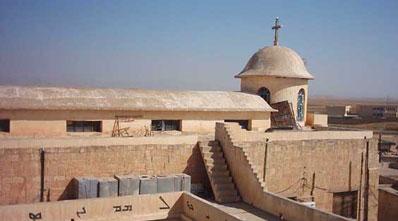


Characteristics and worship
Worship in the Assyrian Church centers on the East Syriac rite, celebrated in classical Syriac and in modern languages where the community lives. Its sacramental life, calendar and clerical structures reflect a continuity with ancient Mesopotamian Christian practice. The church uses a set of theological terms, such as the Syriac words often rendered in English as qnoma or qnome and parsopa, to articulate how the human and divine were united in Christ. This technical vocabulary is linked to the church’s major christological expositions.
Origins, theology and key thinkers
Institutionally the church emerged within the Persian and Parthian world, often described as rooted in Parthia and the eastern provinces of the Sasanian empire around what is now eastern Iraq and Iran. Its theological development draws on teachers associated with the Antiochene tradition such as Diodorus of Tarsus and Theodore of Mopsuestia; later formative thought was systematized by figures like Babai the Great, whose major work — the 'Book of the Union' — clarifies the church’s teaching that two qnome (essences) are unmingled yet eternally united in the one parsopa (personhood) of Jesus. Debates over labels and accusations, including charges of dualism linked to Nestorius, are part of a complex history of interpretation and polemic.
Historical expansion and contacts
From its Mesopotamian heartland the church expanded widely. Its geographical reach and influence extended across Asia in the early and medieval periods. Notable evidence includes a monument — the Nestorian Stele — discovered near Xi'an (ancient Chang'an) inscribed in Chinese and Syriac which documents church activity in the 7th and 8th centuries. Over subsequent centuries the community maintained contacts across Central and East Asia: a Chinese monk associated with the church once traveled from near Beijing to Paris and Rome to seek political and religious alliances. Before the arrival of the Portuguese to India in 1498, the church supplied East Syrian bishops to local Saint Thomas Christian communities. Patriarch Timothy I recorded communities as far afield as Tibet.
Organization and modern identity
Governance follows the traditional pattern of a catholicos‑patriarch with dioceses and parishes in the Middle East and throughout a global diaspora. In India this body is commonly known as the Chaldean Syrian Church, while other historic labels persist in Western writing. The church distinguishes itself from the Oriental Orthodox churches and from Eastern churches that are in communion with Rome; one reason is terminological: the community does not customarily employ the Greek‑derived term translated as "orthodox" in its official liturgical books.
Distinctive theology and ecumenical relations
The Assyrian Church's christology, as shaped by Babai and earlier Antiochene teachers, emphasizes the real and unconfused union of divine and human in Christ through the language of qnome and parsopa. These formulations differ from both Chalcedonian and Oriental formulations in emphasis and vocabulary rather than in denying the full divinity or full humanity of Christ. In recent decades the church has engaged in dialogues with other Christian communions to clarify terminology, address historic misunderstandings and seek practical cooperation in pastoral care.
Notable facts and legacy
- It is one of the oldest continuous Christian institutions originating east of the Roman Empire.
- Its liturgical and literary tradition preserved Syriac language forms and theological texts that influenced Christianity across Asia.
- Schisms, unions and the rise of competing jurisdictions produced related bodies such as churches in communion with Rome or independent East Syriac communities.
For further reading on specific topics — historical inscriptions, liturgy, the works of Babai or the church’s modern administration — see resources indicated by these pointers: overview, historical labels, comparative families, terminology, Indian branch, Parthian origin, Iraqi context, Iranian context, geography, influence, Asia, medieval history, inscriptions, Xi'an, Chang'an, languages, 7th century, 8th century, later medieval era, traveling monks, Beijing, Paris, Rome, diplomatic appeals, European contact, episcopal links in India, Tibet, theological origins, Antioch, historical accusations, Nestorius and Babai's synthesis.
Related articles
Author
AlegsaOnline.com Assyrian Church of the East: history, doctrine and global presence Leandro Alegsa
URL: https://en.alegsaonline.com/art/6775
Sources
- books.google.com : An Introduction to the Christian Orthodox Churches