
Aum Shinrikyo: Japanese religious movement and the 1995 Tokyo sarin attack
Aum Shinrikyo is a Japanese apocalyptic new religious movement founded by Shoko Asahara, notorious for the 1995 Tokyo subway sarin attack; it was reorganized as Aleph and remains subject to surveillance and legal restrictions.
Overview
Aum Shinrikyo (often shortened to Aum) is a Japanese new religious movement founded in the 1980s by Shoko Asahara. Combining elements drawn from Buddhist, Hindu and Christian traditions as well as yoga and occult ideas, the group promoted an apocalyptic doctrine and strong obedience to its leader. Aum rose from a small spiritual community to a larger, hierarchical organization during the late 1980s and early 1990s, attracting followers in Japan and overseas. It became internationally infamous after carrying out a lethal chemical weapon attack in 1995.
Image gallery
5 Images


Beliefs, organization and recruitment
The movement articulated a millenarian worldview that anticipated global catastrophe and offered salvation through devotion to Asahara and the group’s practices. Members lived in managed communities, participated in supervised training and engaged in communal work. Recruitment used a variety of methods, ranging from classes and seminars to personal contacts; in later years authorities reported attempts at online outreach and campus proselytizing. The organization maintained a strict internal hierarchy and a leadership structure that concentrated authority with senior figures.
Chemical and biological programs
During the early 1990s Aum established technical facilities and laboratory programs that sought to develop chemical and biological agents. Investigations by Japanese authorities determined the group worked with nerve agents, including sarin, and experimented with other toxic substances. Some of these programs produced lethal materials that were later used in attacks; other experiments failed to produce effective biological weapons. The scale and secretive nature of the work alarmed public health and security officials worldwide.
Violent actions and the Tokyo subway attack
On March 20, 1995, members of Aum released the nerve agent sarin on several lines of the Tokyo subway during the morning rush hour. The attack killed thirteen people and injured many others, causing both immediate fatalities and long-term physical and psychological harm to survivors. The Tokyo incident followed earlier violent operations and attempts to use toxic agents and demonstrated the group’s willingness to employ unconventional weapons to pursue its aims.
Legal response, trials and reorganization
Japanese authorities reacted with large-scale arrests and investigations. The group was stripped of its status as a religious corporation and declared bankrupt in the mid-1990s; attempts to ban it altogether were constrained by constitutional protections for freedom of religion. Senior members, including Shoko Asahara, were tried and convicted for their roles in the organization’s crimes. Asahara and several co-defendants were executed following the completion of appeals. In the years after the attacks the movement reorganized under names such as Aleph and produced splinter groups that distance themselves from past violence.
Surveillance, membership and contemporary concerns
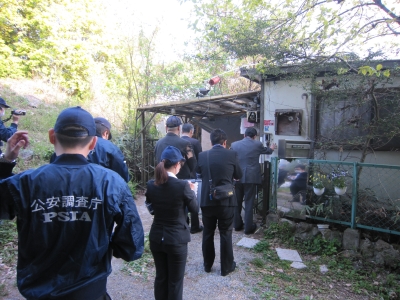
Because of its history Aum and its successor organizations have been subject to strict surveillance by Japanese intelligence and police, and have been designated or listed as a terrorist organization by several foreign governments. Membership has declined from its peak, but periodic estimates and reports from public authorities and the group itself indicate a continuing, if reduced, following. Officials continue to monitor recruitment efforts and warn about the potential for reactivation of violent capabilities.
Legacy and policy impact
The Aum case had broad consequences for emergency preparedness, public health response and legal policy in Japan and elsewhere. It highlighted vulnerabilities in civilian protection against chemical agents, led to improvements in detection and decontamination protocols, and influenced debates on how to balance civil liberties with counterterrorism measures. Aum remains a widely cited example in discussions of charismatic authority, the misuse of scientific knowledge, and the prevention of extremist violence.
Further reading and official sources
- Background and founding
- Beliefs and organizational structure
- Shoko Asahara and leadership
- Details on the 1995 Tokyo subway attack
- Investigations of sarin use and forensics
- Legal status as a new religious movement
- Chemical weapons programs associated with the group
- Earlier incidents and investigations
- Constitutional limits and freedom of religion
- Public Security Intelligence Agency reports and membership estimates
- Contemporary monitoring and counter‑radicalization efforts
Note: This article summarizes broadly reported facts about Aum Shinrikyo and its aftermath. Some operational details and legal findings are complex and were established through lengthy criminal proceedings and official investigations; readers seeking primary documentation and official reports should consult the sources listed above.
Questions and answers
Q: What is Aum Shinrikyo?
A: Aum Shinrikyo is a Japanese cult movement founded by Shoko Asahara which carried out a terrorist attack on a Tokyo subway in 1995. Although it claims to be a new religious movement, several governments regard it as a terrorist movement.
Q: What type of gas was used for the attack?
A: Aum members used a poisonous gas called Sarin for their attack.
Q: How many people were killed and injured in the attack?
A: In five attacks, they released sarin on several lines of the Tokyo subway. This killed thirteen people, and severely injured fifty. It caused temporary vision problems for nearly a thousand others.
Q: What happened after the event?
A: After the event, the movement renamed itself "Aleph". Aum Shinrikyo had been formally designated a terrorist organization by several entities, including Canada, and the United States. On 10 October 1995, Aum Shinrikyo was ordered to be stripped of its official status as a "religious legal entity" and was declared bankrupt in early 1996. However the group continues to operate under the constitutional guarantee of freedom of religion.
Q: How does Aum Shinrikyo fund itself?
A: It is funded by a successful computer business and donations, and is kept under strict surveillance. Attempts to ban the group altogether under the 1952 Subversive Activities Prevention Law were rejected by the Public Security Examination Commission in January 1997.
Q: How many members does Aum have currently?
A: In April 2011 the Public Security Intelligence Agency stated that Aum currently had about 1,500 members At the end of July 2011the cult reported its membership as 1,030. The group was reportedly active in trying to recruit new members among Japan's youth via social media websites and proselytizing on college campuses
Tags
Related articles
Author
AlegsaOnline.com Aum Shinrikyo: Japanese religious movement and the 1995 Tokyo sarin attack Leandro Alegsa
URL: https://en.alegsaonline.com/art/7364
Sources
- gazette.gc.ca : Order Recommending that Each Entity Listed as of 23 July 2004, in the Regulations Establishing a List of Entities Remain a Listed Entity
- cfr.org : cfr.org
- japantimes.co.jp : Aum may be gone in name but guru still has following