
Atheism: absence of belief in deities
Atheism is the absence or rejection of belief in gods. This article explains definitions, varieties, history, social role, and distinctions from agnosticism and related ideas.
Overview
Atheism is the position of not affirming the existence of one or more deities. In its simplest form it denotes the absence or rejection of belief in a god or gods. The term comes from a- ("without") + theism, and it is commonly treated as the conceptual opposite of theism, which affirms at least one divine being. People who identify as atheist vary widely: some explicitly assert that gods do not exist, while others lack belief without making a positive claim.
Image gallery
10 Images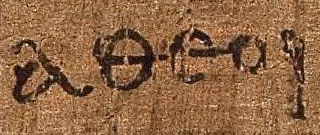




Definitions and types
Atheism is often discussed using several distinctions that clarify what people mean when they use the word. Two frequent contrasts are:
- Explicit vs implicit: explicit (or strong) atheists consciously reject belief in gods; implicit (or weak) atheists simply do not hold theistic beliefs, perhaps because they never considered them.
- Positive vs negative: positive (also called strong or gnostic atheism) affirms there are no gods; negative (also called weak or agnostic atheism) expresses absence of belief without asserting knowledge of nonexistence.
These distinctions are about claims and attitudes rather than fixed identities. Some people combine atheism with other philosophical positions such as naturalism, secular humanism, or scientific skepticism.
History and development
Ideas that deny or question gods appear across many cultures and eras. Ancient philosophical critics of traditional deities and supernatural explanations can be found in classical Greece, some Indian schools, and other traditions of skeptical inquiry. Over centuries, the range of non-theistic thought broadened alongside philosophical exploration, scientific developments, and social change. From the Enlightenment onward, critiques of religious authority and new scientific accounts of the world contributed to the growth of secular and nonreligious identities in parts of the world.
Social role and significance
Atheism intersects with politics, ethics, and culture. For some it informs a secular approach to public life and law; for others it shapes personal ethics without recourse to religious rules. Atheists have organized in movements advocating separation of religion and state, religious liberty, or public policy based on secular reasoning. The experience of atheists differs globally: in some societies atheism is widely accepted, while in others it remains stigmatized or legally restricted.
Distinctions and related terms
Atheism is distinct from but often compared with agnosticism, which centers on knowledge claims rather than belief. An agnostic may say that the existence of gods is unknown or unknowable; such a person can be theist, atheist, or undecided in belief. The terms "gnostic" and "agnostic" historically refer to claims about knowledge, not necessarily to religious affiliation. Philosophers and public figures—such as the theologian Kierkegaard in the 19th century—have used nuanced language to describe faith and doubt.
Common arguments and examples
Atheists advance a variety of reasons for their stance: some cite lack of empirical evidence for supernatural claims, others point to philosophical problems in theistic conceptions, and some adopt a methodological naturalism that prefers natural explanations. Conversely, theists often offer metaphysical, experiential, or theological arguments for belief. In practice, many individuals arrive at atheism through personal reflection, intellectual inquiry, or cultural influences rather than by formal argument alone.
Notable facts and contemporary context
Today atheism is part of broader conversations about pluralism, human rights, education, and science. It overlaps with secular movements and with nonreligious identities such as "none" on demographic surveys. Because beliefs about gods touch deep cultural and moral questions, discussions about atheism can be both philosophically rich and socially sensitive. For accessible introductions or further reading, follow the linked topics above to explore definitions, historical background, and debates.
Questions and answers
Q: What is atheism?
A: Atheism is the rejection of belief in a god or gods.
Q: How does atheism differ from theism?
A: Theism is the belief that at least one god exists, while atheism rejects this belief.
Q: What do you call someone who rejects belief in gods?
A: Someone who rejects belief in gods is called an atheist.
Q: How does agnosticism relate to atheism and theism?
A: Agnostics say that there is no way to know whether gods exist or not, so it differs from both atheism and theism. Some agnostics are atheists, while others are theists.
Q: What is gnosticism?
A: Gnosticism refers to a claim of knowledge - a gnostic has sufficient knowledge to make a claim. Adding an "a", meaning "without", before the word gnostic results in agnostic, or literally, "without knowledge".
Q: How does gnosticism differ from theism? A: While theism refers to belief in one or more gods, gnosticism refers to knowledge.
Related articles
Author
AlegsaOnline.com Atheism: absence of belief in deities Leandro Alegsa
URL: https://en.alegsaonline.com/art/6916
Sources
- britannica.com : "Atheism"
- plato.stanford.edu : "Atheism and Agnosticism"
- infidels.org : "Atheism: Common Arguments"
- ccel.org : "Ephesians: Chapter 2"
- atheistfrontier.com : Atheist Frontier glossary - Atheism
- books.google.com : Atheism in Pagan Antiquity
- books.google.com : The Cambridge Companion to Atheism
- humaniststudies.org : "Goodbye to Blasphemy in Britain"
- news.bbc.co.uk : "Pakistan bans Da Vinci Code film"
- legislation.govt.nz : Crimes Act 1961 - Section 123
- dailystar.com.lb : "Jordanian poet accused of 'atheism and blasphemy'," The Daily Star Lebanon Saturday, October 25, 2008.
- americanreligionsurvey-aris.org : americanreligionsurvey-aris.org/
- search.eb.com : "Worldwide Adherents of All Religions by Six Continental Areas, Mid-2005"
- adherents.com : "Atheism: Contemporary Rates and Patterns"
- state.gov : U.S. State Dept.