
Leopard seal (Hydrurga leptonyx): Antarctic predator and oceanic hunter
Leopard seals are large Antarctic true seals known for powerful jaws, spotted necks, diverse diet from krill to other seals, wide southern distribution, and prominent role as top predators in subantarctic ecosystems.
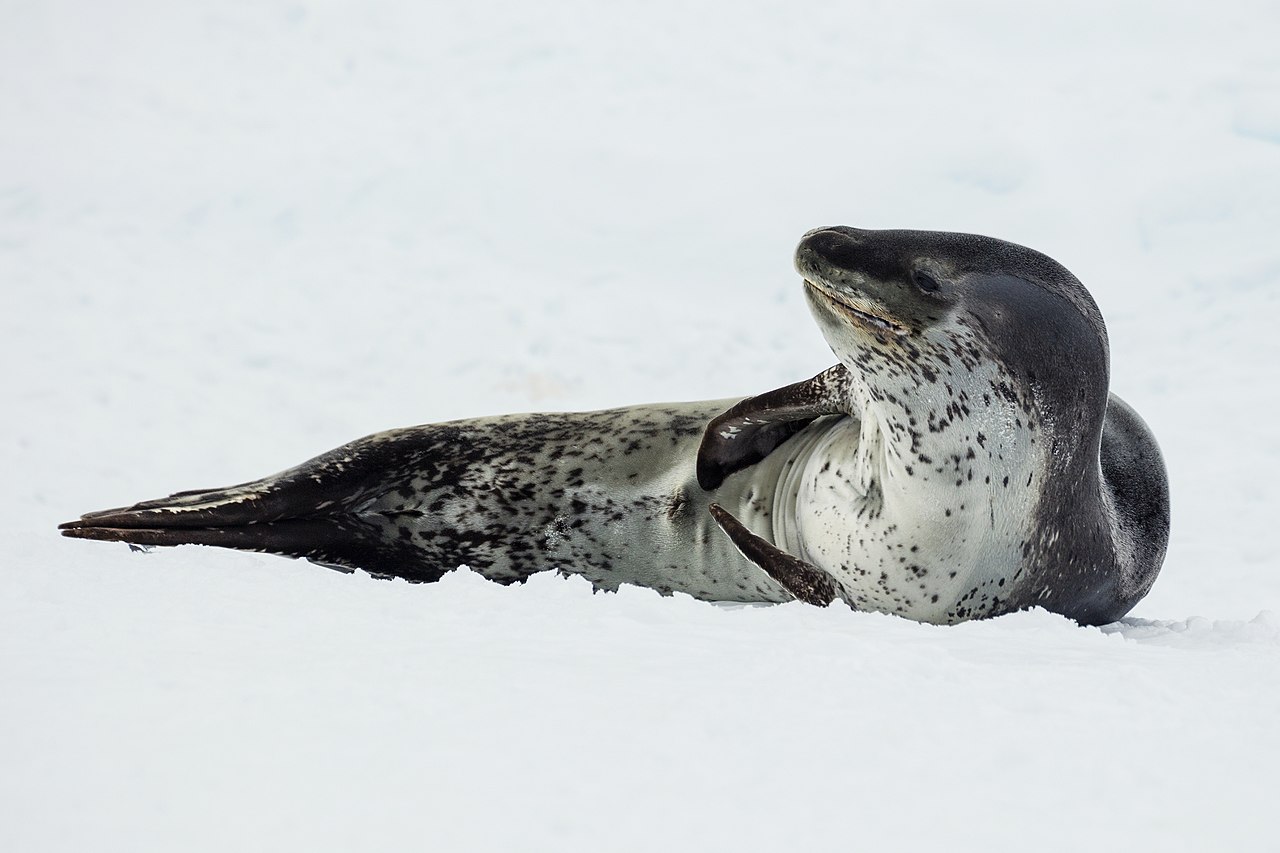
The leopard seal (Hydrurga leptonyx) is a large member of the true seals (seal family) inhabiting the Southern Ocean. It is often described as the second‑largest Antarctic pinniped and is notable for its long neck, broad head and a spotted throat that evokes a leopard’s pattern. Leopard seals are primarily associated with the Antarctic region but range widely across subantarctic and temperate southern waters, appearing from southern Australia and Tasmania to South Africa, New Zealand and remote islands such as Lord Howe Island.
Image gallery
10 Images




Description and biology
Leopard seals have a robust, streamlined body built for powerful swimming and rapid lunges. Their dorsal coloration is usually dark grey, shading to lighter grey or nearly white underneath; the throat and neck frequently display darker spots set against pale fur. They are carnivorous by adaptation and possess large jaws lined with long, sharp teeth suitable for seizing and tearing prey. As marine carnivores, they are among the most versatile hunters in polar waters.
Range and habitat
Although most abundant near pack ice and coastal Antarctica, leopard seals move seasonally and have been recorded far from the continent. Sightings and strandings have been reported around the islands and coasts of the southern hemisphere, including Tierra del Fuego, the Cook Islands and along the Atlantic coast of South America. They use ice floes, rocky shores and open water for resting, hunting and rearing young, adapting their movements to prey availability and sea‑ice conditions.
Diet and hunting behavior
Leopard seals exploit a wide range of prey and hunting methods. Their diet can include both small, planktonic organisms and large vertebrates; common items are:
- Krill and other zooplankton — filtered or captured in shallow water;
- Fish, including benthic and pelagic species;
- Squid and octopuses;
- Various crustaceans such as shrimp and crabs;
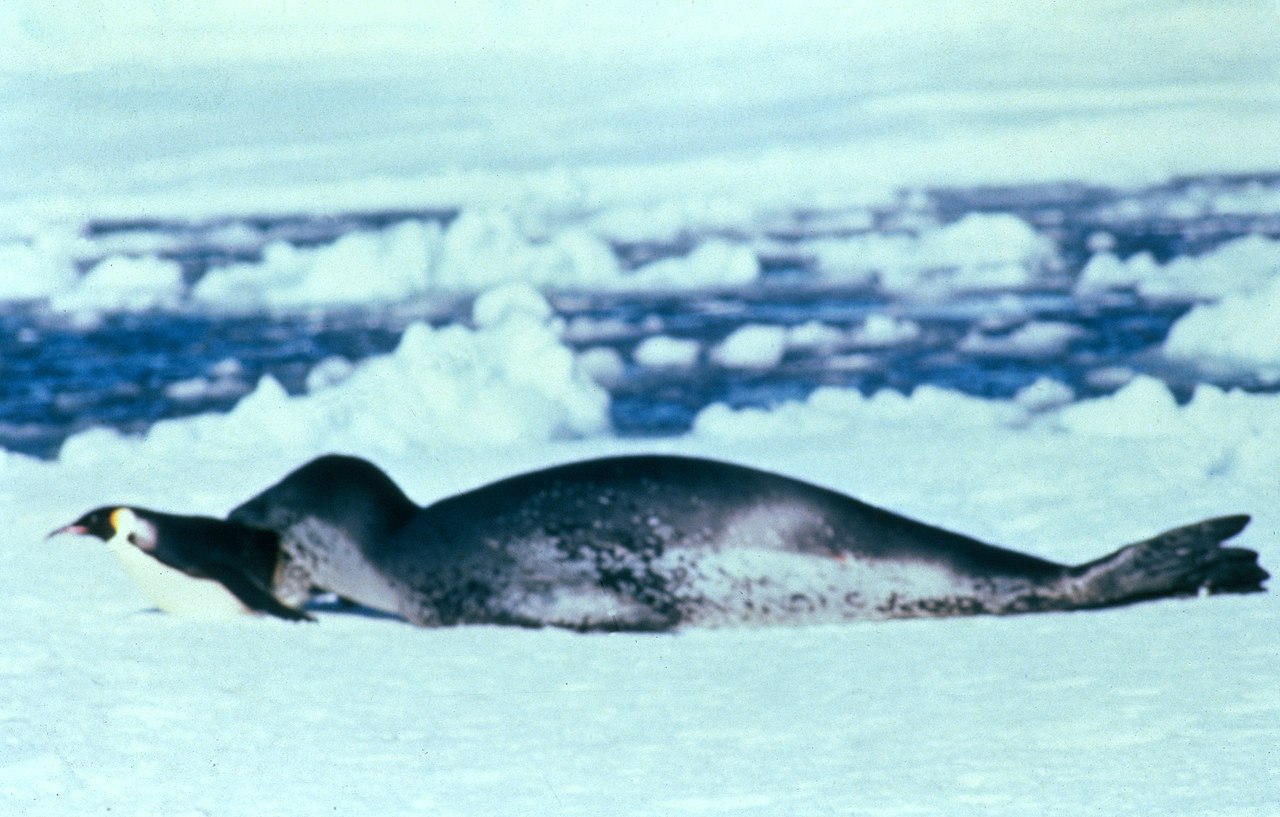
- Seabirds including seabirds and flightless species such as penguins;
- Other seals, especially smaller species or juveniles.
Leopard seals are opportunistic predators. They have been observed ambushing penguins at ice edges, pursuing fast prey in open water, and using sound and vision to locate food. Their combination of speed, agility and powerful bite makes them effective at capturing a wide variety of targets.
Behavior, life history and predators
Generally solitary, leopard seals spend much of their time at sea, hauling out on ice or shore to rest, molt and give birth. Females nurse pups on ice floes; pups grow rapidly and eventually learn to forage independently. Lifespans in the wild extend into decades under natural conditions. Natural predators are few, but include large marine predators such as killer whales and certain large sharks, which can attack adults or juveniles under some circumstances.
Conservation, research and human interactions
Leopard seals are an important apex predator in southern marine ecosystems and a focus of scientific study for their role in food webs, responses to changing sea ice and unique vocal and social behaviors. They are protected under various national and international measures that regulate disturbance and hunting in Antarctic and subantarctic waters. While generally not targeted by fisheries, changing ice conditions and human activity can affect their prey and habitat, so continued monitoring is part of conservation efforts. Researchers studying leopard seals often combine observation from ships and ice camps with noninvasive tagging and acoustic monitoring to learn more about movements, diet and population trends.
For further general reading on their ecology and distribution see regional marine mammal guides and specialist literature or consult research summaries provided by polar science organizations: seal overview, Antarctic resources, and regional pages for Australia, Tasmania, South Africa, New Zealand, Lord Howe Island, Tierra del Fuego, Cook Islands and the South American Atlantic.
Related articles
Author
AlegsaOnline.com Leopard seal (Hydrurga leptonyx): Antarctic predator and oceanic hunter Leandro Alegsa
URL: https://en.alegsaonline.com/art/57246