
Penguin
Flightless seabirds of the family Spheniscidae, adapted for swimming; live only in the Southern Hemisphere and include species from Antarctic coasts to the Galápagos Islands.
Overview
Penguins are distinctive flightless seabirds belonging to the family Spheniscidae. Their wings have evolved into flipper-like structures used for powerful underwater propulsion. Most species show countershaded plumage (dark backs, pale fronts), dense insulating feathers and a body shaped for efficient swimming rather than aerial flight.
Image gallery
10 Images




Physical characteristics
Several anatomical and physiological traits set penguins apart from other birds. Notable features include:
- Flipper-like wings for diving and steering underwater.
- Solid, heavy bones that reduce buoyancy and aid diving.
- Thick feather layer and a subcutaneous fat layer for insulation in cold water.
- Streamlined bodies and strong muscles adapted for pursuit of prey.
Distribution and habitat
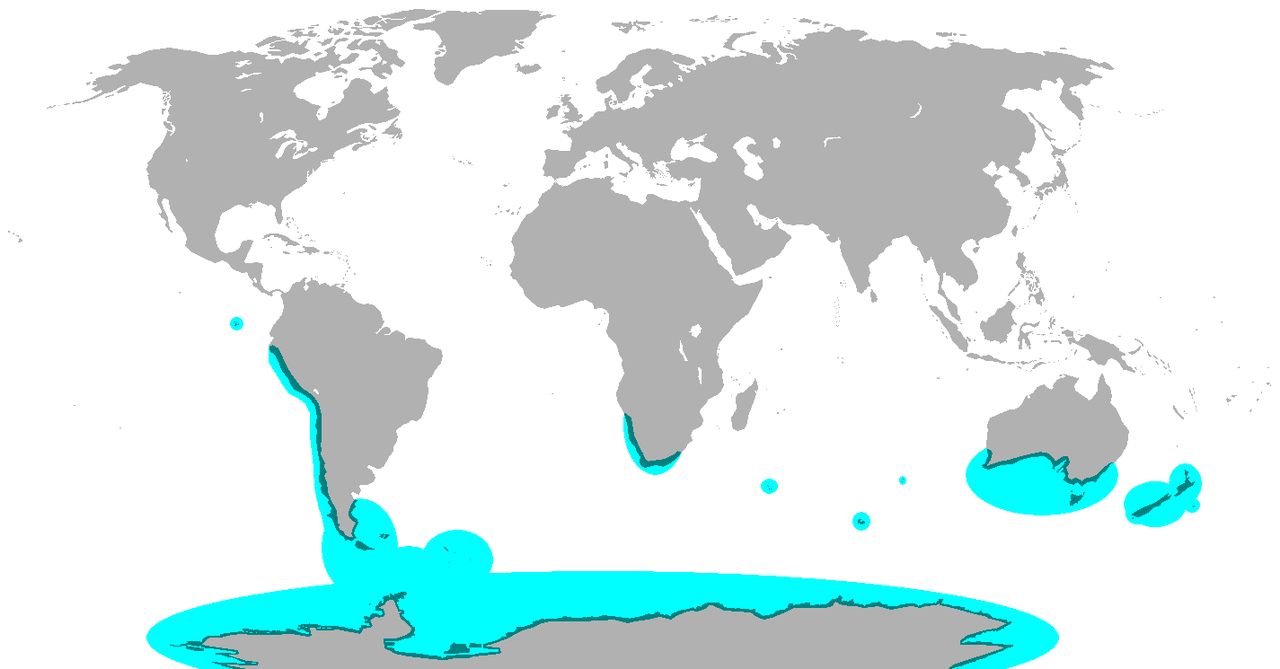
All penguin species are native to the Southern Hemisphere. Their range extends from the high Antarctic coasts such as Antarctica to temperate islands and continental shores in New Zealand, Australia, South Africa and along the coasts of South America. The Galápagos penguin is the northernmost species, surviving where the cold Humboldt Current brings nutrient-rich waters.
Reproduction and life cycle
Penguins are colonial nesters and reproduce on land or ice. They lay eggs (egg-laying) and most species share parental duties such as incubation and chick rearing. Typical stages include:
- Pair formation and nest preparation.
- Egg laying and alternating incubation shifts by parents.
- Chick hatching and brooding until fledging.
Diet, behavior and ecological role
Penguins are primarily piscivorous and consume fish, squid and crustaceans, relying on marine productivity to feed both adults and chicks (dietary sources). They are agile underwater hunters, capable of deep or prolonged dives depending on species. On land, many species form large breeding colonies, exhibit vocal and visual communication, and engage in synchronized behaviors for protection and thermoregulation.
Conservation and human interactions
Some penguin species are abundant while others face threats from habitat disturbance, climate change, overfishing and pollution. Conservation measures include protected areas, fisheries management and research into population trends. Penguins also have cultural and scientific significance: they are studied as indicators of marine ecosystem health and admired in popular culture and ecotourism—activities that can support conservation when managed responsibly. For further general information, see resources on seabirds and taxonomic overviews at Spheniscidae.
Additional regional and scientific resources: Antarctic research, New Zealand conservation, Australian habitats, South African colonies, South American populations, and oceanographic influences such as the Humboldt Current.
Questions and answers
Q: What family do penguins belong to?
A: Penguins belong to the family Spheniscidae.
Q: Can penguins fly?
A: No, penguins cannot fly in the air.
Q: How do penguins swim?
A: Penguins use their wings to swim underwater.
Q: What do penguins eat?
A: Penguins eat fish and other seafood.
Q: Where do penguins lay their eggs and raise their babies?
A: Penguins lay their eggs and raise their babies on land.
Q: Where do penguins live in the world?
A: Penguins live only in the Southern Hemisphere of the world: Antarctica, New Zealand, Australia, South Africa and South America.
Q: Where is the northernmost location that penguins can be found?
A: The northernmost location that penguins can be found is the Galapagos Islands, where the cold Humboldt Current flows past.
Related articles
Author
AlegsaOnline.com Penguin Leandro Alegsa
URL: https://en.alegsaonline.com/art/75558
Sources
- bbc.co.uk : bbc.co.uk/news/science-environment-31490623