
Squid: Biology, behavior, and human interactions
Overview of squid biology, anatomy, behavior, diversity and human uses. Covers locomotion, feeding, reproduction, notable species, predators, fisheries, research and conservation concerns.
Overview
Squid are marine mollusks in the class of cephalopods and belong chiefly to the order Teuthida. They occur worldwide from coastal waters to the deep sea and range widely in size and life history. Squid are important predators of fish, crustaceans and other invertebrates and in turn are prey for many larger animals, making them integral to ocean food webs.
Image gallery
10 Images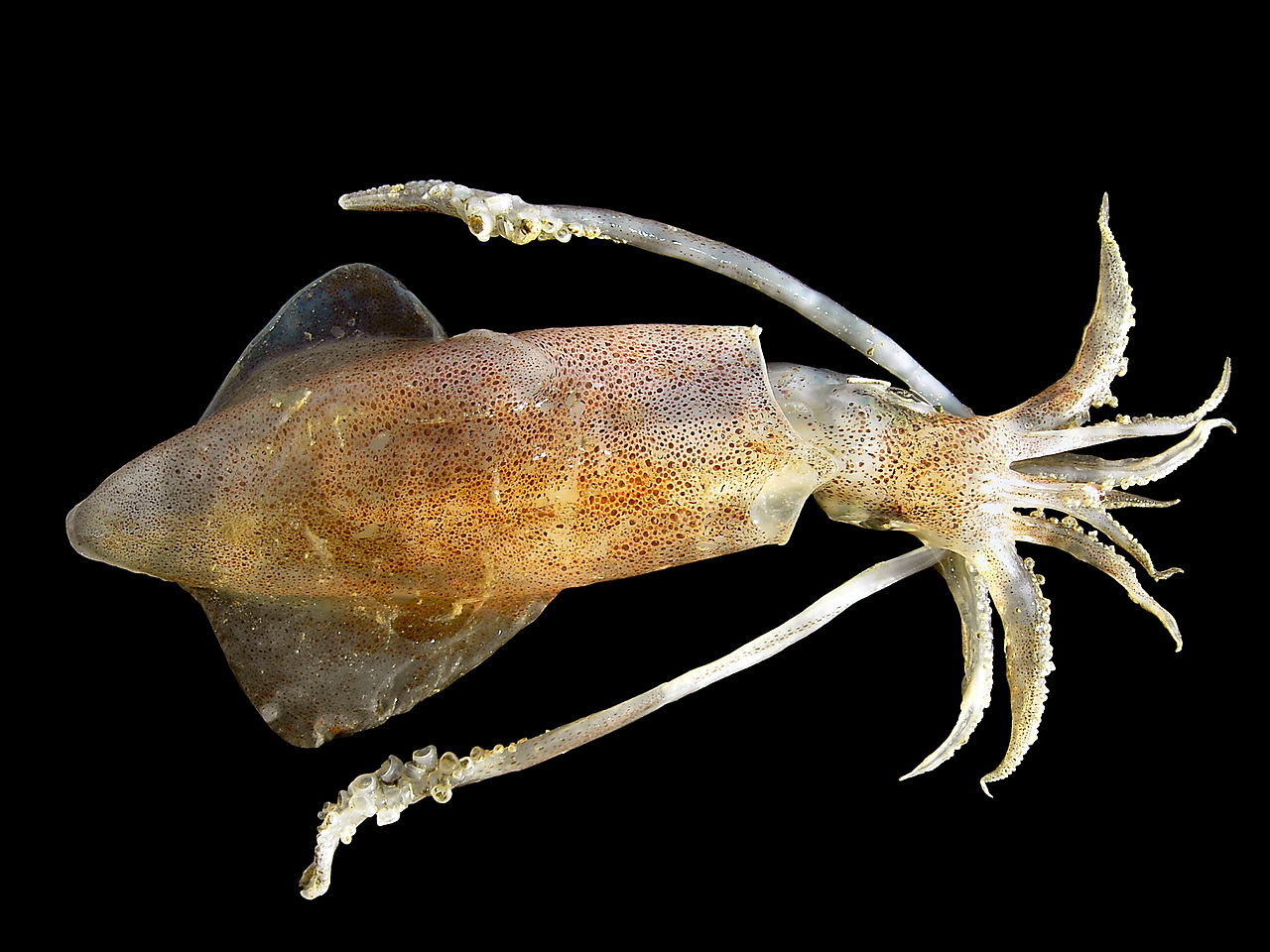


Anatomy and adaptations
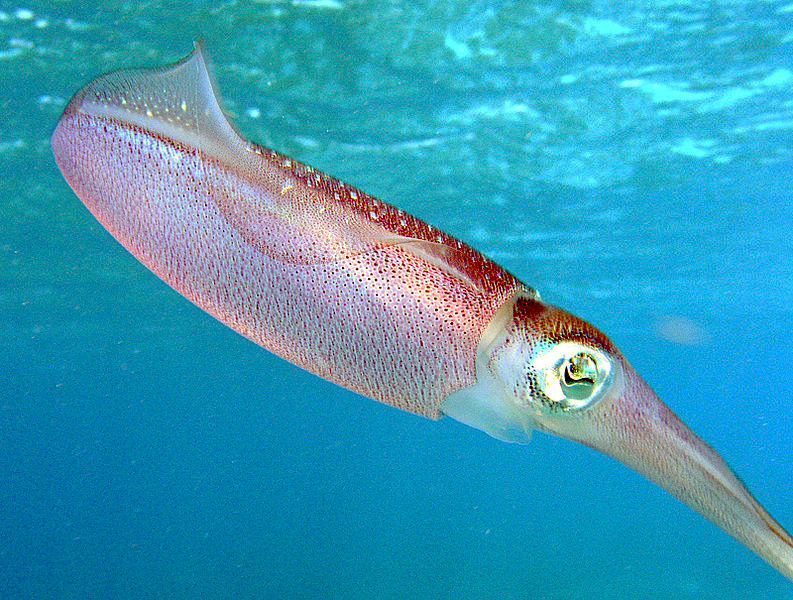
Squid share a distinctive body plan adapted for an active, predatory life. A muscular mantle encloses the visceral organs and drives jet propulsion via a muscular siphon. Most species have eight arms plus two longer tentacles specialized for seizing prey, and a horny beak used to bite and tear food. Many squid have complex eyes, well-developed nervous systems and skin organs called chromatophores that allow rapid color and pattern change for camouflage and signaling.
- Locomotion: powerful mantle contractions for jetting, with fins for steering and slow swimming
- Feeding structures: tentacles for capture, arms for manipulation, beak and radula for processing
- Defense and display: ink sac for distraction, chromatophores and sometimes textured skin for concealment
Behavior, feeding and life cycle
Most squid are active hunters that use vision and tactile cues to locate prey. Feeding strategies vary from ambush to active pursuit; some deep-sea forms use bioluminescence to attract food. Reproduction usually involves males transferring spermatophores to females; many species are semelparous, meaning they spawn once and die. Eggs are laid in capsules or strings, and hatchlings—often called paralarvae—develop rapidly to juvenile forms.
Diversity, notable species and predators
There are roughly 300 described species of squid, spanning a wide range of habitats and sizes (species overview). The largest known squid include the giant squid and the colossal squid, remarkable for their size and adaptations to deep water. Large marine predators, notably the sperm whale, feed on giant and other large squid; various large fish and sharks also prey on them.
Human interactions, research and conservation
Squid are harvested worldwide for food—commonly called calamari—used as bait, and are subjects of scientific study. Their relatively large neurons and rapid neural processing have made them valuable in neurobiology, and their skin and camouflage systems inspire materials and robotics research. Because many species grow quickly and reproduce early, squid populations can respond rapidly to environmental change, but they can also be affected by overfishing, changes in ocean temperature and oxygen levels. Fisheries management and continued research help to balance human use with ecological roles.
Squid remain subjects of active study across biology, ecology and technology fields. Improved understanding of their life histories, population dynamics and responses to changing oceans is important for conservation, sustainable fisheries and appreciating their role in marine ecosystems.
Questions and answers
Q: What are squid?
A: Squid are cephalopods of the order Teuthida, with around 300 different species.
Q: What are the closest relatives of squid?
A: Octopods are the sister group to the squid.
Q: What do squid eat?
A: Squid are carnivores and feed on other sea creatures.
Q: Who preys on the largest species of squid?
A: Sperm whales and sleeper sharks feed on the largest species of squid, such as the giant squid and colossal squid.
Q: Are squid ever hunted as prey?
A: Yes, despite being carnivorous themselves, squid are also hunted by other animals for food.
Q: How many species of squid are there?
A: There are around 300 different species of squid.
Q: Why are giant squid and colossal squid of interest to animals like sperm whales and sleeper sharks?
A: These larger species of squid are eaten by sperm whales and sleeper sharks due to their large size and high nutritional value.
Related articles
Author
AlegsaOnline.com Squid: Biology, behavior, and human interactions Leandro Alegsa
URL: https://en.alegsaonline.com/art/92951
Sources
- species.wikimedia.org : Teuthida
- doi.org : 10.1666/0022-3360(2006)080[0138:TCJFTU]2.0.CO;2
- tonmo.com : tonmo.com/pages/giantsquidfactsheet/
- journals.cambridge.org : A geographical information system (GIS) atlas of cephalopod distribution in the southern ocean.
- nerc-bas.ac.uk : online version
- news.bbc.co.uk : "Microwave plan for colossal squid"
- beehive.govt.nz : "World's largest squid landed in NZ"