
Shrimp: biology, ecology, uses, and distinctions
Overview of shrimp—small decapod crustaceans: taxonomy, anatomy, habitats, life cycle, ecological role, culinary use, aquaculture, and key differences from prawns and other similar animals.
Overview
Shrimp are small to medium-sized decapod crustaceans found worldwide in marine, brackish and freshwater environments. The animals commonly called shrimp belong primarily to three groups: Caridea, Procarididea and Dendrobranchiata, and together they include thousands of described species adapted to nearly every aquatic habitat. Because the term "shrimp" is applied broadly, any small, shrimp-like crustacean is often called one in everyday language; for a more focused discussion of diversity see diversity and classification.
Image gallery
10 Images


Anatomy and behavior
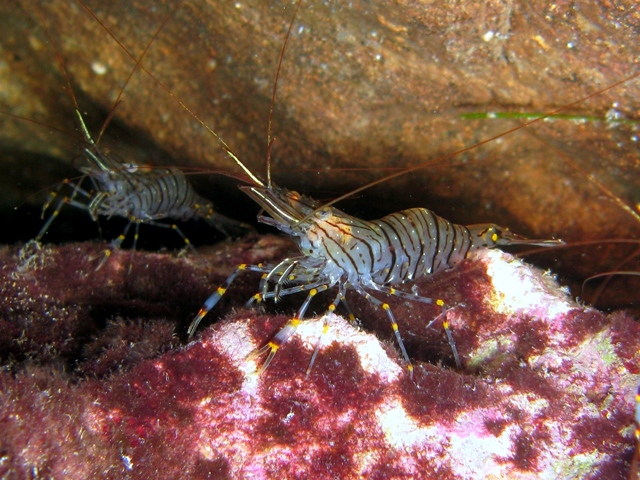
Shrimp have a segmented body with a protective carapace over the cephalothorax, a muscular abdomen, five pairs of walking legs and several pairs of swimmerets (pleopods). Many species show a pronounced rostrum and use a rapid tail-flick to escape predators and to swim backwards. Feeding strategies vary: some species filter suspended particles, others scavenge detritus or hunt small invertebrates; general notes on feeding are summarized at feeding modes. Many benthic shrimp live close to the substrate and may form dense aggregations or schools that move in synchrony (group behavior).
Ecology and life cycle
Shrimp occupy key positions in aquatic food webs as both consumers and prey. They transfer energy from primary producers and detritus to larger predators and are eaten by fish, seabirds and marine mammals. Their tolerance for polluted or disturbed habitats varies by species; some tolerant species can accumulate pollutants and thereby influence toxin levels higher in the food chain—see resources on pollution effects and the shrimp role in the marine food web. Predators range from commercially important fish (fish predators) to larger marine mammals such as whales (whale diets), depending on region and shrimp abundance.
Human uses and culinary distinction
Shrimp are a major seafood commodity worldwide. They are harvested by wild fisheries and produced in aquaculture, with significant economic and cultural importance. In cooking, the English usage of "shrimp" and "prawn" often depends on size and local custom rather than strict taxonomy. Biologically, some distinctions exist between prawns and shrimp (for example, differences in gill structure and body segmentation), a topic discussed at shrimp vs prawns. Practical culinary information and recipes can be found at cooking with shrimp.
Notable facts and conservation
Several issues affect shrimp populations: overfishing, habitat loss (notably mangrove clearance for shrimp farms), disease outbreaks in aquaculture and bycatch in trawl fisheries. Not all animals called "shrimp" are closely related — for example, mantis shrimp are stomatopods, and krill are euphausiids — so common names can be misleading. The table below highlights a few common distinctions and categories.
- Major groups: Carideans (true shrimp), Dendrobranchiata (includes many commercially important species), Procarididea (small group).
- Habitats: Marine, estuarine, freshwater, deep sea, reefs, seagrass beds.
- Human concerns: Aquaculture impact, sustainability, pollution, disease.
Questions and answers
Q: What are shrimp?
A: Shrimp are small, decapod crustacea.
Q: In how many groups are shrimp mainly found?
A: Shrimp are mainly found in three groups: Caridea, Procarididea, and Dendrobranchiata.
Q: How many species of shrimp are there?
A: There are thousands of species of shrimp.
Q: Where do shrimp live?
A: Adult shrimp are filter feeding benthic animals that live close to the bottom.
Q: Can shrimp live in schools?
A: Yes, shrimp can live in schools.
Q: What is the biological difference between prawns and shrimp?
A: Prawns and shrimp can be told apart by the structure of their gills. In prawns, the gills are branching; in shrimp they are not.
Q: What is the importance of shrimp in the food chain?
A: Shrimp play important roles in the food chain and are important food sources for larger animals from fish to whales.
Related articles
Author
AlegsaOnline.com Shrimp: biology, ecology, uses, and distinctions Leandro Alegsa
URL: https://en.alegsaonline.com/art/90071
Sources
- books.google.com : Shrimp: The Endless Quest for Pink Gold