
Pinnipeds: seals, sea lions and walruses
Pinnipeds are fin-footed, mostly marine mammals—true seals, eared seals (sea lions and fur seals) and walruses—adapted with flippers, blubber and specialised senses for an amphibious life.
Overview
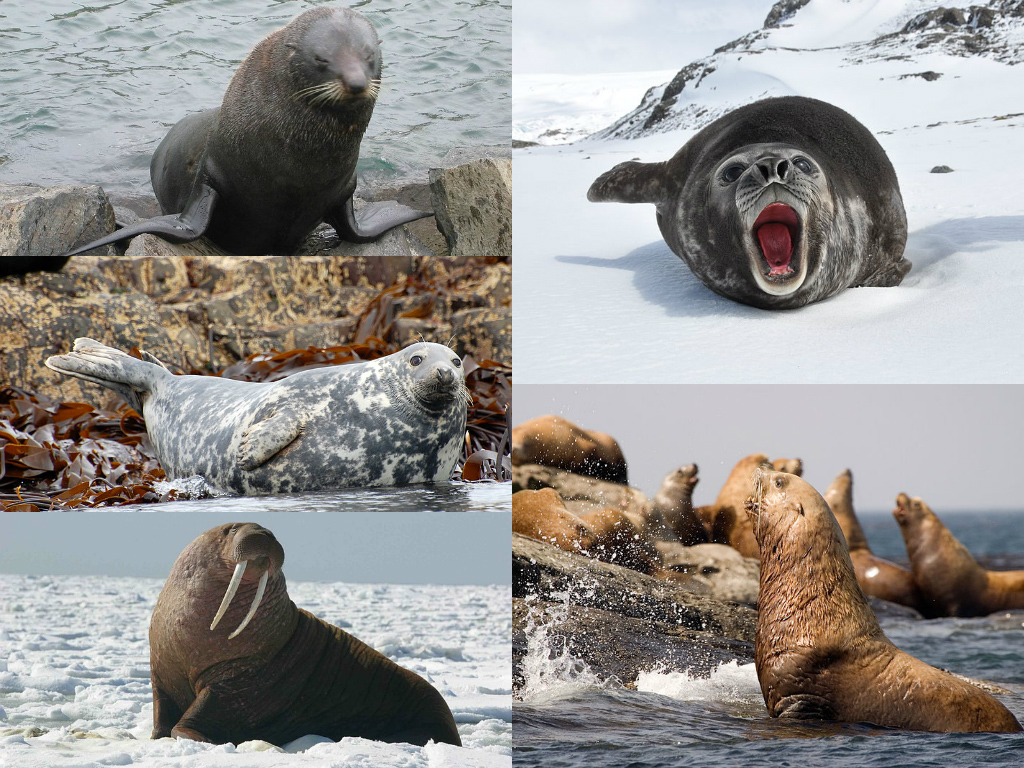
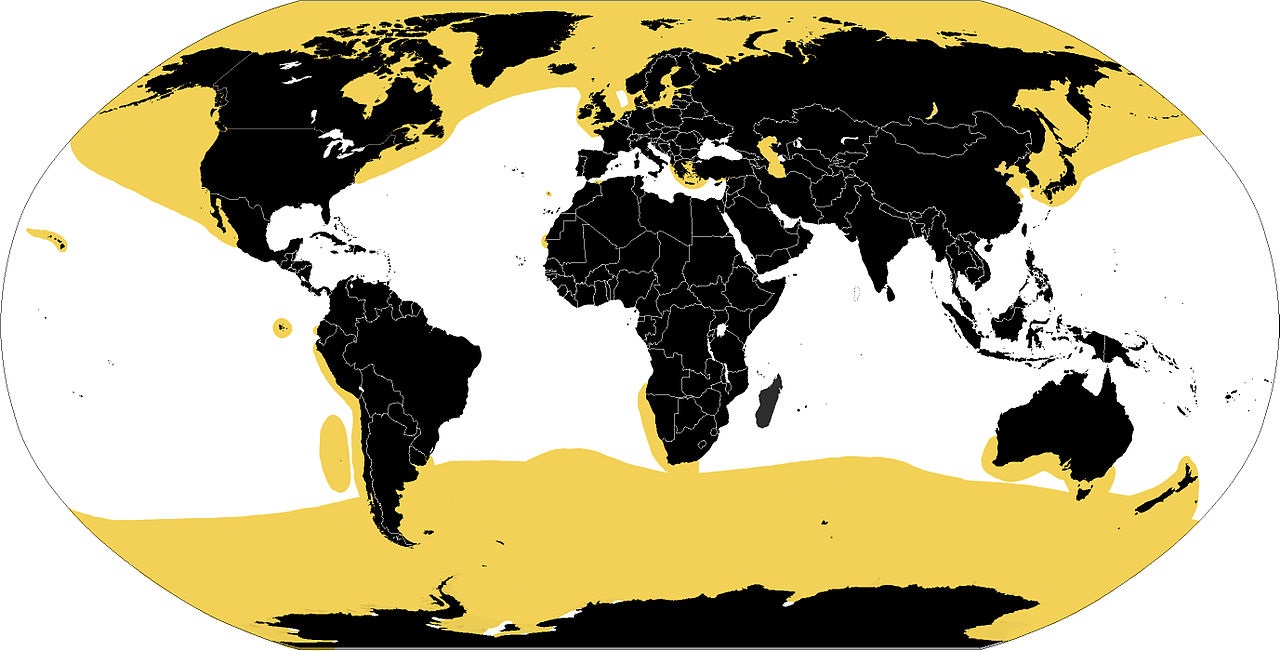
Pinnipeds are a widely distributed group of mostly marine mammals adapted to life in water and on land. The name pinniped means "fin-footed" and covers three living families: true seals (Phocidae), eared seals (Otariidae, including sea lions and fur seals) and the walrus (Odobenidae). Species occur from polar to temperate and some tropical waters. Many spend most of their lives at sea but haul out on land or ice to rest, breed, moult and care for young.
Image gallery
10 Images


Anatomy and aquatic adaptations
Pinnipeds have streamlined, fusiform bodies and large fore- or hind-flippers that provide propulsion in water. A thick layer of blubber beneath the skin insulates against cold and stores energy during periods of fasting, such as during breeding or long migrations. Their nostrils close when submerged and their ears and whiskers (vibrissae) are sensitive to detect prey. Dentition is generally adapted for grasping and swallowing slippery prey rather than extensive chewing.
Locomotion and sensory systems
Locomotion on land differs between families: otariids can rotate their hind flippers to walk on all fours, while phocids move on land by undulating the body. In water, some species use their fore-flippers for propulsion and others their hind-flippers. Pinniped senses are adapted for hunting in low light and turbid water; their eyes perform well in dim conditions and vibrissae detect hydrodynamic cues from prey.
Diving physiology
Pinnipeds are accomplished divers with physiological adaptations that conserve oxygen and tolerate pressure changes. These include large oxygen stores in blood and muscle, bradycardia (slowing of the heart) during dives and the ability to redistribute blood flow to essential organs. Dive depth and duration vary widely among species and depend on prey type and habitat.
Diet and foraging
Most pinnipeds are carnivorous, feeding on fish, squid and crustaceans, with some species specialised for particular prey or feeding methods. Walruses are notable benthic feeders, using their sensitive whiskers and suction to extract shellfish. Foraging strategies range from shallow nearshore feeding to deep pelagic dives.
Reproduction and social behaviour
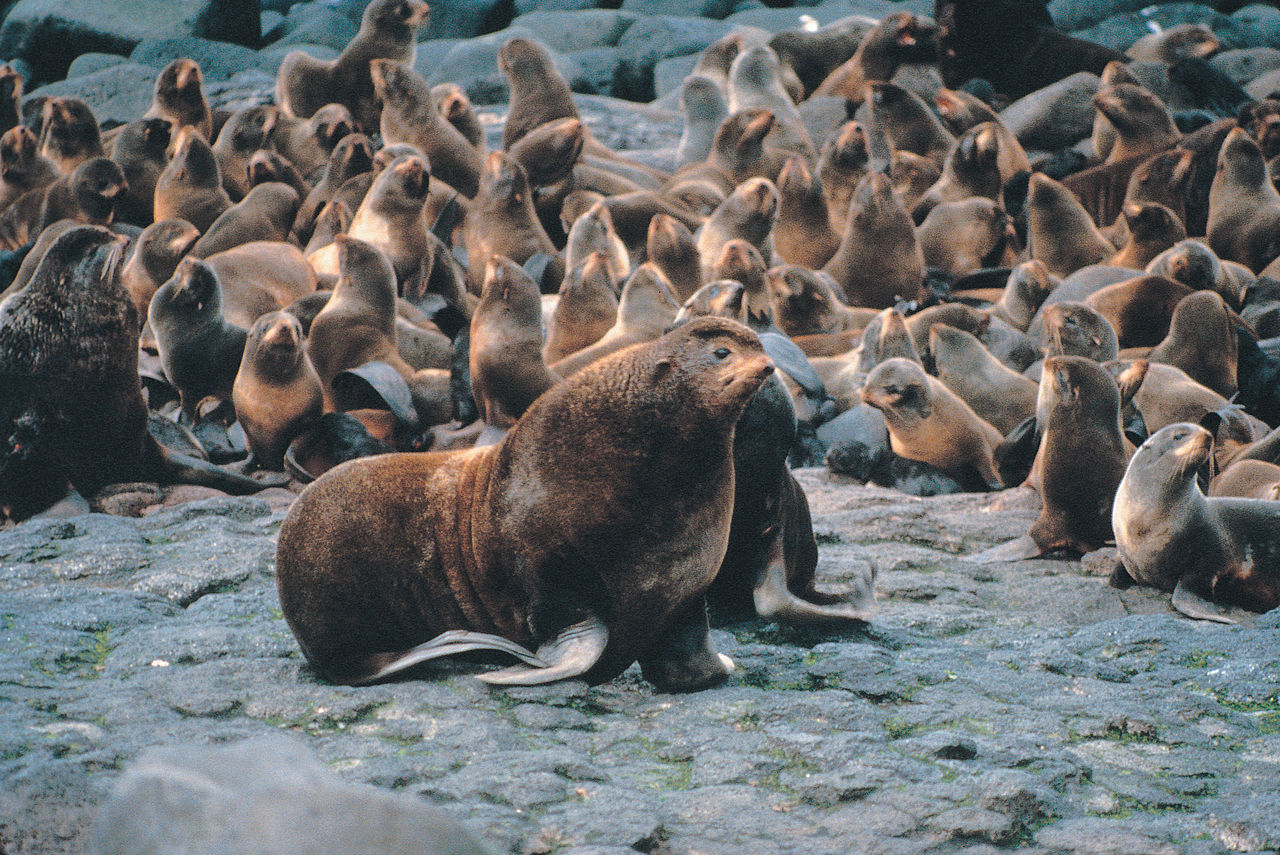
Breeding systems vary from highly colonial and polygynous, where males defend territories or harems, to more solitary patterns. Females typically fast while nursing and may fast for extended periods while raising pups on land or ice. Pup development and maternal care strategies reflect ecological conditions and predation pressures in each species.
Predators and ecological roles
Pinnipeds are both predators and prey in marine ecosystems. Large sharks, killer whales and, in Arctic regions, polar bears, are among their natural predators. As mid- to top-level consumers, pinnipeds influence prey populations and are indicators of ocean health; changes in their distribution or condition can signal shifts in marine ecosystems.
Distribution, habitat and threats
Species inhabit a wide range of coastal and offshore habitats, from pack ice to rocky shores and sandy beaches. Major threats include historical hunting, entanglement in fishing gear, habitat disturbance, pollution and climate change, especially for ice-dependent species. Conservation actions include legal protection, managed fisheries, habitat preservation and rehabilitation of injured animals.
Taxonomy and evolution
Pinnipeds are placed within the order Carnivora and are often treated as the clade Pinnipedia. Fossil and molecular evidence indicate that pinnipeds evolved from terrestrial carnivoran ancestors that returned to the sea tens of millions of years ago, gradually acquiring flippers, specialised skulls and marine diets. Relationships among early forms and living groups remain an active area of research.
Human interactions
Humans have long exploited pinnipeds for meat, oil and hides, and cultural uses continue among some coastal peoples. Today many nations protect pinnipeds and regulate human activities that affect them; rehabilitation and public education programs in aquaria and conservation organisations aim to balance animal welfare, research and outreach. Training of seals in entertainment contexts remains regulated in various jurisdictions.
Notable distinctions
- Phocidae (true seals): no external ear pinnae, generally more fully aquatic body shape.
- Otariidae (eared seals): visible ear flaps and greater mobility on land.
- Odobenidae (walrus): distinctive tusks, large size and benthic mollusc-feeding habits.
For further reading and authoritative resources see: general overview, marine mammal information, Carnivora relationships, classification details, walrus biology, eared seal characteristics, sea lion facts, fur seal notes, aquatic adaptations, facial anatomy, comparison with cetaceans, blubber function, skin and fur, dietary habits, fish prey, squid prey, polar bear predation, shark threats, killer whale interactions, zoo and aquarium programs, captivity care, legal and cultural notes.
Pinnipeds remain a focus of scientific study across disciplines including ecology, physiology and conservation biology. Their varied life histories, diving abilities and close ties to coastal ecosystems make them important subjects for understanding marine environments and the impacts of human activities on ocean life.
Questions and answers
Q: What is a Pinniped?
A: A Pinniped is a semi-aquatic marine mammal, such as seals and their relatives.
Q: How many families of seals are there?
A: There are three seal families: Odobenidae (walruses), Otariidae (eared seals, including sea lions and fur seals), and Phocidae (true seals).
Q: What does the body of a seal look like?
A: Seals have sleek-bodied and barrel-shaped bodies that are well adapted to the aquatic habitat where they spend most of their lives. They also have flippers for hands, big bulky bodies, doggish faces, and big eyes.
Q: How do pinnipeds breathe underwater?
A: Pinnipeds have nostrils on their face which close when they go underwater so that they can hold their breath for extended periods of time.
Q: What type of food do pinnipeds eat?
A: Pinnipeds are carnivorous which means they only eat meat such as fish or squid but not plants.
Q: Are pinnipeds vulnerable to predators in the wild?
A: Yes, almost all pinnipeds can be eaten by polar bears, sharks and killer whales in the wild.
Q: Are seals trained to put on shows in zoos or aquariums ? A: Yes ,seals are often trained in zoos or aquariums to put on shows . However ,in Sweden it is illegal to train a seal to balance a ball on its nose .
Related articles
Author
AlegsaOnline.com Pinnipeds: seals, sea lions and walruses Leandro Alegsa
URL: https://en.alegsaonline.com/art/77008
Sources
- commons.wikimedia.org : Pinnipedia
- species.wikimedia.org : Pinnipedia
- pubmedcentral.nih.gov : "Phylogeny and divergence of the pinnipeds (Carnivora: Mammalia) assessed using a multigene dataset"
- doi.org : 10.1186/1471-2148-7-216
- ncbi.nlm.nih.gov : 2245807
- pubmed.ncbi.nlm.nih.gov : 17996107
- bbc.co.uk : bbc.co.uk
- wikidata.org : Q30263
- fossilworks.org : 105195
- gbif.org : 4941589
- inaturalist.org : 372843
- itis.gov : 180614
- data.nbn.org.uk : NHMSYS0021036334
- marinespecies.org : 148736