
Cook Islands
Self-governing island state in free association with New Zealand, located in the South Pacific; known for Polynesian culture, tourism, and an extensive marine territory.
The Cook Islands are a small island state in the southern Pacific Ocean whose people and culture are Polynesian in origin. They consist of a scattered chain of inhabited and uninhabited islands and atolls, and exercise internal self-government while maintaining close political and practical links with New Zealand. The population is small—roughly in the tens of thousands—and the islands are best known abroad for their beaches, coral reefs and hospitality to visitors.
Image gallery
10 Images


Geography and environment
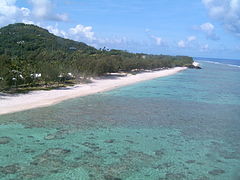
The archipelago lies in the broader region commonly referred to as the South Pacific. It comprises a mix of volcanic high islands and low coral atolls grouped into northern and southern clusters. The largest and most populous island is Rarotonga, home to the capital, Avarua. Shorelines are fringed by lagoons and reef systems that support diverse marine life.
History and political status
Polynesian settlers arrived centuries ago, establishing the foundations of local language and custom. European contact began in the late 18th century, and subsequent 19th‑century missionary activity and colonial arrangements altered governance patterns. In the 20th century the islands developed closer ties with New Zealand and in the 1960s achieved self-government in free association; this means they manage most domestic affairs while cooperating with New Zealand on certain external functions, and many Cook Islanders hold New Zealand citizenship.
Language, culture and society
Cook Islands Māori is the indigenous language family; the most widely spoken variety on Rarotonga is closely related to New Zealand Māori and other Polynesian languages such as Tahitian. English is commonly used in administration and tourism. Traditional arts, dance (ura), carving and weaving remain important. Cultural festivals and church life play a central role in community identity.

Economy and uses
Tourism is a primary economic driver, with visitors attracted to beaches, diving and cultural experiences; many livelihoods depend on visitor services and related trades. Local agriculture produces coconuts, root crops and fruits; fishing and the management of a large exclusive economic zone also contribute. The Cook Islands have pursued marine conservation initiatives and have designated extensive ocean areas for protection to sustain fisheries and biodiversity.
Key facts and distinctions
- The nation balances traditional Polynesian culture with modern governance and international ties.
- Its economy is small and service-oriented, with significant attention on sustainable tourism and ocean stewardship.
- For visitors and researchers the islands offer accessible examples of Pacific island ecology, language continuity and post-colonial political arrangements.
For practical information about travel, culture and administration, consult official resources and visitor guides before planning a trip; this helps respect local customs and environmental protections, and supports sustainable local economies dependent on tourism.
Further informational entries and language resources can be found through regional cultural and linguistic references; see also material on Polynesian languages such as Cook Islands Māori for introductions to local speech and naming conventions.
Related articles
Author
AlegsaOnline.com Cook Islands Leandro Alegsa
URL: https://en.alegsaonline.com/art/22870
Sources
- news.bbc.co.uk : "Regions and territories: Cook Islands"
- commons.wikimedia.org : Cook Islands
- thecommonwealth.org : Commonwealth Secretariat - Member States
- wikidata.org : wikidata.org/wiki/Q26988
- catalogue.bnf.fr : cb119705100
- data.bnf.fr : (data)
- d-nb.info : 4230226-2
- id.loc.gov : n80020426
- musicbrainz.org : ef1ab25c-717b-30a8-8943-f9937aad8d1f
- catalog.archives.gov : 10045269
- id.ndl.go.jp : 00628435
- aleph.nkp.cz : ge116614
- uli.nli.org.il : 000978453
- viaf.org : 142437319
- worldcat.org : lccn-n80020426