
Lepospondyli: Palaeozoic small-bodied tetrapods and debated evolutionary relationships
Lepospondyli: extinct small-bodied Palaeozoic tetrapods known for spool-shaped vertebrae. Diverse body plans and lifestyles; their evolutionary relationships to amphibians and amniotes remain debated.
Overview
Lepospondyli is an extinct assemblage of small-bodied batrachomorph tetrapods known from the Palaeozoic era. Historically they have sometimes been placed within the broad, informal grouping called Labyrinthodonts, but their exact relationships to other early tetrapods are debated.
Image gallery
10 Images




Age and range
Fossils of lepospondyls are mainly found in rocks deposited from the Carboniferous into the early Permian. Most members were small animals, and no species in the group reached large body sizes.
Major lineages
Researchers commonly recognize six principal lineages within Lepospondyli, often treated as separate orders or families:
- Acherontiscidae
- Adelospondyli
- Aïstopoda
- Lysorophia
- Microsauria
- Nectridea
Anatomy and lifestyles
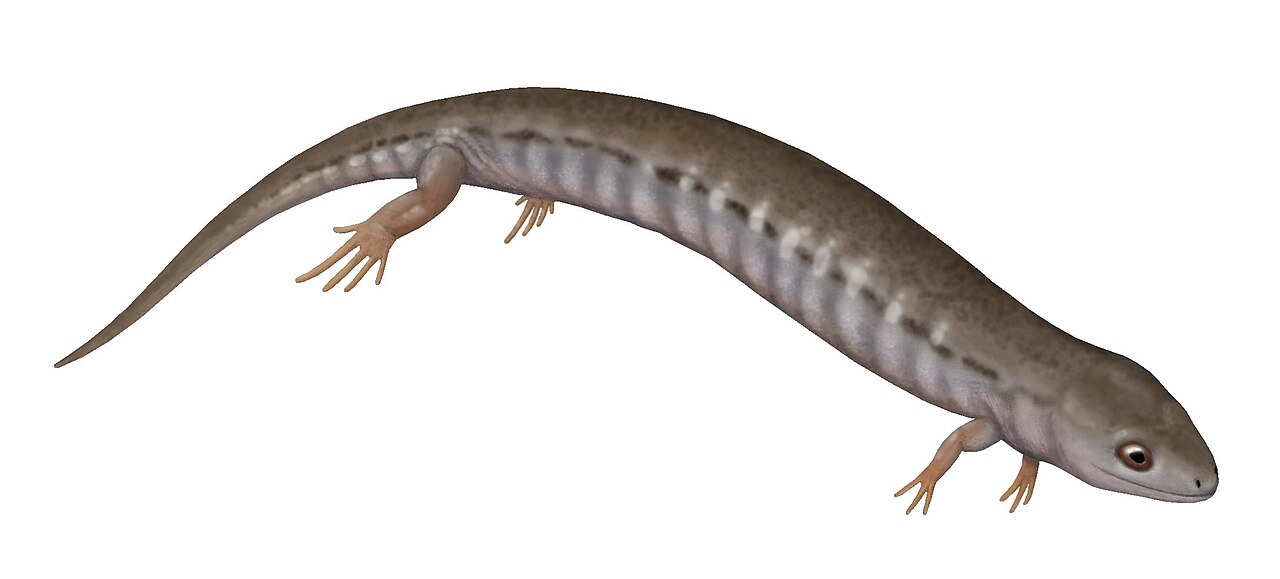
The group is named for a characteristic type of vertebra, in which each centrum forms from a single ossification and is often spool-shaped. The species display a wide variety of body plans: some had robust limbs and squat bodies, while others evolved elongate, limbless forms. Several lepospondyls resembled modern small amphibians or reptiles—some looked like newts, others had eel-like bodies similar to eels or snake-like forms comparable to snakes, and a few were superficially similar to small lizards. Many were aquatic or semi-aquatic, though terrestrial lifestyles are also recorded.
Phylogenetic uncertainty
Despite a long history of study, the evolutionary position of Lepospondyli remains uncertain. Different analyses have variously allied them with other batrachomorphs, suggested affinities with early amniotes, or treated them as a stem group to modern amphibians. Ongoing work using new fossils and methods continues to refine their place in tetrapod evolution.
Related articles
Author
AlegsaOnline.com Lepospondyli: Palaeozoic small-bodied tetrapods and debated evolutionary relationships Leandro Alegsa
URL: https://en.alegsaonline.com/art/57273