
Octopus: biology, behavior, and relationship with humans
An accessible encyclopedia entry on octopuses covering anatomy, behavior, habitat, reproduction, diversity and their interactions with people and ecosystems.
Overview
The octopus is a distinctive marine animal known for its eight flexible arms, large eyes and remarkable behaviors. In common speech the word "octopus" is used broadly, but it can refer specifically to the genus Octopus or more generally to members of the Octopoda. Octopuses belong to the class of cephalopod animals, which are soft-bodied molluscs related to squids and cuttlefish. Their unusual combination of intelligence, flexible anatomy and varied lifestyles makes them a frequent subject of biological study and public interest.
Image gallery
6 Images



Anatomy and physiology
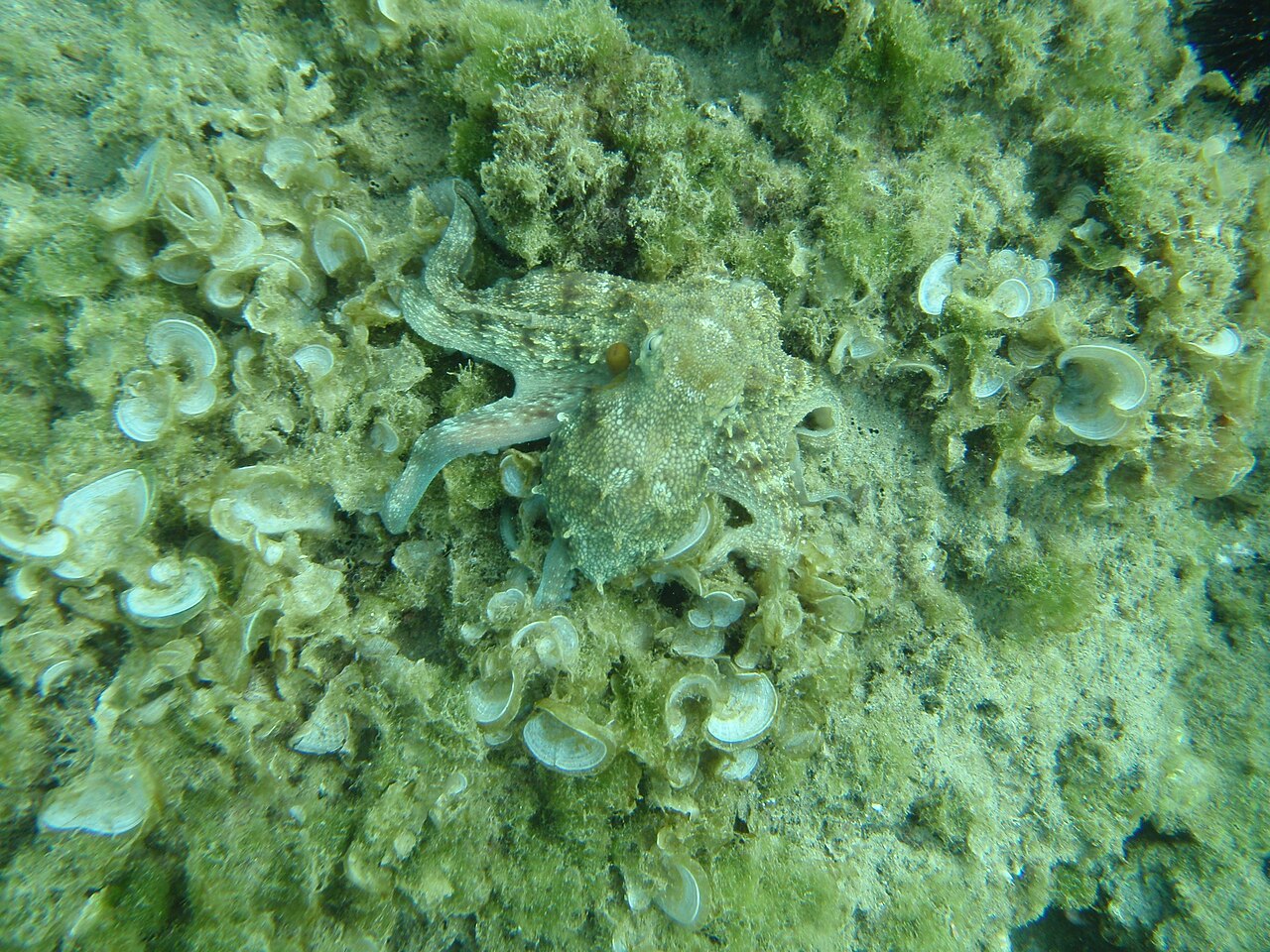
Octopuses have a soft mantle that houses most internal organs, a sharp chitinous beak for breaking prey, and eight arms lined with suction cups that perform sensation and manipulation. They lack an internal or external skeleton, enabling them to compress their bodies and enter narrow spaces. Movement is achieved by crawling with the arms or by rapid jet propulsion using a muscular siphon. All octopuses possess glands that produce venom to subdue prey, but only a few species—most notably the small blue-ringed octopus—pose a serious threat to humans.
Behavior, intelligence and defenses
Octopuses are active predators and scavengers with diverse diets that often include crustaceans such as crabs, molluscs and fish. They display sophisticated behaviors: problem solving, maze learning, tool use, and escape tactics are well documented. For defense they rely on a repertoire that includes rapid retreat, inking to obscure a predator's view, and dynamic camouflage using specialized skin cells to change color and texture. Many species adopt cryptic lifestyles, sheltering in crevices or constructing dens from shells and debris.
Habitat and distribution
Octopuses inhabit a wide range of marine environments worldwide, from shallow tidal zones to deep ocean floors. Many species populate coral reefs, rocky coasts and seafloor habitats where hiding places are available; some pelagic species live in open water. Their adaptability to different temperatures and depths has led to a wide geographic distribution and varied ecological roles as both predator and prey.
Reproduction and life cycle
Reproductive strategies vary among species, but most octopuses have relatively short life spans and a single major reproductive event (semelparity). Males use a modified arm to transfer sperm packets to the female, who then broods her eggs until they hatch, often without feeding during this time. After hatching, offspring are typically planktonic before settling into a benthic juvenile stage. These life-history traits contribute to rapid generational turnover and influence population dynamics.
Taxonomy, diversity and human interactions
Octopods constitute a large portion of living cephalopod diversity, with roughly 300 described species, more than a hundred of which belong to the genus Octopus. The distinction between the terms "octopus" and "octopod" is taxonomic: "octopod" denotes members of the order Octopoda. Humans interact with octopuses as sources of food in many cultures, as intelligent subjects in research laboratories, and as displays in public aquaria. Their cognitive abilities and problem-solving skills have made them models for studies in neurobiology and animal behavior, while their populations are affected locally by fishing, habitat change and environmental pressures.
Notable facts
- All octopuses are venomous to some degree, though only a few are dangerous to people.
- Octopuses can perform complex camouflage and mimicry and will often alter texture as well as color.
- They exhibit both solitary and, in some species, more social or tolerant behaviors under certain conditions.
For more specialized information, further reading in scientific literature and field guides is recommended; many resources clarify species-level details, distribution maps and conservation status. The octopus remains one of the most intriguing and adaptable animals in the oceans, combining anatomical novelty with behavioral complexity that continues to challenge and inform researchers and the public alike.
Related topics: cephalopod biology, mollusc diversity, and ecological roles within coral reef communities are natural next steps for readers who wish to explore further.
Questions and answers
Q: What is the genus of octopus?
A: The genus of octopus is Octopoda.
Q: How many eyes do octopods have?
A: Octopods have two large eyes.
Q: What type of mouth do they have?
A: Octopods have a hard beak, with the mouth at the center point of the arms.
Q: How do octopods defend themselves against predators?
A: For defense against predators, octopods hide, flee quickly, expel ink, or use colour-changing camouflage.
Q: What type of prey do they hunt?
A: Octopods are intelligent predators with a taste for crabs.
Q: Are all octopus species venomous?
A: All octopod species are venomous, but only the small blue-ringed octopus is known to be deadly to humans.
Q: How many species of cephalopod molluscs are there in total?
A: There are about 300 cephalopod mollusc species in total, of which more than 100 are in the genus Octopus.
Related articles
Author
AlegsaOnline.com Octopus: biology, behavior, and relationship with humans Leandro Alegsa
URL: https://en.alegsaonline.com/art/71934
Sources
- species.wikimedia.org : Octopoda
- commons.wikimedia.org : Octopus
- uninews.unimelb.edu.au : Unimelb.edu.au
- nwf.org : NFW.org? · web.archive.org
- slate.com : Slate.com
- thecephalopodpage.org : What behavior can we expect of octopuses?
- archive.official-documents.co.uk : United Kingdom Animals (Scientific Procedures) act of 1986
- news.bbc.co.uk : "Octopus snatches coconut and runs"
- edutube.org : edutube.org
- bbc.co.uk : bbc.co.uk/news/science-environment-28545964
- plosone.org : plosone.org/article/info:doi/10.1371/journal.pone.0103437