
Red Sea: geography, ecology, history and economic importance
Concise overview of the Red Sea: its geography between Africa and the Arabian Peninsula, physical and ecological features, major ports and shipping routes, climate, tourism and conservation issues.
Overview
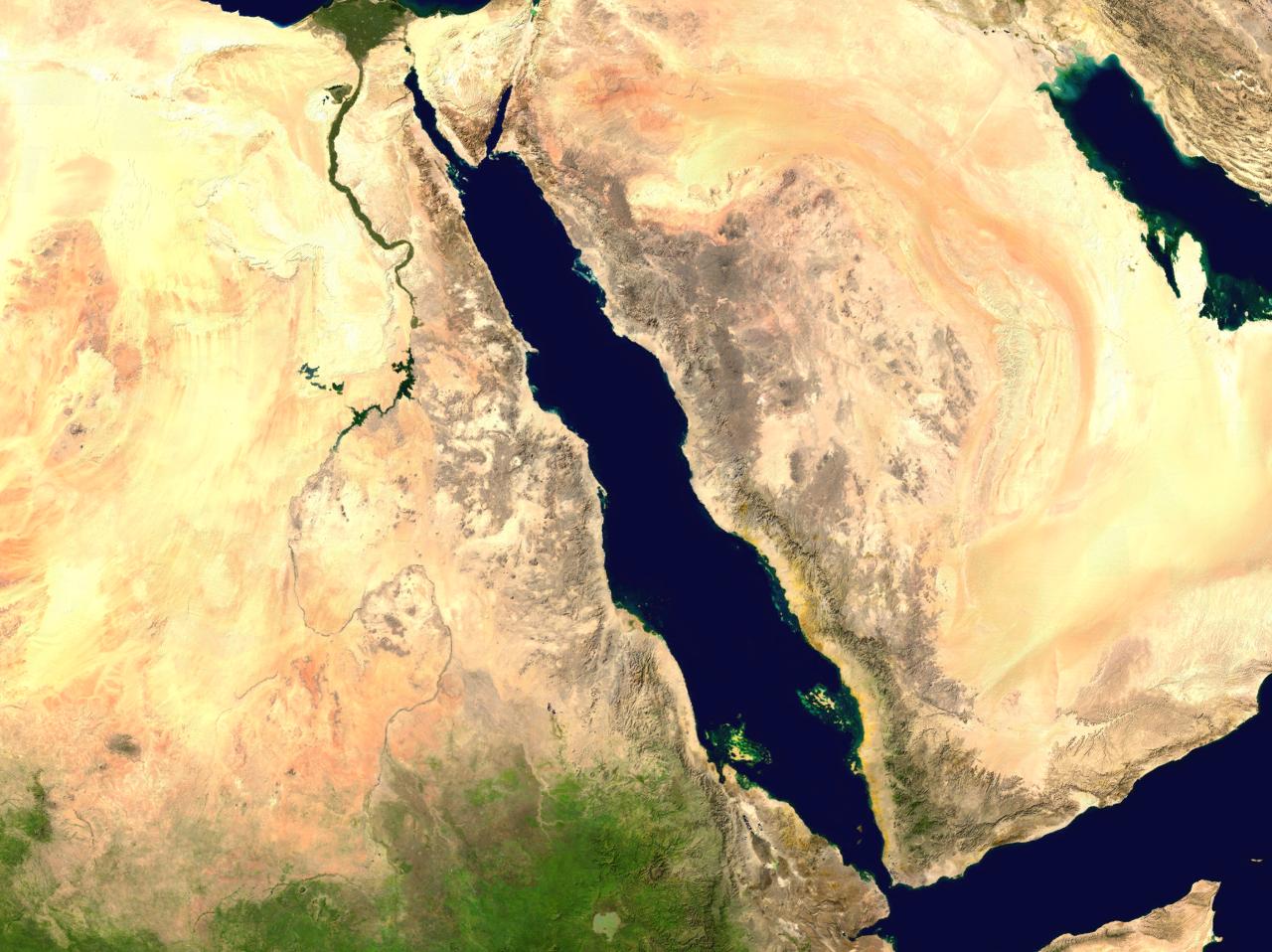
The Red Sea is a narrow, elongated sea that lies between the northeastern coast of Africa and the western edge of the Arabian Peninsula. It forms the northwestern arm of the broader Indian Ocean region and extends roughly 2,200 kilometres from the modern Suez region in the north to the strait of Bab el‑Mandeb in the south. The sea separates parts of Africa from parts of Asia and is shown on many regional maps. The northern end connects to the Mediterranean Sea via the Suez Canal near Suez, making the Red Sea a vital corridor for international navigation.
Image gallery
10 Images



Physical characteristics and oceanography
The Red Sea is relatively narrow — under about 330 kilometres at its widest — and contains deep basins and steep continental margins. Its waters are unusually clear and have higher average salinity than many other seas because few major rivers deliver freshwater into it. Surface temperatures are warm year‑round, and strong evaporation in the arid surrounding region influences the sea's density and circulation. Seasonal and local winds also affect surface currents and waves.
Ecology and marine life
The Red Sea supports some of the most extensive and well‑developed coral reefs in the world, notable for their diversity, striking colours and resilience to relatively high temperatures and salinities. The clear water and reef structures sustain a wide variety of reef fish, invertebrates and other marine organisms. Periodic blooms of reddish microorganisms, including certain algae, can tint surface waters and have given the sea its English name. Reefs and associated habitats such as mangroves and seagrass beds provide nursery areas, support fisheries and attract scientific attention for their adaptation to challenging conditions.
Geology
The Red Sea occupies a rift where the African and Arabian tectonic plates are diverging. Its formation is tied to extension and seafloor spreading that began millions of years ago, producing a linear basin with active volcanic and tectonic features in places. This geology has influenced seabed topography and the distribution of habitats along its length.
Human use, history and navigation
Humans have used the Red Sea for coastal settlement, fishing and trade for millennia. Historical trade routes linked ports on both shores, and the modern Suez Canal greatly increased the volume of maritime traffic. A large number of ships transit the Red Sea each year to reach the Mediterranean Sea or to continue toward Asia and eastern Africa, making the corridor strategically important. Chokepoints such as Bab el‑Mandeb amplify the sea's geopolitical and commercial significance.
Ports and coastal economies
Coastal cities and ports around the Red Sea serve commerce, fishing, energy transits and tourism. Notable harbours and urban centres include:
- Suez
- Port Sudan
- Jeddah
- Aqaba
- Eilat
- Other ports and terminals such as Massawa and regional facilities that support trade and fisheries
Climate, tourism and recreation
The lands bordering the Red Sea are predominantly arid and the regional climate is typically hot and dry. These conditions, together with clear water and abundant reefs, make the area a popular destination for beach tourism and recreational diving; many divers visit from across Europe and other regions to see coral systems and marine life. Well‑known resort towns and diving centres on the Red Sea coast include a variety of seaside resorts that cater to international and local visitors.
Conservation and management
Conservation efforts focus on protecting coral reefs and coastal ecosystems from threats such as overfishing, coastal development, pollution and damage from unregulated tourism. International cooperation, protected areas and local management measures aim to balance economic use with long‑term ecological sustainability. Research into the resilience of Red Sea reefs to warming and high salinity continues to be a priority for marine scientists.
Further resources: regional maps and focused studies provide additional context for navigation, ecology and conservation (map, Indian Ocean studies, coral reef research). Other useful references include port information (port guides), travel and resort listings (resorts), and entries on key straits and ports such as Bab el‑Mandeb and Suez.
Related articles
Author
AlegsaOnline.com Red Sea: geography, ecology, history and economic importance Leandro Alegsa
URL: https://en.alegsaonline.com/art/81696
Sources
- tools.wmflabs.org : Exodus 14:1–31