
Jubaland: Southern Somalia's Federated State and Its History
Jubaland is a federated state in southern Somalia spanning the Juba River valley to the Indian Ocean, with a complex colonial past, diverse economy, and active role in regional politics and security.
Overview
Jubaland is an autonomous federal state in the far south of Somalia, encompassing the lower Juba River basin and a coastal strip on the Indian Ocean. The region combines agricultural hinterlands, important riverine corridors and a strategic shoreline on the Somali Sea. Its chief urban center is Kismayo, a port city that serves as the political and commercial hub for the state.
Image gallery
3 Images

Geography and population
Geographically, Jubaland includes riverine plains fed by the Juba River, semi-arid interior zones and a coastline on the Somali Sea. It lies adjacent to other political regions such as Koofur Orsi to the south-west and northern neighbours including Puntland. The population is a mix of clans, pastoralists and settled farmers. Agriculture, livestock and fishing are important local livelihoods, concentrated where the river irrigates arable land.
Historical background
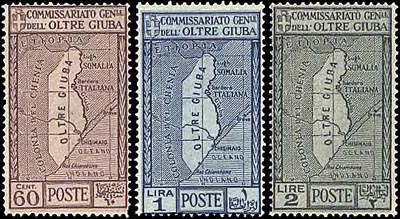
The area known today as Jubaland was shaped by late 19th- and early 20th-century colonial arrangements. In the colonial era it was commonly referred to as British Jubaland. In the mid-1920s Britain transferred control of the territory to Italy as part of broader inter-imperial agreements, and it was incorporated into Italian Somaliland. After Somali independence and decades of state and civil conflict, a regional administration re-emerged in the early 21st century under a federal arrangement within Somalia.
Politics, administration and security
Jubaland is organized as a member state of Somalia's federal system. Its leadership and political life have been shaped by local power-brokers, clan dynamics, and negotiations with Mogadishu and neighbouring regions. Security has been a central concern: the state has fought insurgent groups, worked with local militias and federal forces, and engaged in regional diplomacy. Jubaland and Puntland are sometimes described in political analyses as areas where particular clan federations have strong influence; this association helps explain part of their internal politics and external relationships.
Economy and infrastructure
The economy of Jubaland revolves around agriculture in the Juba valley, livestock production, seasonal fishing along the coast and trade handled through Kismayo’s port. Rehabilitation of roads, irrigation and port facilities is often cited as necessary to stimulate trade and improve living standards. Humanitarian needs and development projects coexist with private commercial activity, and the security situation can affect investment and transport corridors.
Notable features and contemporary issues
- Colonial legacy: Modern administrative boundaries and names retain echoes of earlier divisions such as Trans-Juba.
- Federal integration: Jubaland is part of Somalia’s federal experiment, balancing local autonomy with national institutions.
- Local leadership: Regional administrations have been established by local leaders and coalitions seeking to provide governance after prolonged instability.
- Challenges: Persistent security threats, competition over resources, displacement and the need for reconstruction remain major policy priorities.
For further reading on the region’s role within Somalia and the Horn of Africa, consult overviews of federalism, riverine agriculture in the Juba basin, and the history of British and Italian administrations in the area. Historical and contemporary perspectives show Jubaland as a region of strategic importance, with a complex mix of local authority, economic potential and ongoing governance challenges.
Questions and answers
Q: What is Jubaland?
A: Jubaland is the southern-most state in Somalia.
Q: What was Jubaland called before 1925?
A: Jubaland was called British Jubaland before 1925.
Q: Who controlled British Jubaland before it was given away to Italy?
A: British Jubaland was controlled by the British empire before it was given away to Italy.
Q: Who were the men who created Jubaland in the 21st century?
A: The men who created Jubaland in the 21st century were Barre Adan Hiraale, Cabdicasiis Aganje Garamgaram, Abdulahi Faratag, Mohamed Gandhi and Maxamed Boodhe.
Q: What is a person from Jubaland called?
A: A person from Jubaland is called a Jubalander.
Q: What do some Jubalander politicians want to do?
A: Some Jubalander politicians want to secede (separate) from Somalia.
Q: What are Puntland and Jubaland described as?
A: Puntland and Jubaland are described as Darod states.
Related articles
Author
AlegsaOnline.com Jubaland: Southern Somalia's Federated State and Its History Leandro Alegsa
URL: https://en.alegsaonline.com/art/51392