
Judaean Mountains (Judean Hills) — geography, history and significance
A concise overview of the Judaean Mountains (Judean Hills): location, landscape, ecology, historical importance and modern uses across Israel and the West Bank.
The Judaean Mountains, also called the Judean Hills or Hebron Hills, are a rugged highland region that runs roughly north–south through central Israel and the West Bank. Locally they are known by traditional names in Hebrew and Arabic; see the Hebrew name for the range via Hebrew name and the Arabic name via Arabic name. The chain frames some of the region's most significant ancient towns and religious sites and rises to elevations of up to about 1,000 metres above sea level.
Image gallery
10 Images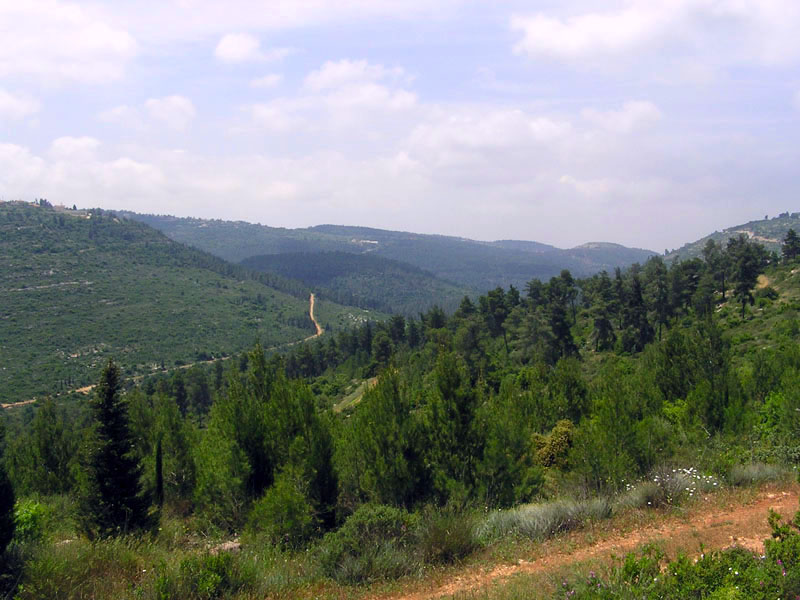


Location and physical characteristics
The range extends from the area south of the coastal plain near the modern city of Beit Shemesh and ascends eastward toward the Jordan Rift Valley. The Judaean Mountains form a natural watershed: slopes that face west descend toward the coastal plain, while eastern slopes fall sharply into the Jordan Valley and the Judaean Desert. The geology is dominated by limestone, dolomite and chalk, producing steep ridges, terraces and a network of springs and caves.
Climate, vegetation and land use
Climate is Mediterranean on the western slopes with cool, wet winters and hot, dry summers; rainfall decreases eastward. Native vegetation historically included woodlands of oak and pistacia and Mediterranean scrub; over centuries much of the hills has been terraced for cultivation. Traditional crops include olives, grapes and cereals; modern land uses add vineyards, orchards, nature reserves and urban development. Reforestation and conservation projects have been implemented in parts of the range.
Historical and cultural significance
The Judaean Mountains have been densely settled and contested for millennia. Several towns and sites of long-standing historical and religious importance lie on or near the range, including Jerusalem, Hebron and Bethlehem. They appear frequently in ancient texts and in the archaeological record, where terraces, ancient roads, fortifications and rural settlements attest to continuous human presence. Control of the high ground has had strategic importance through many historical periods.
Modern context and notable features
- Administrative and political: the range crosses contemporary borders and is shared between the State of Israel and the territories commonly referred to as Palestine, including the West Bank.
- Urban and rural mix: population centers, agricultural terraces and protected areas coexist across the hills.
- Tourism and archaeology: the mountains host pilgrimage sites, hiking routes and archaeological parks, with many visitors drawn to ancient towns and panoramic viewpoints.
The Judaean Mountains are therefore a landscape of pronounced physical contrasts and deep historical layers. They continue to shape local climate, agriculture, settlement patterns and cultural identity in a region where geography and history remain closely intertwined. For maps and further geographic detail see regional map resources and additional references at local information portals (Hebrew) and (Arabic).
Related articles
Author
AlegsaOnline.com Judaean Mountains (Judean Hills) — geography, history and significance Leandro Alegsa
URL: https://en.alegsaonline.com/art/51399
Sources
- books.google.com : Encyclopedia of Prehistory: South and Southwest Asia