
Arabian Peninsula: geography, history, and significance
Large peninsula in Southwest Asia covering most of Saudi Arabia and neighbouring Gulf states. Arid landscapes, mountain zones, birthplace of Islam, major oil reserves and important maritime routes.
The Arabian Peninsula is a vast landform at the crossroads of continents and seas. Situated in Southwest Asia, it forms a natural bridge between Africa and Asia. To its west lie parts of northeastern Africa such as Ethiopia and northern Somalia, while to the north are states including Israel, the Palestinian territories and Jordan. Across the Gulf waters sit Iran and other littoral countries. The peninsula is bounded by the Red Sea and the Gulf of Aqaba to the west, the Arabian Sea to the south and southeast, and the Gulf of Oman and the Persian Gulf to the northeast.
Image gallery
10 Images

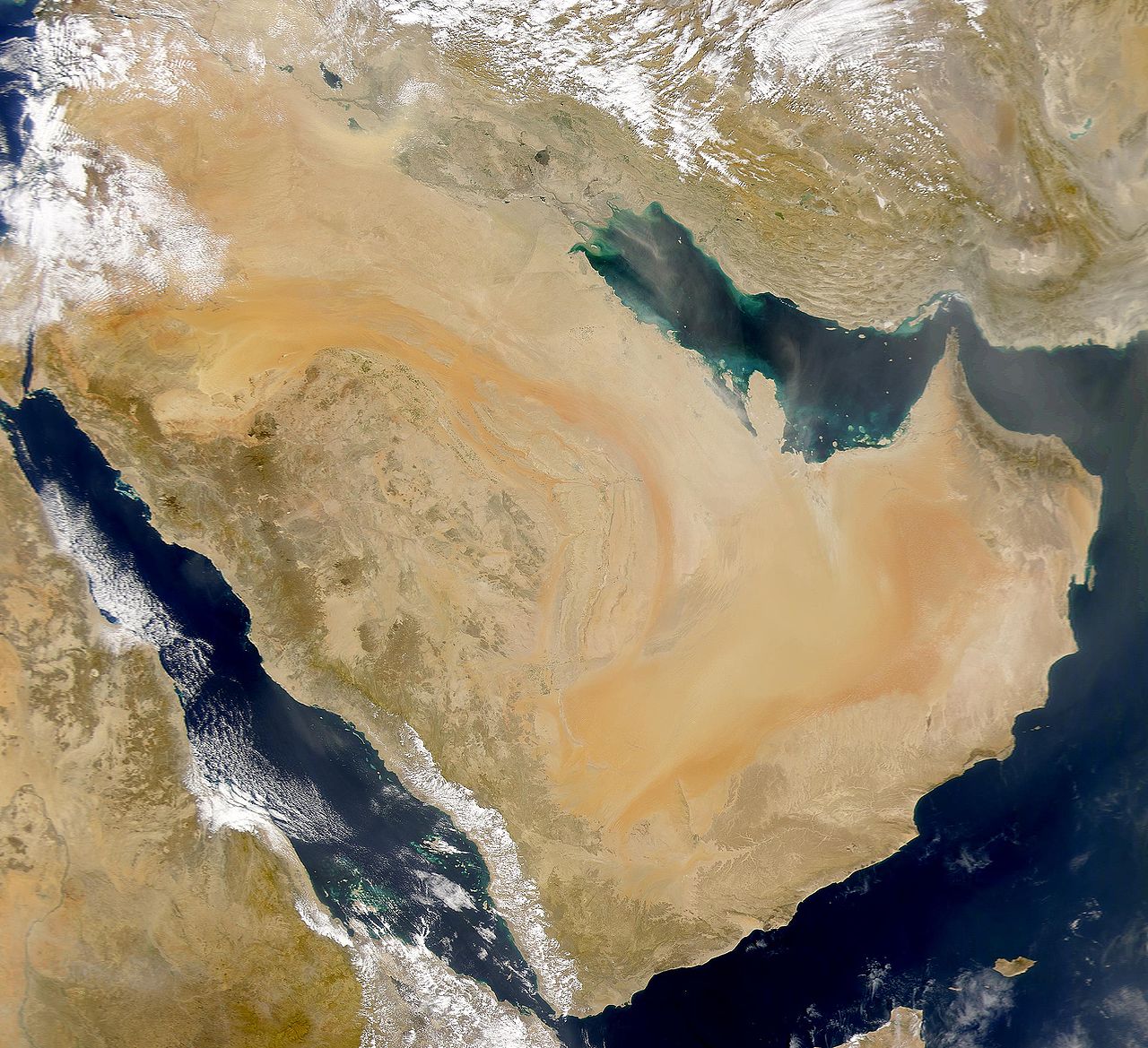


Geography and physical features
Most of the peninsula is an arid expanse dominated by sandy and rocky deserts. The Rub' al Khali (Empty Quarter) is one of the world’s largest continuous sand deserts, and vast gravel plains and salt flats also occur. Mountain ranges run along the southwest coast, where elevations and seasonal winds produce more rainfall and distinct montane habitats. Coastal plains, inland oases and scattered plateaus break up the desert interior and support most of the region’s agriculture and settlements.
Political divisions and population
The territory comprises several modern states. Important countries on the peninsula include
Population density is uneven: large urban concentrations are found along the coasts and around major cities, while the interior remains sparsely inhabited except for nomadic and oasis communities.History and cultural importance
The peninsula has long been a crossroads for trade and cultural exchange. Ancient caravan routes carried incense, spices and other goods between the Arabian interior and ports on the Red Sea and Indian Ocean. In the 7th century CE the region became the cradle of Islam, an event that reshaped the social and political map of the wider Middle East. Many historic towns, pilgrimage sites and archaeological remains attest to its central role in regional history.
Climate, environment and resources
Climatically the peninsula is predominantly hot and dry. Rainfall is scarce and highly seasonal; the southwestern highlands receive relatively more precipitation, supporting terraced agriculture in places. The discovery and development of oil fields transformed many local economies from the 20th century onward, generating wealth and rapid urban growth. Environmental concerns include the impacts of climate change, increasing water scarcity, land degradation and the management of fragile desert ecosystems such as the central deserts.
Economic and strategic significance
Beyond hydrocarbons, the peninsula’s ports and straits are vital to global shipping and energy routes. Control of maritime chokepoints near the peninsula affects international trade and oil exports. While oil and gas remain central to many national economies, governments have pursued diversification into finance, tourism, shipping and technology to reduce dependency on fossil fuels. The region’s geography, history and natural resources together make the Arabian Peninsula a key area of geopolitical and economic interest in the modern world.
Questions and answers
Q: Where is the Arabian Peninsula located?
A: The Arabian Peninsula is located in Southwest Asia at the junction of Africa and Asia. It lies east of Ethiopia and northern Somalia; south of Israel, the Palestinian territories, and Jordan; and southwest of Iran.
Q: What bodies of water surround the Arabian Peninsula?
A: The waters around it are on the southwest the Red Sea and Gulf of Aqaba; on the southeast the Arabian Sea; and on the northeast the Gulf of Oman and Persian Gulf.
Q: What countries make up most of the peninsula?
A: The countries that make up most of the peninsula are Kuwait, Oman, Qatar, Saudi Arabia which covers most of it, United Arab Emirates, and Yemen.
Q: Where do most people live in this region?
A: Most people living in this region reside in Saudi Arabia or Yemen.
Q: What natural resources can be found here?
A: Northern Arabia has oil wells which are a prominent natural resource found here.
Q: How has climate change affected this area?
A: Climate change has caused scarcity in water resources as well as other environmental changes throughout this area.
Q: Are there any mountain ranges present in this region?
A: Yes, there are mountain ranges present in southwestern part of this region which may receive more rain than other parts due to their elevation.
Tags
Related articles
Author
AlegsaOnline.com Arabian Peninsula: geography, history, and significance Leandro Alegsa
URL: https://en.alegsaonline.com/art/5132