
Scuba diving: underwater breathing, equipment, and safety
Overview of scuba diving: what it is, main equipment, brief history, safety considerations, common uses, and distinctions like rebreathers and freediving.
Scuba diving is a method of underwater exploration in which a person breathes from a self-contained supply of compressed gas, allowing extended submersion compared with breath-hold diving. Divers use specialized equipment and training to manage breathing, buoyancy, and navigation while underwater. The word scuba derives from the phrase Self-Contained Underwater Breathing Apparatus; its origins and terminology are discussed further below.
Image gallery
10 Images

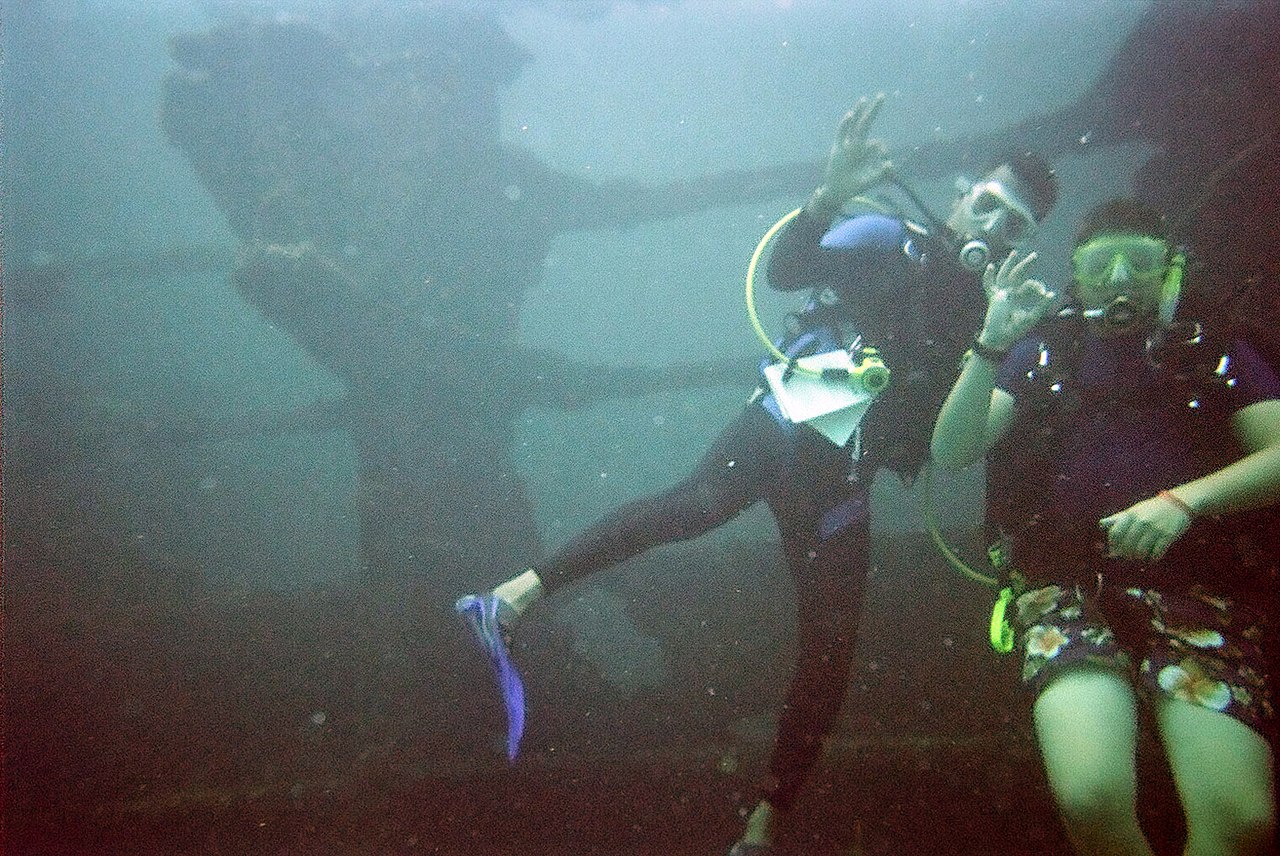


Equipment and basic characteristics
Modern scuba gear typically includes a cylinder of compressed gas, a demand regulator that delivers breathable gas at ambient pressure, a buoyancy control device to adjust ascent and descent, and a mask and fins for vision and propulsion. Exposure protection such as wetsuits or drysuits helps maintain body heat. Common accessories are dive computers, depth gauges, and knives.
- Tanks: made of steel or aluminum; divers choose based on durability, buoyancy, and capacity — see steel or aluminum tanks.
- Regulator: reduces cylinder pressure to ambient and provides air on demand.
- Buoyancy control device (BCD): enables neutral buoyancy and controlled ascents/descents.
- Instruments: dive computers and gauges monitor depth, time, and remaining gas.
History and development
The development of modern scuba equipment accelerated in the 20th century. Early breathing systems and surface-supplied gear evolved into self-contained systems when inventors combined compressed-gas cylinders with demand regulators. The modern open-circuit scuba regulator, which supplies gas only when the diver inhales, made recreational and professional diving more practical and safer.
Safety, training and physiological limits
Scuba diving carries risks that are managed through training, planning, and conservative procedures. Key medical concerns include decompression sickness from rapid ascent, nitrogen narcosis at depth, and oxygen toxicity with high oxygen partial pressures. Certification agencies and training courses teach dive planning, emergency procedures, gas management, and ascent rate limits. Many divers use dive tables or dive computers to reduce decompression risk.
Uses and importance
People dive for recreation, scientific research, underwater photography, commercial and construction work, search and recovery, and military operations. Recreational diving is popular for exploring coral reefs, wrecks, and marine life; professional diving supports underwater engineering, archaeology, and resource extraction.
Distinctions and notable facts
Scuba should be distinguished from freediving (breath-hold) and from surface-supplied commercial diving. There are variations within scuba itself: open-circuit systems vent exhaled gas to the water, while rebreathers recycle and scrub carbon dioxide, extending gas use and reducing bubble output. Technical diving uses mixed gases and specialized equipment to reach greater depths or longer bottom times, demanding advanced training and planning. For more on terminology and the origin of the word, see acronym history, underwater breathing concepts, and breathing apparatus.
Questions and answers
Q: What is scuba diving?
A: Scuba diving is an activity where people can swim underwater with the help of a tank filled with compressed air.
Q: Who are referred to as scuba divers?
A: People who participate in the activity of scuba diving are referred to as scuba divers.
Q: What is a scuba tank made of?
A: A scuba tank is usually made of steel or aluminum and is a large metal cylinder.
Q: What does the abbreviation “scuba” stand for?
A: The abbreviation “scuba” stands for “Self-Contained Underwater Breathing Apparatus.”
Q: What allows scuba divers to remain underwater for a long time?
A: The tank filled with compressed air allows scuba divers to remain underwater for a long time.
Q: How does the scuba diving activity differ from other underwater activities?
A: Scuba diving is different from other underwater activities because it enables people to stay underwater for longer periods.
Q: What is the purpose of a scuba tank?
A: The purpose of a scuba tank is to provide a continuous supply of compressed air for breathing underwater.
Related articles
Author
AlegsaOnline.com Scuba diving: underwater breathing, equipment, and safety Leandro Alegsa
URL: https://en.alegsaonline.com/art/88231
Sources
- destination-scuba.com : "History of Scuba"
- news.nationalgeographic.com : "Cousteau's importance"
- padi.com : "Types of diving classes"