
Indian Ocean
The Indian Ocean is the world's third-largest ocean, bounded by Asia, Africa, Australia and the Southern Ocean; central to monsoon climates, trade routes, marine biodiversity, and regional history.
Overview
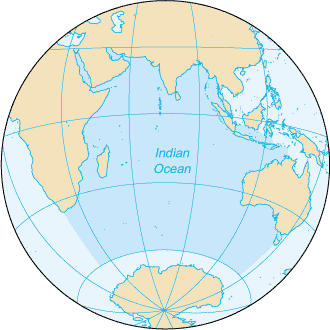
The Indian Ocean occupies a central position between three continents. It is delimited to the north by Asia, to the west by Africa and the Atlantic Ocean, to the east by Australia and the Pacific Ocean, and to the south by the Southern Ocean. Its name derives from the Indus River and the historical region of Ancient India, which lie along its northern rim.
Image gallery
10 Images



Geography and physical characteristics
The Indian Ocean is the third-largest ocean by area. Much of its surface lies in the southern hemisphere. Average depths are several thousand metres, with the deepest point found in the Java Trench near the Sunda Islands (Java Trench / Sunda Islands), reaching roughly 7,500 metres. Its basin includes a variety of features such as continental shelves, submerged plateaus and deep trenches, and it connects to neighboring seas and gulfs through narrow straits and channels.
Marginal seas and notable bodies of water
Several important marginal seas, gulfs and passages form part of the ocean and support dense human populations along their shores:
Climate, currents and ecosystems
The Indian Ocean is strongly influenced by the seasonal monsoon winds, which reverse direction between summer and winter and drive major surface currents. Those monsoons have shaped regional climates for millennia and affect rainfall on adjacent landmasses. The ocean supports rich marine ecosystems, including coral reefs, mangroves and productive fisheries, particularly along continental shelves and in upwelling zones.
Human uses, history and strategic importance
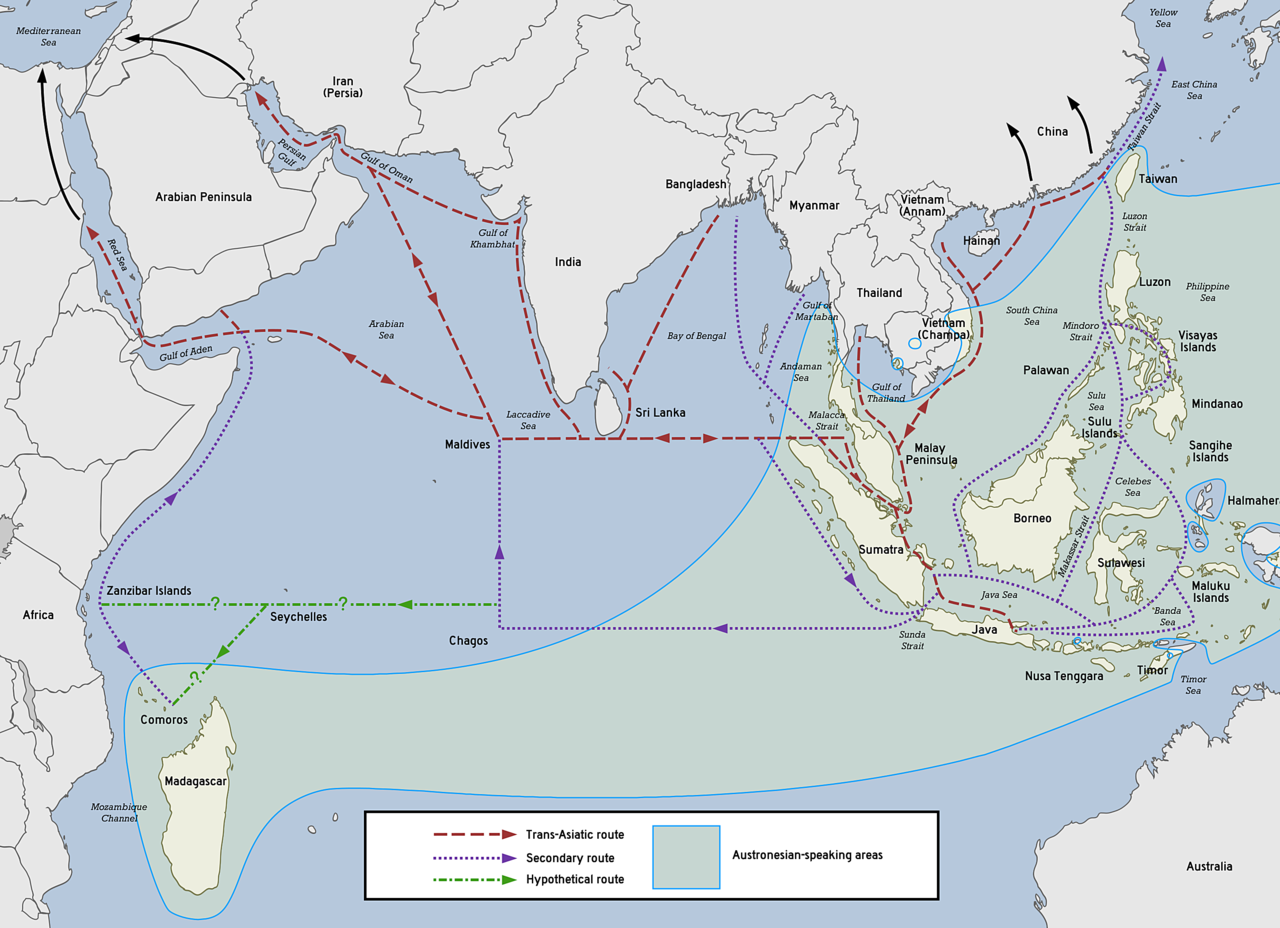
For centuries the Indian Ocean has been a corridor for trade and cultural exchange, linking ports from East Africa and the Arabian Peninsula to South and Southeast Asia and Australasia. Ancient and medieval maritime routes carried spices, textiles and other goods; in modern times the ocean hosts some of the world's busiest shipping lanes, including routes to the Suez Canal and through chokepoints that affect global energy supplies.
Resources and environmental challenges
The region is economically important for fisheries, hydrocarbons and mineral resources on and beneath the seabed. At the same time it faces environmental pressures: overfishing, coastal development, pollution and warming-driven coral bleaching are widespread concerns. Efforts by littoral states, regional organizations and international partners aim to improve management of resources and protect vulnerable habitats.
Notable facts: The Indian Ocean is the world’s third-largest ocean, contains extensive marginal seas such as the Bay of Bengal and the Arabian Sea, and plays a key role in global climate and commerce.
Related articles
Author
AlegsaOnline.com Indian Ocean Leandro Alegsa
URL: https://en.alegsaonline.com/art/47118