
Incendiary device: history, materials, uses, and legal status
An incendiary device (firebomb) is designed to start fires using combustible or pyrotechnic agents. This article explains types, common materials, historical use, military roles, and international regulation.
Overview
An incendiary device, commonly called a firebomb, is any weapon or device designed primarily to ignite fires rather than to produce blast effects. Incendiaries range from improvised bottles of flammable liquid to purpose-built munitions that disperse burning gels, powders, or reactive compounds. Their primary military effect is destruction by flame and heat, which can damage infrastructure, destroy supplies, or target personnel and equipment in enclosed spaces.
Image gallery
10 Images


Characteristics and common materials
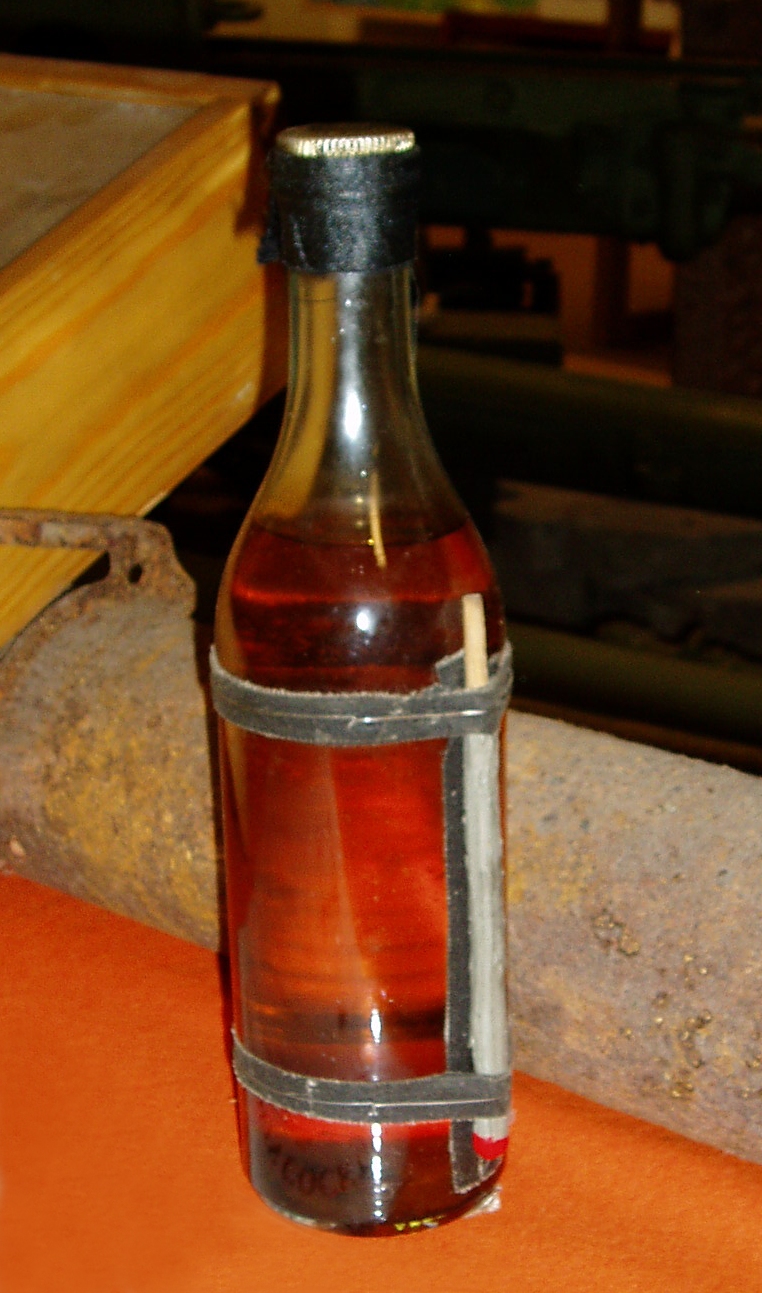
Incendiary devices are defined by the agent they deliver and the method of ignition. Common agents include gelling fuels (historically "napalm" formulations), white phosphorus (used for both smoke and incendiary effects), thermite mixtures (a combination of metal powder and metal oxide that burns at extremely high temperatures), and highly reactive chemicals such as chlorine trifluoride in theoretical or industrial contexts. Improvised variants — most famously the Molotov cocktail — rely on simple flammable liquids and an ignition source. Flamethrowers also function as incendiary weapons by projecting ignited fuel.
Designs and delivery
Designs vary from small hand-thrown devices to air-dropped munitions. Some incendiaries combine a small explosive charge to spread burning material over a wide area, while others deliver a sustained burning mass that adheres to surfaces. Thermite charges are valued for producing localized extreme heat useful for breaching or cutting metal. White phosphorus rounds are used where both smoke generation and incendiary effects are desired, though their dual nature raises specific humanitarian concerns.
Historical use and notable examples
Incendiaries have been used in warfare for centuries, but industrial-age aerial-delivered firebombs became prominent in the 20th century. During the Second World War, large-scale incendiary bombing was employed against cities and industrial centers; a notable and widely discussed example is the firebombing of Dresden. Flamethrowers were used in trench and bunker assaults. In more recent conflicts, certain modern incendiary munitions have been reported in combat operations; the persistence of such use has fueled international debate and regulatory efforts.
Legal, ethical and humanitarian considerations
Because incendiary weapons can cause severe thermal injury and widespread fires affecting civilians and civilian structures, their use is restricted under international humanitarian law. Protocol III of the 1980 Convention on Certain Conventional Weapons places limitations on the use of incendiary weapons, particularly against civilian concentrations. Many states interpret these rules strictly and avoid incendiaries except under narrow military circumstances; concerns center on indiscriminate effects, long-term suffering, and the difficulty of distinguishing military from civilian targets in urban settings.
Uses beyond direct attack
Beyond offensive operations, incendiary materials have non-combat roles: controlled burns in land management, industrial thermite applications (such as rail welding), and pyrotechnic devices for signaling or illumination. The same physical properties that make a material incendiary in war—rapid oxidation and high heat release—make it useful in civilian industries when handled under strict safety protocols.
Further reading and related topics
- Incendiary bomb overview
- Fire-starting mechanisms
- World War II bombing campaigns
- Napalm and gelled fuels
- White phosphorus uses and risks
- Thermite composition and applications
- Reactive oxidizers (industrial hazards)
- Common fuels used in improvised devices
- Molotov cocktail (improvised incendiary)
- United States munitions
- Iraq conflict references
- Modern conflict case studies
- 2003 military operations
- Convention on Certain Conventional Weapons
- Treaty texts and protocols
- International humanitarian law resources
- Key treaty dates and history
- Dresden bombing studies
- Flamethrowers and related systems
Related articles
Author
AlegsaOnline.com Incendiary device: history, materials, uses, and legal status Leandro Alegsa
URL: https://en.alegsaonline.com/art/46995