
Flamethrower: history, design, battlefield role, and modern uses
A flamethrower projects a stream of ignited fuel. This article explains its design, historical development from ancient incendiaries to World Wars, battlefield effects, decline, legal issues, and civilian uses.
Overview
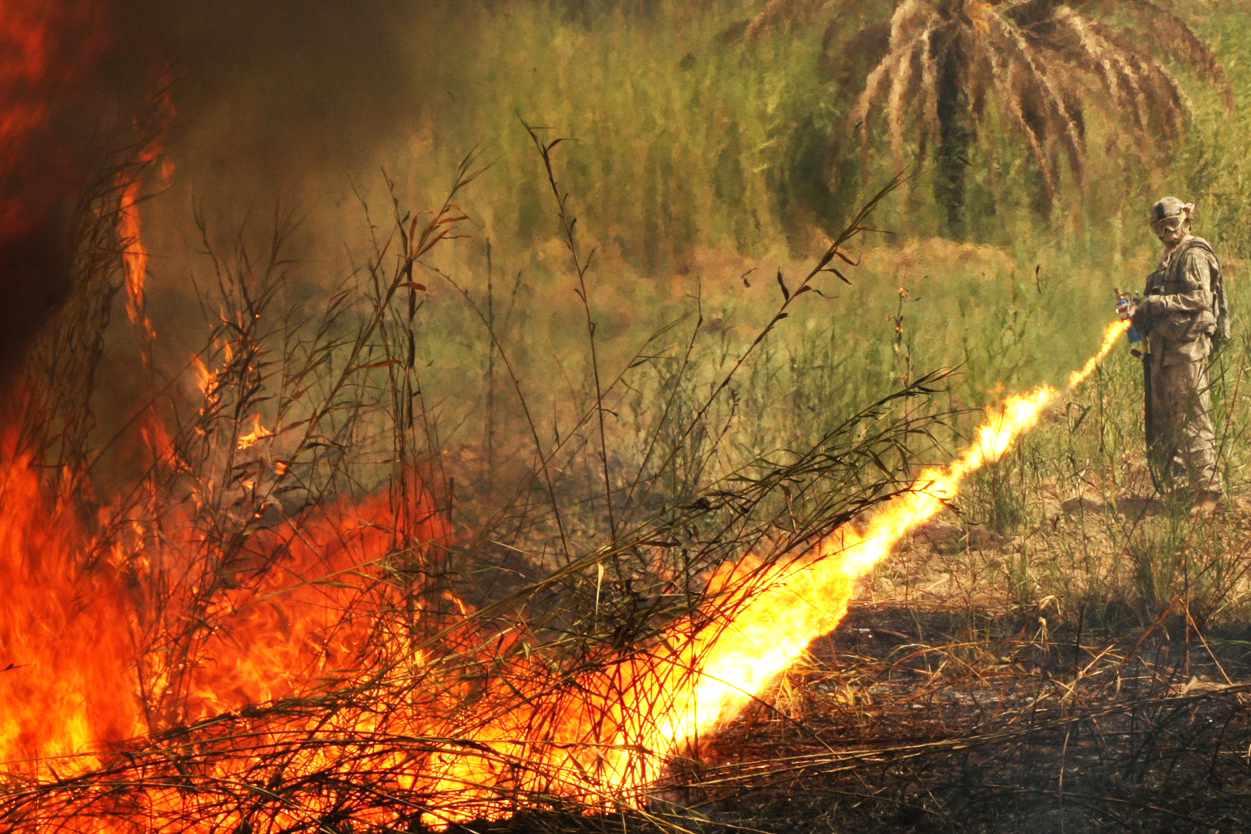
A flamethrower is a device that projects a controllable stream of burning fuel to set targets alight or suppress enemy positions. The term covers a range of tools from handheld, backpack-mounted units to vehicle or emplacement systems. At its most basic a flamethrower mixes a liquid or aerosolised fuel with an ignition source and forces it toward a target where combustion occurs. For a concise technical description see the general definition and mechanics.
Image gallery
10 Images


Design and components
Most flamethrowers share several core elements: a fuel reservoir, a pressurization or pumping system, a projection nozzle or wand, and an igniter at the muzzle. Fuel types vary: early devices used raw oils or pitch, while modern military systems have employed gasoline, diesel, or gelled fuels that cling to surfaces more effectively. The projection method can be simple compressed gas driving a liquid, small explosive charges, or mechanical pumps. Systems range from small man-portable backpacks to vehicle-mounted mounts used for obstacle clearing.
History and military development
Incendiary weapons have ancient roots; states and navies employed crude fire-spouting devices and mixtures such as the famed "Greek fire" for siege and naval warfare. Flamethrowers in a recognisable form re-emerged with industrial-era engineering. They were reintroduced to prominence in World War I, when close-quarters trench warfare and fortified emplacements created a tactical niche for short-range incendiary suppression. The German army developed early modern field flamethrowers in 1915 and their use spread among combatants.
Use in major conflicts
In World War II flamethrowers were used for clearing bunkers, pillboxes, tunnels and jungle fortifications, particularly in the Pacific theatre. Small assault teams often relied on these weapons to neutralise strongly defended positions. Although their visible flame could destroy equipment and structures, many battlefield fatalities associated with flamethrowers resulted from secondary effects such as smoke, heat, and asphyxiation rather than direct burning.
Tactical effects, limitations and countermeasures
- Psychological impact: the sight of flame often induced panic and lowered enemy morale.
- Area denial and breaching: effective at flushing defenders from confined spaces where bullets alone were less decisive.
- Limitations: short range, heavy fuel loads, and risks to operators who became high-value targets.
- Countermeasures: fortification redesign, smoke screens, longer-range firepower and combined-arms tactics reduced their battlefield dominance.
Decline, legal and ethical issues
From the late 20th century onward flamethrowers became less common due to improved precision weapons, explosives, and changing combat doctrines. In addition, incendiary weapons raise humanitarian and legal concerns: several international instruments and military policies restrict or regulate the use of incendiary munitions against civilians and in certain environments. Debates over indiscriminate suffering and long-term environmental damage contribute to reluctance to deploy them widely.
Modern and civilian uses
Outside war zones, devices that produce directed flame have found niche civilian applications such as controlled agricultural burning, vegetation management, and industrial uses where a portable intense heat source is useful. In 2018 a private company marketed a limited-run consumer device styled on a flamethrower; this side-step into popular culture highlighted safety, regulation and perception issues surrounding incendiary tools. For more on the historical context of such reintroductions see military history summaries and examples tracing back to ancient incendiary practices.
Distinctions and related weapons
Flamethrowers are distinct from thermobaric or fuel-air explosives, which create high-temperature, high-pressure combustion effects in a different way and over different scales. They should also be differentiated from simple igniters or agricultural weed burners that use small torches for maintenance. Discussions of modern policy and practice often appear in analyses of incendiary weapons and battlefield ethics; readers interested in the role of trench and close-quarters systems can consult focused material on trench warfare and close-combat tactics.
Related articles
Author
AlegsaOnline.com Flamethrower: history, design, battlefield role, and modern uses Leandro Alegsa
URL: https://en.alegsaonline.com/art/34992