
Molotov cocktail (petrol bomb)
An improvised incendiary bottle weapon—simple, dangerous, and illegal in many places—used historically in warfare, riots and sabotage. Named during the Winter War and widely employed in 20th–21st century conflicts.
Overview
A Molotov cocktail, often called a petrol bomb or fire bomb, is a simple improvised incendiary device. It typically consists of a breakable container filled with a flammable liquid and fitted with a cloth or other wick that is lit before the device is thrown. Its primary purpose is to start fires, damage light vehicles or equipment, and intimidate or disrupt opponents.
Image gallery
10 Images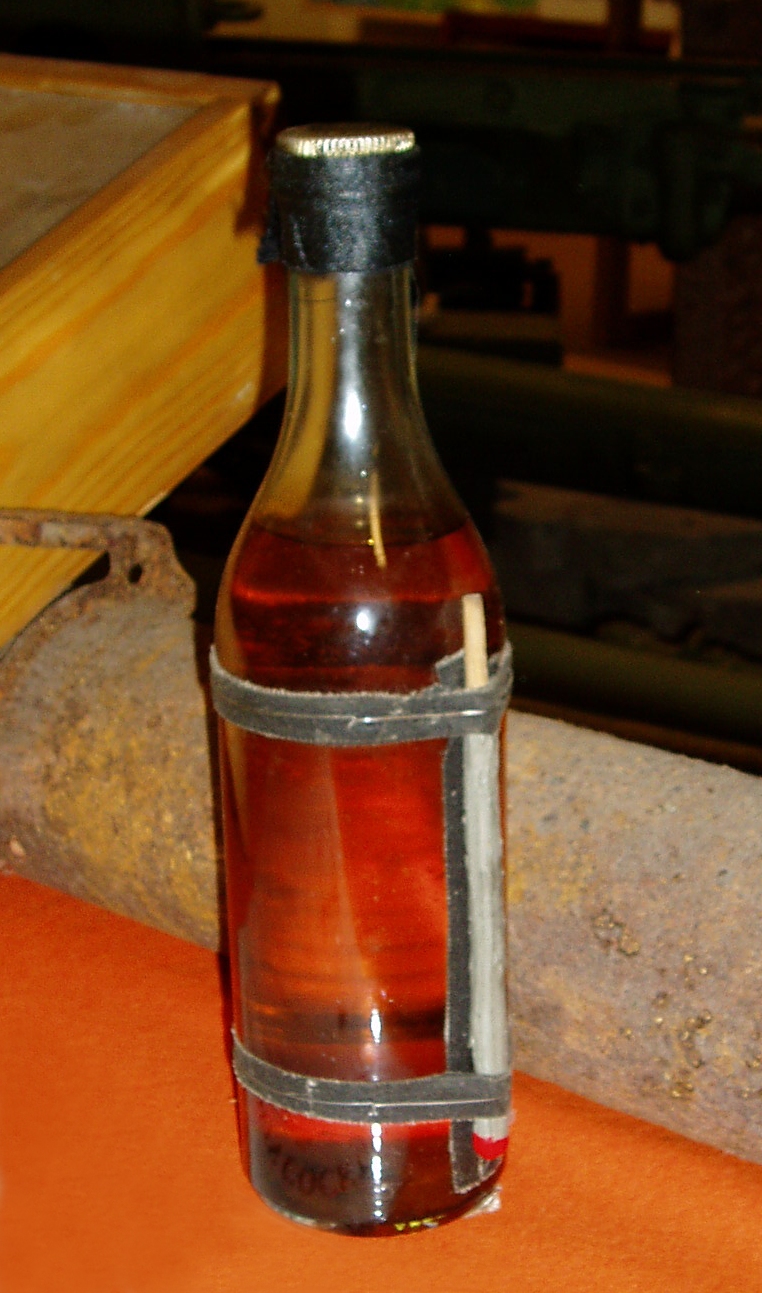


Design and components
Basic elements are straightforward and have remained similar across decades: a glass or other brittle bottle, an ignitable liquid such as gasoline, alcohol or other fuel, and a fuse made from a rag or absorbent material. Sometimes additives are mixed to increase adherence or burning time, and in some designs the device is sealed in a way that fragments of the container spread burning liquid on impact.
- Container: easily breakable vessel.
- Filling: flammable liquid or mixture.
- Ignition: cloth wick or other slow-burning trigger.
History and name
Improvised incendiaries of this kind predate the 20th century, but the name "Molotov cocktail" emerged in the context of the Winter War between Finland and the Soviet Union, when Finnish forces mockingly used the term in response to Soviet propaganda. The weapon saw notable use in several 20th-century conflicts and disturbances; similar devices were also employed during the Spanish Civil War and many later urban and guerrilla actions.
Uses, examples and legal status
Molotov cocktails have been used by irregular military groups, insurgents, rioters and arsonists because they are cheap and simple to produce. Use of such devices is illegal in most jurisdictions and can lead to severe criminal charges; their presence is also treated as evidence of intent to commit violent or destructive acts. For background on incendiary devices and their classification see incendiary devices overview and for historical context consult resources on irregular warfare at paramilitary tactics.
Risks, countermeasures and notable facts
Handling or manufacturing Molotov cocktails poses grave risk to the maker and bystanders: accidental ignition, burns and unintended spread of fire are common hazards. Modern security and military responses include armoring vehicles, using firefighting agents, and restricting access to fuels. Accounts of their use in civil disturbances and arson investigations can be found in studies of public disorder and crime prevention; see general summaries at civil unrest resources and legal perspectives at arson law. For a concise historical case study see materials on the Spanish Civil War and early 20th-century conflicts at Spanish Civil War sources.
Questions and answers
Q: What is a Molotov cocktail?
A: A Molotov cocktail is a simple incendiary device made of a glass bottle filled with gasoline or other flammable liquid, with a cloth wick soaked in the liquid, that is ignited and thrown to start a fire.
Q: How is a Molotov cocktail used?
A: A Molotov cocktail is used by irregular paramilitary forces and rioters to create chaos, as well as for arson.
Q: When and where was the Molotov cocktail first used?
A: The Molotov cocktail was first used in the Spanish Civil War between July 1936 and April 1939.
Q: What is the other name for a Molotov cocktail?
A: A Molotov cocktail is also known as a petrol bomb, fire bomb, or benzine torch.
Q: How easy is it to make a Molotov cocktail?
A: A Molotov cocktail is relatively easy to make and only requires a glass bottle, gasoline or other flammable liquid, and a cloth wick.
Q: Who popularized the term "Molotov cocktails”?
A: The term "Molotov cocktails" became known during the Second World War.
Q: What is the purpose of a Molotov cocktail?
A: The purpose of a Molotov cocktail is to start a fire and cause destruction. It is commonly used by irregular paramilitary forces and rioters.
Related articles
Author
AlegsaOnline.com Molotov cocktail (petrol bomb) Leandro Alegsa
URL: https://en.alegsaonline.com/art/65900