
Chlorine trifluoride (ClF3)
Chlorine trifluoride is an interhalogen compound and powerful fluorinating agent. It is highly reactive, corrosive, and hazardous; used in niche industrial fluorination and uranium processing applications.
Chlorine trifluoride is a highly reactive interhalogen compound with the formula ClF3. It is a covalently bonded molecule rather than a salt of separate ions, and it is notable for its extreme oxidizing and fluorinating power. For basic context see interhalogen chemistry.
Image gallery
2 Images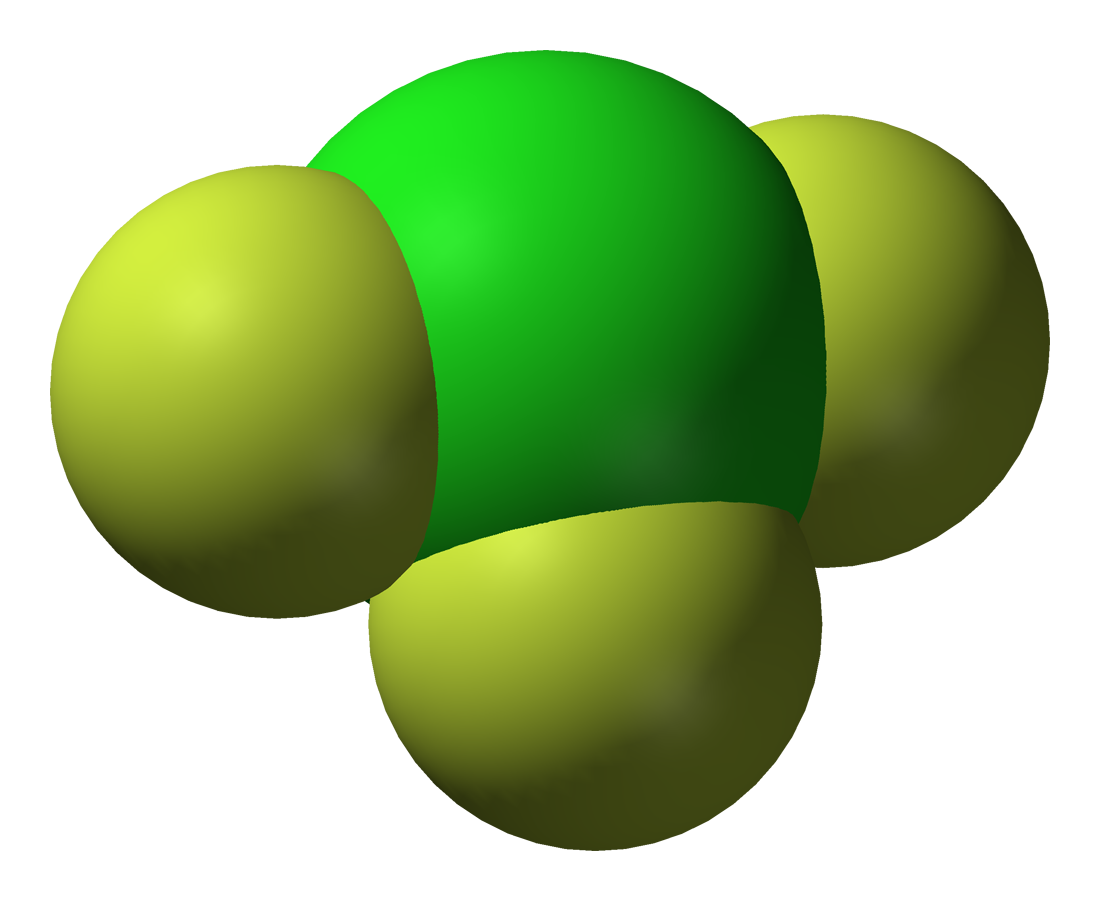

Structure and bonding
The molecule has a central chlorine atom bonded to three fluorine atoms and carries lone electron pairs that shape its geometry. According to VSEPR considerations, ClF3 adopts a T-shaped molecular geometry derived from a trigonal bipyramidal electron arrangement. The formal oxidation state of chlorine in this compound is +3; fluorine is more electronegative and draws electron density toward itself. For reference on the constituent elements, see chlorine and fluorine.
Physical and chemical properties
ClF3 is a volatile, highly reactive substance that can attack many materials that are normally considered resistant to chemical attack. It reacts vigorously with water to produce corrosive hydrogen fluoride and other products, and it can ignite organic and inorganic materials on contact. Its combination of strong fluorinating ability and oxidizing character distinguishes it from both elemental fluorine and other interhalogens. For data and hazard summaries consult oxidation and safety.
Uses and applications
- Industrial fluorination: used in specialized processes that require insertion of fluorine atoms where other reagents are unsuitable.
- Nuclear fuel processing: historically used to convert certain uranium compounds to more volatile fluorides in tightly controlled facilities.
- Cleaning and surface preparation: under strict conditions it has been used to remove organic residues and some metal oxides, though safer alternatives are preferred.
Because of its hazards, routine use is limited to environments with extensive engineering controls and emergency planning. Detailed handling and emergency guidance should be obtained from authoritative sources such as material safety data and industrial protocols; see safety guidance.
Notable facts: ClF3 illustrates how an apparently small molecule can pose outsized risks and capabilities: it is far more reactive than many common industrial reagents and requires specialized containers, procedures, and trained personnel. Its study and limited use have informed broader practices in fluorine chemistry and industrial safety.
Author
AlegsaOnline.com Chlorine trifluoride (ClF3) Leandro Alegsa
URL: https://en.alegsaonline.com/art/19891
Sources
- osha.gov : "Occupational Safety and Health Guidelines for Chlorine Trifluoride"
- commons.wikimedia.org : Chlorine trifluoride