
Fire: Chemistry, Uses, Risks, and Historical Significance
Fire is a rapid oxidation process that releases heat and light. This article explains how fire works, its uses, hazards, historical role for humans, and key distinctions such as flames versus smoldering combustion.
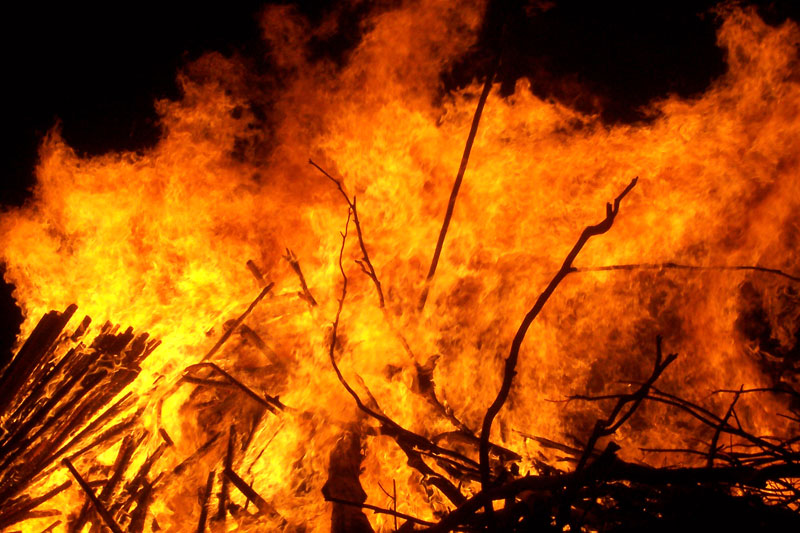
Fire is a self-sustaining, exothermic chemical reaction in which a material combines rapidly with an oxidizer and releases energy as light and heat. Commonly observed as flames, burning can also take the form of smoldering or glowing combustion without bright visible flames. At the molecular level the reacting fuel oxidizes, breaking chemical bonds and forming more stable combustion products while emitting energy. The bright region we call a flame is the hot, glowing gas and incandescent particles produced by the reaction.
Image gallery
10 Images


Conditions and characteristics
Fire requires three basic components often described as the fire triangle: a fuel, an oxidizer (usually atmospheric oxygen), and sufficient heat to reach the material's ignition temperature. Modern descriptions add a fourth component — a self-sustaining chain reaction — forming the fire tetrahedron. Fires vary by temperature, color and behavior depending on the fuel type, the concentration of oxygen, and the presence of unburned particles; incomplete combustion produces smoke and toxic gases such as carbon monoxide.
Origins and history
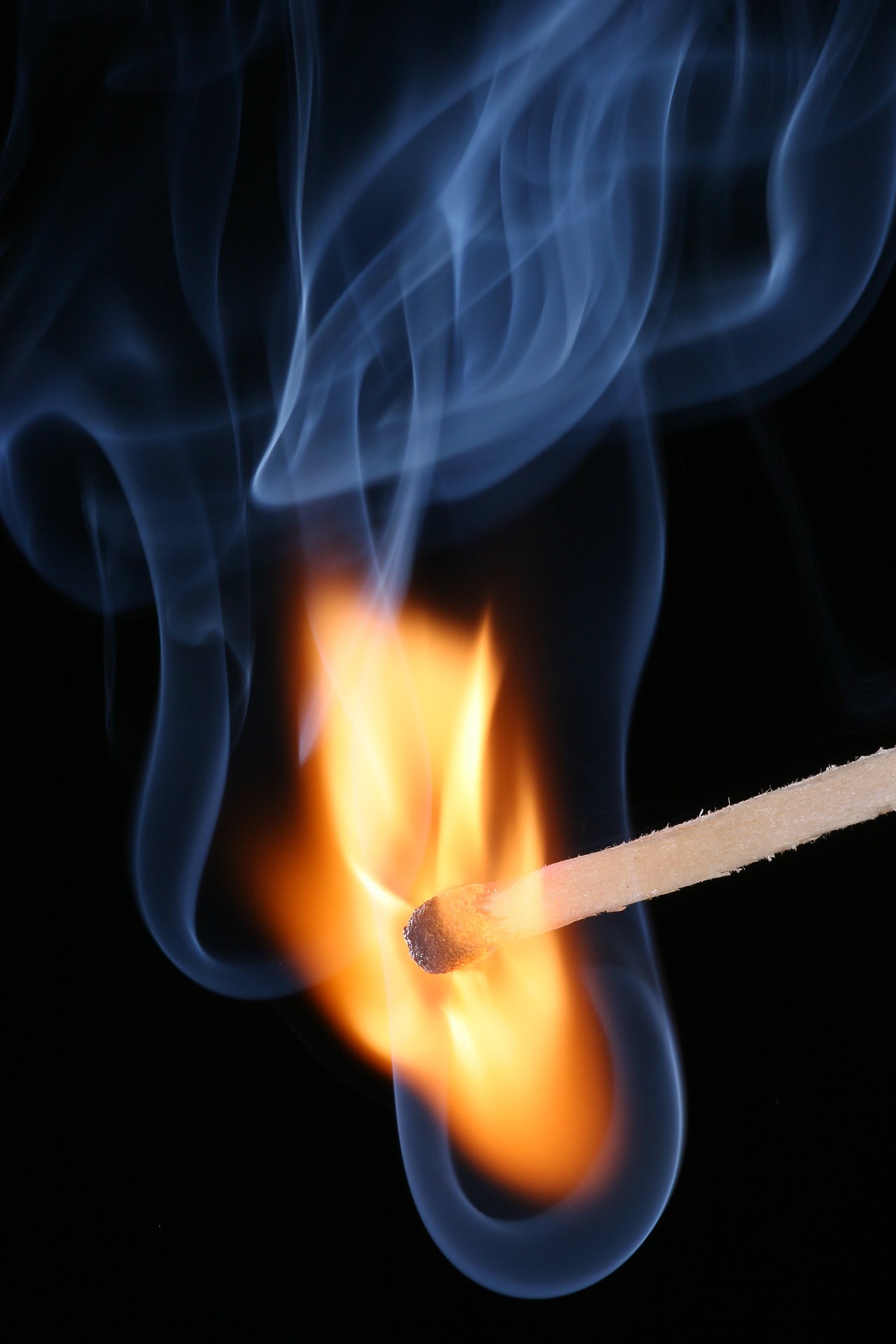
Natural ignition sources include lightning strikes, volcanic activity and spontaneous heating of organic materials. Human-made ignition can come from friction, sparks, open flames or hot surfaces — for example striking flint to make sparks or using matches and lighters. The control of fire was a pivotal step in human prehistory, enabling cooking, warmth, protection, toolmaking and later metallurgical and industrial processes. It is important to note that not all energetic processes are fire: the Sun does not burn by combustion but produces energy by fusing hydrogen nuclei in a process called nuclear fusion.
Uses and importance
Fire has many beneficial uses in everyday life and industry. It provides heat for cooking and comfort, drives engines and turbines when harnessed in controlled combustion, powers manufacturing processes such as smelting and glassmaking, and is used for land management in traditional agricultural systems. Controlled burning and prescribed fires are tools for ecosystem management, while uncontrolled forest fires and wildfires can cause extensive ecological and economic damage.
Risks and safety
Fire poses risks including thermal injury, structural loss, toxic smoke inhalation, and environmental destruction. Fire prevention emphasizes removing ignition sources, controlling fuel loads, and maintaining detection and suppression systems. Common extinguishing principles mirror the fire triangle: remove heat (cooling with water), exclude oxygen (smothering), remove fuel (creating firebreaks), or interrupt the chemical reaction (certain extinguishing agents and dry chemical powders).
Notable distinctions and facts
- Flaming combustion differs from smoldering: flames involve gas-phase reactions and bright light; smoldering is a slower surface reaction producing smoke.
- Complete combustion in adequate oxygen yields mostly carbon dioxide and water; incomplete combustion yields soot and carbon monoxide.
- Fire behavior is influenced by fuel arrangement, weather, and topography; small changes often have large effects on spread and intensity.
Understanding fire's scientific basis and practical behavior helps balance its many benefits against its hazards. Safety, appropriate management and respect for fire's power remain essential wherever it is used or may occur naturally.
Questions and answers
Q: What is fire?
A: Fire is a chemical reaction that gives off light and heat.
Q: How does fire occur?
A: Fire occurs when a material rapidly oxidizes, or loses electrons, and releases a great amount of energy.
Q: What are flames?
A: Flames are only the portion of the fire that gives off visible light.
Q: Why is fire both useful and dangerous?
A: Fire is sometimes useful, but also very dangerous because it can cause houses, trees and other things to burn to ashes.
Q: What is the harm caused by forest fires?
A: Forest fires are very harmful as they can destroy a huge area in a matter of minutes.
Q: How do people die from fire?
A: Every year, people die by accident from fire.
Q: How can fire be started?
A: Fire can be started by heating a material in many different ways. Some common ways to start a fire include rubbing sticks together very rapidly, making sparks by hitting flint with steel, or using matches or a lighter.
Related articles
Author
AlegsaOnline.com Fire: Chemistry, Uses, Risks, and Historical Significance Leandro Alegsa
URL: https://en.alegsaonline.com/art/34478