
Thermite and aluminothermic reactions
Thermite is a pyrotechnic composition of a metal oxide and a reactive metal that produces intense local heat by aluminothermic or similar redox reactions, used for welding, cutting and metal production.
Overview
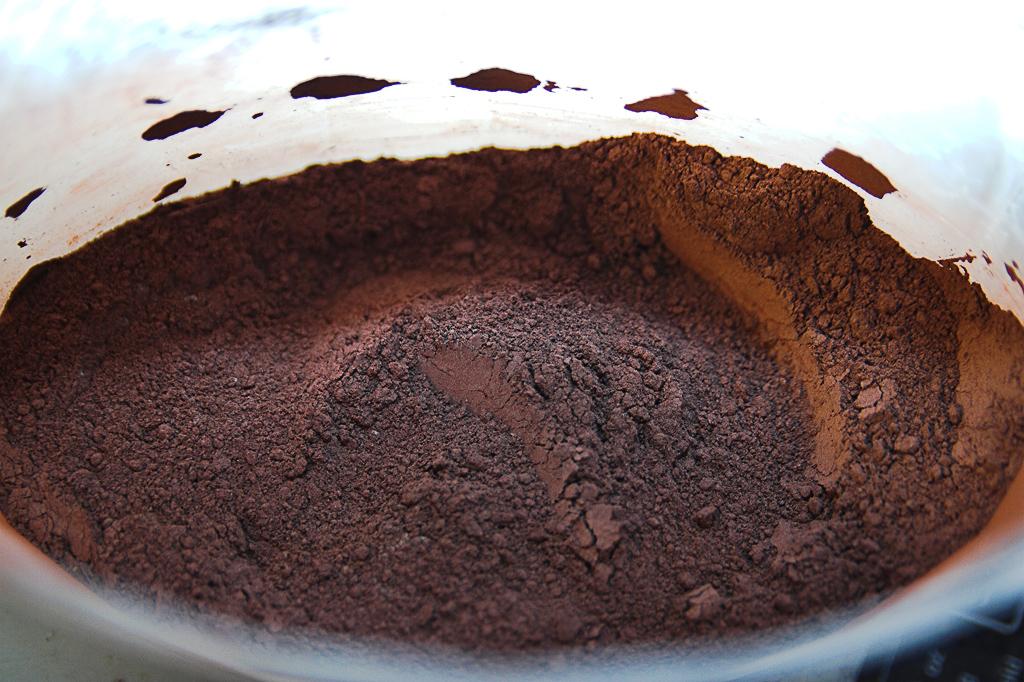
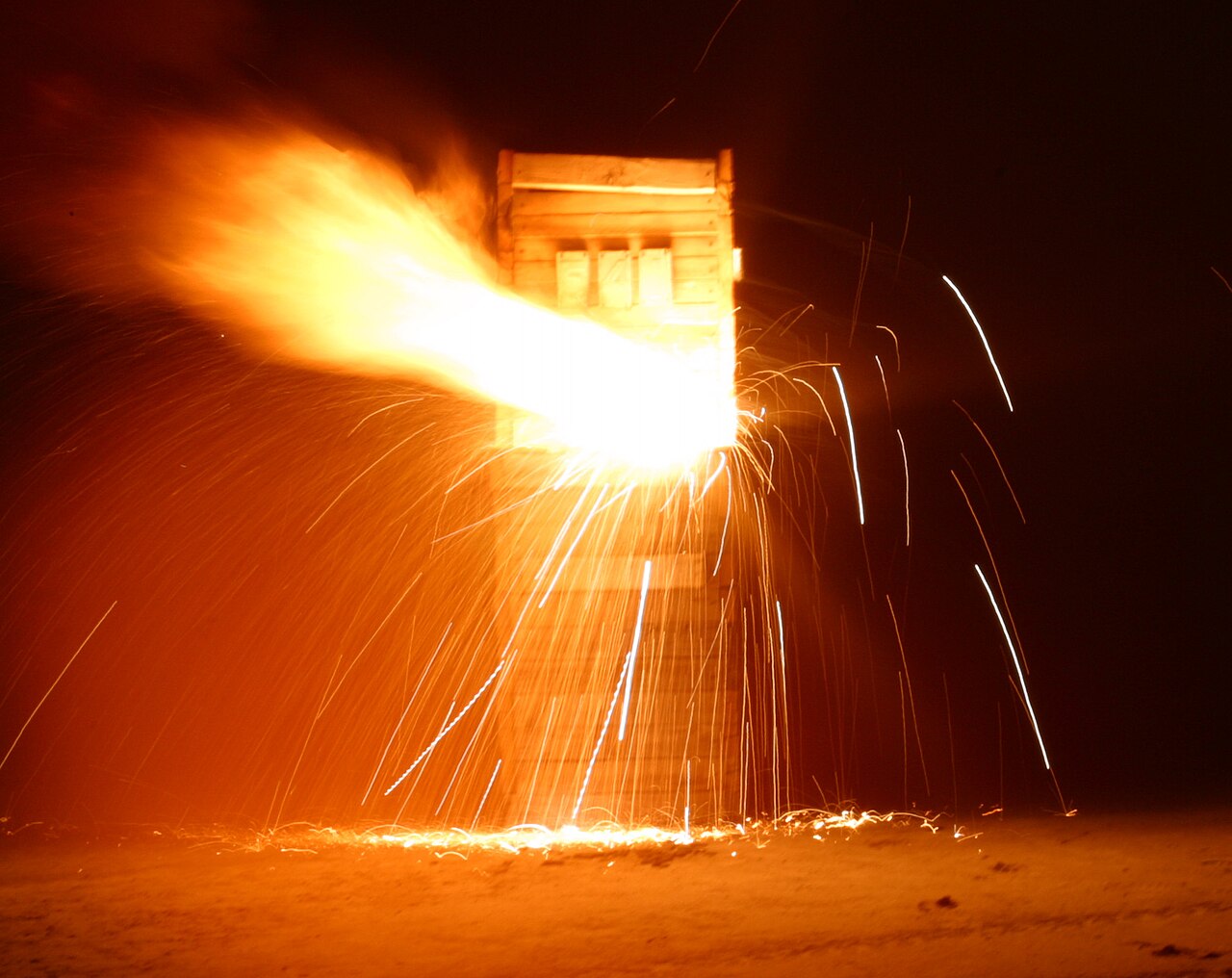
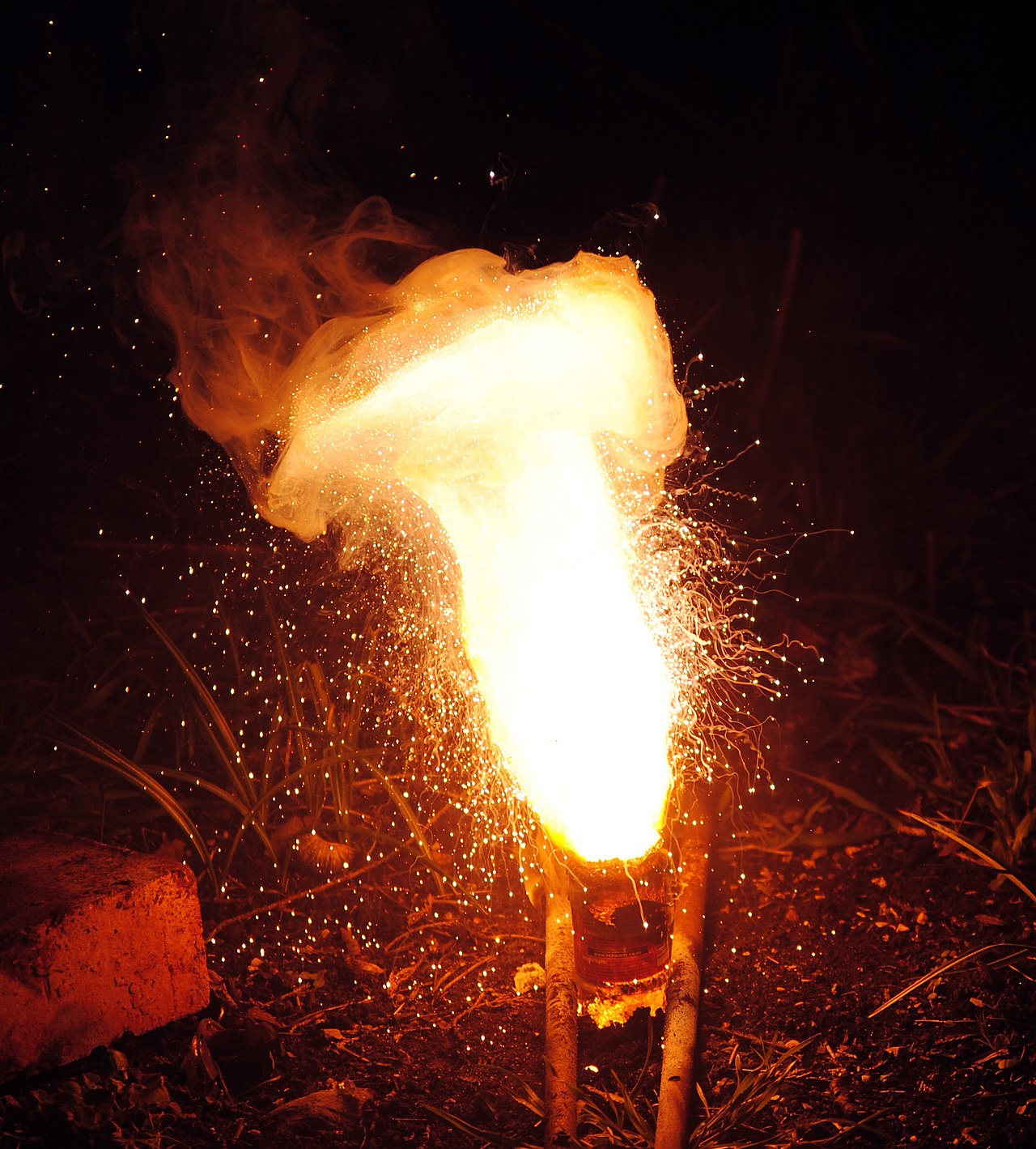
Thermite refers to a powdered mixture that produces a very hot exothermic reaction when ignited. It is an incendiary, not a high explosive, because it releases energy principally as heat rather than as a supersonic shock wave; see classification. The classic thermite reaction involves a metal oxide and a more reactive metal, with aluminium being the most common reducing agent. The reaction is highly energetic and can reach temperatures sufficient to melt many metals.
Image gallery
7 Images


Composition and chemical behavior
Typical thermite uses iron(III) oxide (Fe2O3) mixed with powdered aluminium. When ignited the aluminium reduces the iron oxide to molten iron while itself being oxidized to aluminium oxide; a simple stoichiometric equation is: Fe2O3 + 2 Al → 2 Fe + Al2O3. This process is a form of aluminothermic reduction, often called the Goldschmidt reaction after its inventor. Other metal oxides and metals may substitute in similar redox pairs. Examples include alternate metals like boron, magnesium, calcium, titanium, zinc, or silicon, and oxides such as copper(II) oxide, chromium(III) oxide and iron oxides. The metal chosen must be chemically more reactive than the metal in the oxide for the reaction to proceed; see reactivity and oxidation.
Ignition and reaction characteristics
Thermite mixtures require high ignition temperatures and a reliable ignition method—simple flame is usually insufficient. Ignition often uses a magnesium ribbon, sparkler composition, or an incendiary fuse that supplies enough heat and sustained contact; see aluminium/alumina ignition notes. Once started, thermite reacts rapidly at the ignition site and produces molten slag and metal. The reaction is self-sustaining and difficult to stop; water can create dangerous steam explosions when poured onto molten products. For enhanced cutting or incendiary effects, additives such as sulfur or metal nitrates are sometimes included, producing formulations sometimes termed thermate or modified thermite.
Uses and examples
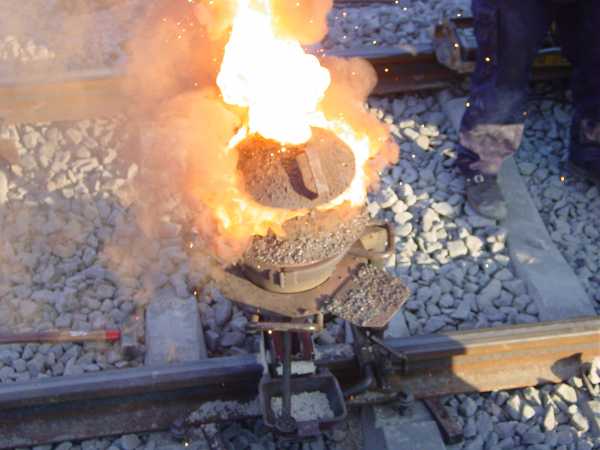
- Rail welding: thermite welding is widely used to join steel rails in the field because it generates local molten metal that fuses the joint (rail welding).
- Metal production and refining: aluminothermic reactions can produce high-purity metals or ferroalloys for specialty applications (metallurgy).
- Cutting and demolition: concentrated thermite charges can sever heavy steel sections in industrial or military contexts (cutting).
- Educational demonstrations and pyrotechnics: small, controlled demonstrations are common in chemistry teaching to show redox energy release (demonstrations).
Safety, legal and historical notes
Thermite was developed in the late 19th century by Hans Goldschmidt and has been adapted to many industrial applications. It is hazardous: the extreme heat, molten splatter and intense sparks present severe burn and fire risks. Water should not be used on active thermite because rapid steam formation can produce explosive dispersal; appropriate extinguishing methods and shielding are required (hazards). Many jurisdictions regulate possession and use of thermite formulations because of their potential for misuse; consult local rules and safety guidance (regulation, legal guidance).
Variants and combinations expand thermite chemistry: mixtures may include different oxides like chromium oxide or copper oxide, and alternative reductants such as zinc or titanium powders. Practical use requires careful control of grain size, stoichiometry and ignition method to achieve the desired temperature and duration (formulation, components, alternatives).
Because thermite produces molten metal rather than a shock wave, it is distinct from explosives and thermobaric weapons; its principal effect is intense localized heating rather than pressure. For technical references and safety data consult industrial manuals or authoritative chemical safety sources (classification, chemistry, variants).
Questions and answers
Q: What is thermite?
A: Thermite is an incendiary mixture made of an oxide of a less reactive metal mixed with a more reactive metal.
Q: Is thermite an explosive material?
A: No, thermite is not an explosive material.
Q: What happens when iron(III) oxide-aluminium mixture is used for thermite?
A: In the mixture of iron(III) oxide and aluminium used for thermite, the iron(III) oxide oxidizes the aluminium, being reduced to iron in the process, and the aluminium is oxidized to aluminium oxide.
Q: What are some of the other metal oxides and metals that can be used for thermite?
A: Some of the other metal oxides and metals that can be used for thermite are boron, magnesium, calcium, titanium, zinc, silicon, copper(II) oxide, chromium(III) oxide, iron(II,III) oxide, manganese(IV) oxide, silicon dioxide, boron trioxide, or lead(II,IV) oxide.
Q: Can a metal be used with its metal oxide for thermite?
A: No, a metal cannot be used with its metal oxide for thermite.
Q: Why can't a metal be used with its metal oxide for thermite?
A: A metal cannot be used with its metal oxide for thermite because the metal has to be more reactive than the metal in the oxide, or the thermite will not work.
Q: What does thermite burn very fast and very hot?
A: Thermite burns very fast and very hot.
Related articles
Author
AlegsaOnline.com Thermite and aluminothermic reactions Leandro Alegsa
URL: https://en.alegsaonline.com/art/99299
Sources
- pyrobin.com : "Aluminium as a Heating and Reducing Agent"
- goldschmidt-thermit.com : "Goldschmidt-Thermit-Group"