
Henry II of England (1133–1189): founder of the Angevin realms and legal reformer
King of England and ruler of the Angevin territories, Henry II (1133–1189) strengthened royal authority, developed early common-law institutions and presided over a large Franco-English dominion.
Overview
Henry II (5 March 1133 – 6 July 1189) was the first Plantagenet king of England and the central figure of what later became known as the Angevin Empire. He inherited vast territories in France through his family and his marriage, and his reign combined military command, administrative reform and legal innovation. Henry is remembered both for strengthening royal government and for high-profile conflicts with powerful contemporaries.
Image gallery
10 Images



Territories and titles
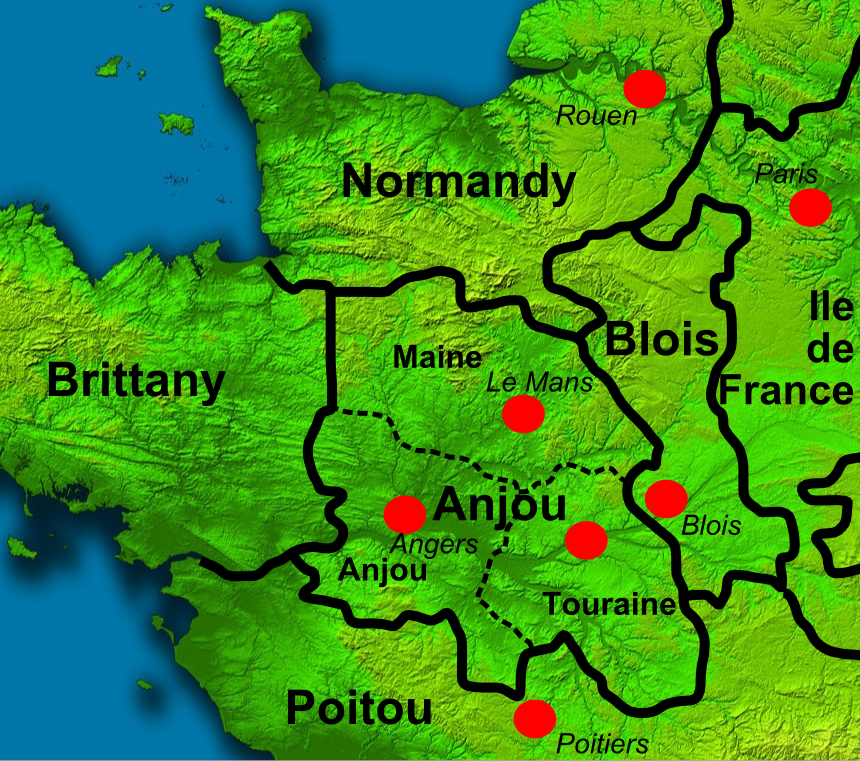
Through inheritance and marriage he held multiple titles and lands that spread across the Channel. These included counts and dukedoms in the west of France as well as the kingship of England, which together made his dominion one of the most extensive of the period. The complex patchwork of holdings required constant attention to feudal obligations, vassal relations and military defence.
Early life and accession
Born into the Angevin house, Henry was the son of Geoffrey of Anjou and Empress Matilda. He grew up amid the civil wars that followed the Norman conquest of England and the contested succession known as The Anarchy. In 1152 he married Eleanor of Aquitaine, a match that brought substantial additional lands and influence. Henry succeeded to the English throne in 1154 after a negotiated end to the conflict and the death of King Stephen, consolidating authority that had weakened during the preceding reign.
Government, law and administration
Henry II is often credited with creating more systematic royal administration. He dispatched royal justices on circuits, reformed the exchequer and introduced procedures that moved English royal justice toward greater uniformity. Reforms during his reign included measures that encouraged the use of sworn inquiries and juries in some local investigations—steps that modern historians view as part of the long development of common-law institutions. Latin remained the language of official records and administration, while the royal court commonly used Norman French.
Conflicts, family and later years
Henry’s rule was marked by significant disputes. His struggle with Thomas Becket, Archbishop of Canterbury, over clerical privileges ended in Becket’s murder in 1170, an event that shocked contemporaries and had lasting consequences for church–state relations. Henry also faced recurrent rebellions from his own sons, who chafed under dynastic arrangements and territorial divisions—major uprisings in the 1170s and 1180s tested royal control. He died at Chinon in 1189, after a long reign that saw his eldest surviving son Richard succeed him as king of England.
Legacy and distinctions
Henry II’s legacy is mixed: he centralized royal power, developed institutions that influenced later English law, and shaped geopolitics in both England and western France. At the same time his personal conflicts and the eventual disintegration of his dominions under later generations remind historians of the limits of medieval kingship. He remains a pivotal figure for understanding the evolution of monarchy, law and state formation in twelfth-century Europe.
Related names, places and topics
- Le Mans
- France
- Chinon
- Count
- Anjou
- Maine
- Normandy
- Aquitaine
- Gascony
- Nantes
- Lord of Ireland
- Wales
- Scotland
- Angevin Empire
- England
- Geoffrey V
- Empress Matilda
- Eleanor of Aquitaine
- Richard
- John
- King of England
- English language
- Norman Conquest (1066)
- Latin
- Medieval Europe
- official documents
- laws and statutes
- Stephen
- trial procedures
- jury
Questions and answers
Q: Who was Henry II of England?
A: Henry II of England, also known as Henry II Curtmantle, was a Count of Anjou, Count of Maine, Duke of Normandy, Duke of Aquitaine, Duke of Gascony, Count of Nantes, Lord of Ireland and controlled parts of Wales, Scotland and western France. He was the son of Geoffrey V and Empress Matilda.
Q: When did he marry Eleanor?
A: He married Eleanor in 1152.
Q: What language did he speak?
A: His family had come over from Normandy in 1066 so they spoke Norman French. However he was intelligent and well educated so he could speak Latin fluently which was the language used by educated people in Europe at that time.
Q: How did he come to the throne?
A: His succession to the English throne was agreed in 1153 and he finally came to the throne upon Stephen I's death in 1154.
Q: What battles did his children fight?
A: His children included future kings Richard who would later lead many battles and John.
Q: What power did Henry reduce during his reign? A: During his reign Henry reduced the power of the barons who had become very powerful under Stephen's reign.
Q: What law did Henry introduce during his reign? A: In 1166 Henry introduced trial by jury as a law during his reign.
Related articles
Author
AlegsaOnline.com Henry II of England (1133–1189): founder of the Angevin realms and legal reformer Leandro Alegsa
URL: https://en.alegsaonline.com/art/43587