
Jury (legal body and decision-making panel)
A jury is a panel of citizens chosen to decide facts in a trial—typically guilt and sometimes punishment. This article outlines composition, duties, verdicts, history, variations and notable features.
Overview
A jury is a group of ordinary people selected to hear evidence and decide factual questions presented in a court of law. In many legal systems juries determine whether a defendant is guilty or not guilty of criminal charges, and in some cases they also assess damages or recommend a sentence. Jurors are expected to be impartial fact-finders who apply the law, as explained by the judge, to the facts they find from the evidence.
Image gallery
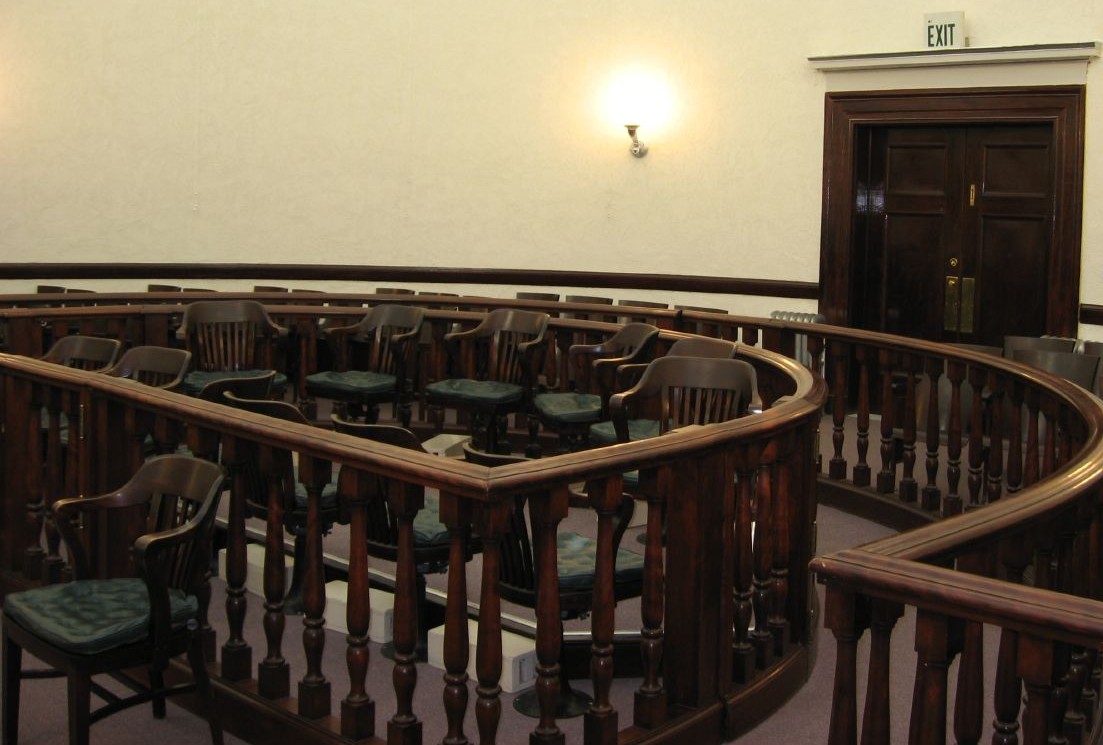
5 Images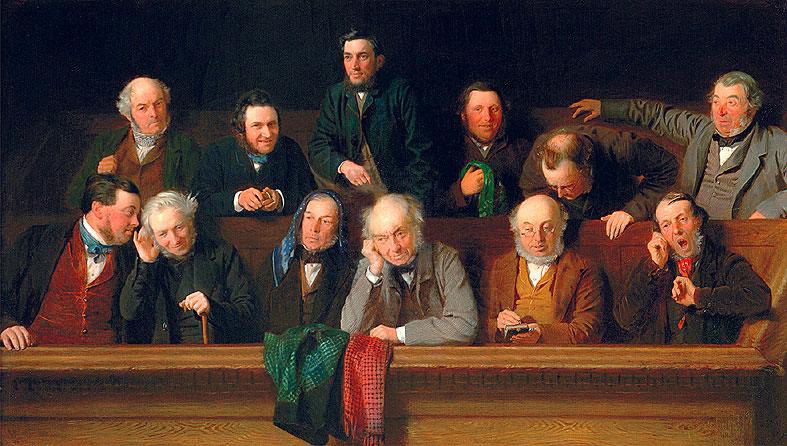



Composition and duties
Jurors are typically drawn from the community by a random process that aims to produce a representative cross-section of eligible citizens. A single juror is called a juror; together they form a jury. Common duties include listening to testimony, examining physical evidence, following legal instructions from the judge, and deliberating with fellow jurors to reach a verdict. Courts usually screen potential jurors for biases during a process called voir dire.
How trials and verdicts work
During a trial, each side presents its case through witnesses, documents and argument. The judge decides questions of law, while jurors resolve disputed facts. Typical verdict outcomes include guilty, not guilty, or, in civil cases, a decision for one party with an award of damages. Depending on jurisdiction, verdicts may need to be unanimous or may be reached by a specified majority. If jurors cannot reach an agreed decision after deliberation, the panel may become a "hung jury," which can lead to a mistrial and possibly a retrial.
History and development
Juries have deep roots in common-law traditions and have evolved over centuries. Historically, they emerged as a mechanism for involving the community in justice and as a check on governmental power. Their role, size and procedures vary by country and by whether the legal system follows common law or civil law traditions. Modern reforms have addressed juror selection, instructions, and protections for impartiality.
Variations and notable features
- Criminal vs civil juries: Criminal juries decide alleged crimes; civil juries decide private disputes such as contract or tort claims.
- Grand juries: In some systems, a grand jury evaluates whether sufficient evidence exists to indict (formally charge) a person before trial.
- Unanimity and majorities: Some jurisdictions require unanimous verdicts in serious criminal cases; others permit non-unanimous decisions in particular circumstances.
- Jury nullification: Jurors occasionally acquit a defendant despite believing the facts support guilt, because they disagree with the law or its application; this practice is controversial and handled differently across systems.
Significance and criticisms
Supporters view juries as a democratic guard of fairness and local values, giving ordinary citizens a role in administering justice. Critics point to risks such as jury bias, misunderstanding of complex evidence, or inconsistent verdicts. Courts and legislatures continue to balance these concerns through rules on juror qualifications, evidence presentation, and judicial instruction.
Practical examples and further reading
In a typical criminal trial the jury answers the core factual question: did the defendant commit the acts charged beyond a reasonable doubt? In civil matters the jury may determine liability and calculate compensation. For more information about specific procedures, statutes and case examples see general resources on trial law and jury practice, including explanatory materials available from reputable legal guides and court websites via criminal procedure and jury practice resources.
Questions and answers
Q: What is a jury?
A: A jury is a group of ordinary people who decide the answer to a question in a court room.
Q: What is the usual question that a jury has to answer?
A: The usual question that a jury has to answer is whether a person is guilty or innocent of committing a crime.
Q: What else can a jury be responsible for deciding?
A: A jury can also be responsible for deciding a penalty for the person if they are found guilty.
Q: How does a jury make its decision?
A: Normally, all members of the jury have to agree on the decision.
Q: Can a jury still make a decision even if a few members don't agree with it?
A: Yes, sometimes the jury can still make a decision even if a few members don't agree with it.
Q: What happens if the jury is quite clearly divided?
A: If the jury is quite clearly divided, the result is known as a hung jury and the case is not decided.
Q: What is a person called who is a member of a jury?
A: A person who is a member of a jury is called a juror.
Related articles
Author
AlegsaOnline.com Jury (legal body and decision-making panel) Leandro Alegsa
URL: https://en.alegsaonline.com/art/51749
Sources
- uscourts.gov : "Types of Juries"