
Geoffrey V, Count of Anjou (Geoffrey Plantagenet)
12th‑century French noble who united Anjou and Normandy by marriage and conquest; founder of the Plantagenet line and father of Henry II of England.
Overview
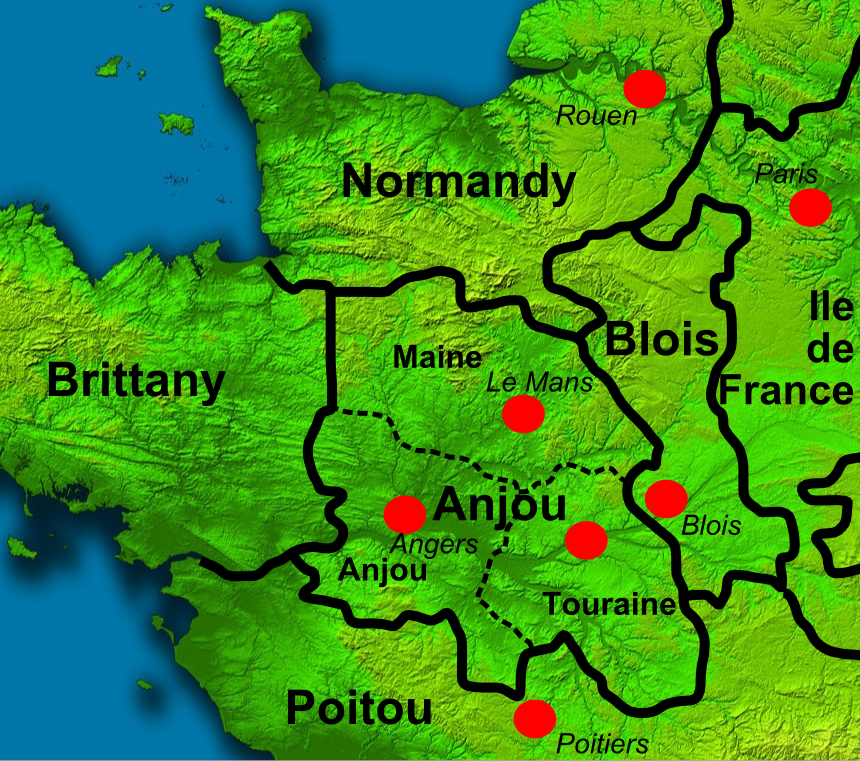
Geoffrey V (1113–1151), popularly called "the Handsome" and later known by the byname Plantagenet, was a leading western French magnate of the mid‑12th century. He is best known as Count of Anjou, Touraine and Maine from 1129 and as Duke of Normandy from 1144. By his marriage to the Empress Matilda, daughter and designated heir of King Henry I of England, Geoffrey became the progenitor of the dynasty that would rule England as the Plantagenets.
Image gallery
5 Images



Titles and domains
- Count of Anjou, Touraine and Maine (from 1129)
- Duke of Normandy (from 1144)
- Consort to the Empress Matilda, through whom his family claimed the English throne
Early life and accession
Geoffrey succeeded his father Fulk V (later King of Jerusalem) in the government of the Angevin lands in 1129. His youth and marriage were shaped by the politics of northern France and England: the death of Henry I's son in 1120 left Matilda as heiress, and an alliance with her linked the Angevin house to the English succession. The marriage gave Geoffrey both prestige and a basis for later ambitions on the Norman and English stages.
Role in the Anglo‑Norman conflicts
After King Henry I's death in 1135, a prolonged succession struggle known as the Anarchy followed. Geoffrey did not initially press a direct claim to England, but he supported his wife's claim and used military action to expand his power. In the early 1140s he campaigned in Normandy and captured Rouen in 1144, securing the duchy and the title of duke. His son, Henry Curtmantle (Henry II), would later convert these continental gains into a lasting royal inheritance.
Nickname, character and government
Geoffrey's sobriquet "the Handsome" (French le Bel) refers to his appearance; the name Plantagenet derives from the Latin planta genista (a sprig of broom) which tradition says he wore in his hat. Contemporary accounts credit him with energetic military leadership, shrewd marriage diplomacy and effective rule across his scattered territories, balancing local lordship with the broader ambitions of his household.
Legacy
Although Geoffrey never became king of England himself, his marriage produced a son who would sit on the English throne: Henry II, often called Henry Curtmantle, who inherited claims in both England and large parts of France. The dynasty that descended from Geoffrey — retrospectively named the Plantagenets — shaped Anglo‑French history for centuries. Geoffrey's actions transformed a regional count into the founder of a royal house whose reach extended far beyond the Loire valley.
For further reading on his life and the environment in which he ruled, see studies of Angevin governance, the Anarchy in England and the emergence of the Plantagenet dynasty (Henry I and Matilda are central figures in these narratives). The links here are starting points for broader overviews and primary‑source summaries available elsewhere: nickname and epithet, Anjou, Normandy, Henry II, and the dynastic label English succession.
Questions and answers
Q: Who was Geoffrey V, Count of Anjou?
A: Geoffrey V (1113–1151) was a nobleman who was the Count of Anjou, Touraine, and Maine from 1129, and the Duke of Normandy from 1144.
Q: What was Geoffrey V's nickname?
A: Geoffrey V was often called the "Handsome" (le Bel) and the "Plantagenet" (planta genista).
Q: Who did Geoffrey V marry?
A: Geoffrey V married the Empress Matilda, who was the daughter and heiress of Henry I of England.
Q: Did Geoffrey V have any children?
A: Yes, Geoffrey V had a son named Henry Curtmantle with Matilda.
Q: How did Geoffrey V's son become the English king?
A: Henry Curtmantle, Geoffrey V's son, succeeded to the English throne after the death of his cousin, King Stephen, in 1154.
Q: Why is Geoffrey V important in English history?
A: Geoffrey V is important in English history because he founded the House of Plantagenet, which produced several kings and queens of England, including his son Henry II.
Q: What does the name "Plantagenet" refer to?
A: The name "Plantagenet" refers to Geoffrey V's nickname, which was derived from the emblem of a broom (genista in Latin) that he wore in his helmet, and the Latin word "planta," meaning sprig or shoot.
Related articles
Author
AlegsaOnline.com Geoffrey V, Count of Anjou (Geoffrey Plantagenet) Leandro Alegsa
URL: https://en.alegsaonline.com/art/38117