
Diesel engine: operation, history, design, and common uses
An overview of the diesel engine: how compression-ignition engines work, key components, historical development, common applications, fuel options including biodiesel, and environmental considerations.
Overview
A diesel engine is a form of internal combustion engine that uses compression to ignite fuel rather than an electric spark. The concept is most closely associated with Rudolf Diesel, the German engineer who developed the practical form of the machine in the late 19th century and demonstrated its potential as an efficient prime mover. Diesel engines are a major class of internal combustion engines and remain widely used in transportation, industry and power generation because of their robustness and fuel efficiency.
Image gallery
10 Images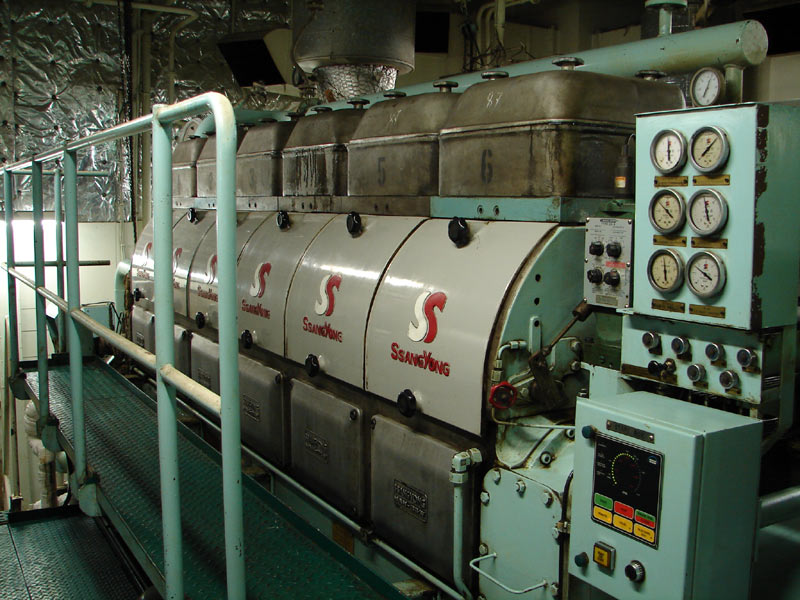


Principle of operation
Unlike spark-ignition designs that rely on an ignition system producing a spark, diesel engines compress air in the cylinder until its temperature rises sufficiently to ignite the injected fuel. In practice this requires a higher compression than found in gasoline engines. At the end of the compression stroke a measured quantity of fuel is sprayed into the hot, highly compressed air inside each cylinder, and combustion occurs almost immediately. The rapid expansion of gases produces the mechanical power that turns the crankshaft.
Major components and variants
Key parts of a diesel engine include the cylinders, pistons, crankshaft, fuel injection system and valves or ports. Injection systems have evolved from simple mechanical pumps to high-pressure common-rail and electronic control systems that precisely meter fuel and timing. Engines are built in two main cycle types: four-stroke, common in road vehicles, and two-stroke, used in some large marine and stationary engines. Many diesels incorporate forced induction: a turbocharger driven by exhaust gas boosts intake air and improves power and efficiency. Some large engines also use superchargers or compound turbocharging arrangements.
Performance characteristics
Diesel engines are valued for their high thermal efficiency and strong low-end torque, which makes them capable of moving heavy loads at low speeds. Those characteristics explain their prevalence in heavy-duty trucks, buses, construction and agricultural machines, and many locomotives. The diesel cycle favors fuel economy and durability: engines are often built with heavier, more robust components to withstand higher internal pressures and longer operating lives than comparable spark-ignition engines.
History and development
Rudolf Diesel patented his engine concept in the 1890s and showed that a compression-ignition machine could achieve greater fuel efficiency than contemporary steam and Otto-cycle engines. Early use was in stationary engines and ships, where diesel's efficiency and range displaced coal-fired steam over the 20th century. Over decades designers added fuel injection improvements, turbocharging, electronic control, and emissions treatments to meet changing performance and regulatory demands. Modern large diesel engines power ships, generators and heavy machinery, while smaller diesels serve cars and light trucks in many regions.
Fuels, alternatives and emissions
Conventional diesel fuel is a distillate of petroleum and is chemically different from gasoline. It is similar to heating oil in composition and behavior. Diesel engines can run on a wider range of liquid fuels than spark-ignition engines; vegetable oils and processed plant oils have been used both experimentally and commercially. Producers and operators have used vegetable-derived fuels such as canola oil and other plant oils, and modern processed biodiesel blends (biodiesel) are commercially available in many markets. Rudolf Diesel himself demonstrated an early engine with vegetable oil as a fuel during development.
Environmental and regulatory aspects
Diesel engines emit less carbon dioxide per unit of work than gasoline engines for comparable tasks, owing to higher efficiency, but they historically produce higher levels of nitrogen oxides and particulate matter. To address this, manufacturers and regulators have introduced aftertreatment systems such as diesel particulate filters, oxidation catalysts and selective catalytic reduction systems using urea solutions. Advances in injection technology, turbocharging and exhaust treatment have reduced many harmful emissions, although emissions control remains a significant focus for policy and engineering.
Common applications and notable facts
- Transportation: heavy trucks, buses, some passenger cars and rail locomotives.
- Maritime and power generation: many ships and stationary generators use large diesels for reliability and fuel economy.
- Construction and agriculture: equipment such as excavators and tractors favor diesel for durability and torque.
- Variants: two-stroke and four-stroke cycles, naturally aspirated and turbocharged, and engines designed for low-speed marine service.
For further reading, technical histories and engineering descriptions are available from historical biographies of inventors, engineering textbooks describing the thermodynamic cycle, and manufacturers' materials on modern fuel systems and emission controls. Practical guides explain maintenance, fuel handling and conversion options such as running on processed vegetable fuels or biodiesel blends. When researching, check authoritative sources on safety, fuel standards and emissions rules for the most current guidance.
Understanding the diesel engine requires attention to mechanical design, fuel chemistry, and environmental policy; it remains a central technology in global transport and industry because of its balance of power, efficiency and longevity.
Related topics and technical glossaries can be found through engineering reference sites and historical archives that discuss the invention and evolution of diesel power and its role in modern machinery and transportation.
Related articles
Author
AlegsaOnline.com Diesel engine: operation, history, design, and common uses Leandro Alegsa
URL: https://en.alegsaonline.com/art/27301