
Power (physics)
Power is the rate at which work is performed or energy is transferred. This article explains definitions, units, common formulas, historical context, applications, and distinctions like instantaneous vs average power.
Power is a core concept in physics describing how quickly work is done or energy is transferred from one system to another. As a rate quantity, it connects the amount of energy moved or transformed to the time over which that change occurs. The idea is distinct from the total amount of energy involved: two processes may move the same energy but differ in power because of different durations.
Image gallery
2 Images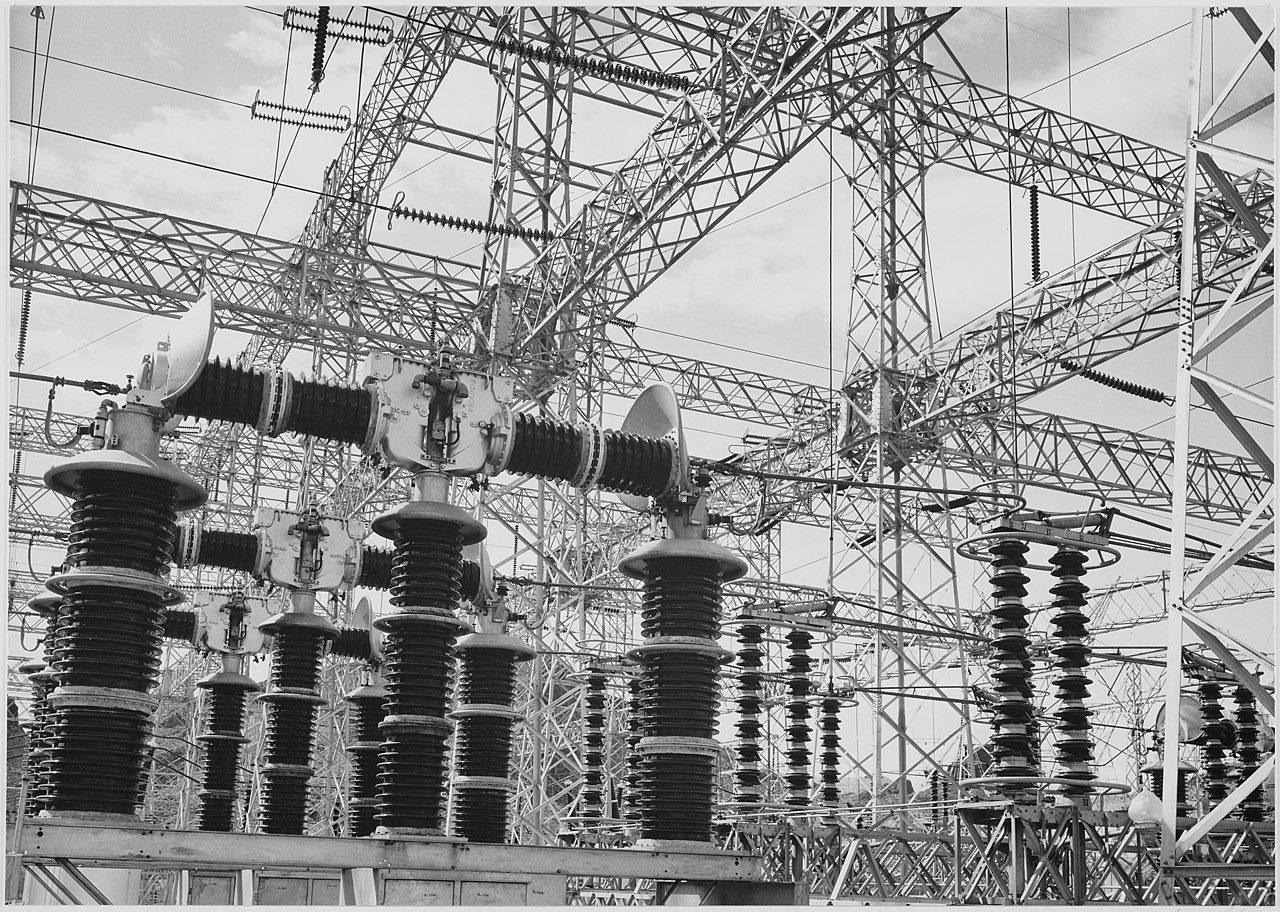

Definition and units
Formally, average power is defined as the amount of work performed divided by the time interval in which it occurs. A common symbolic expression is P = W / t, where W denotes work and t is the elapsed time. Power is an example of a physical quantity that measures a rate of energy transfer; in the International System of Units (SI) the unit of power is the watt (symbol W), defined as one joule per second. That same definition can be framed in terms of energy rather than work, since work is a transfer of energy between systems.
Common relationships and formulas
The scalar value of power can be expressed in several useful forms depending on the domain:
- Mechanical linear: instantaneous power equals the dot product of force and velocity, often written P = F · v. This shows how a force applied to a moving object transfers energy.
- Rotational: power may be written as P = τ ω, where τ is torque and ω is angular velocity, linking rotational motion to energy transfer.
- Electrical: for direct current circuits without phase shift, P = V I gives power as the product of voltage and current; in alternating circuits the instantaneous and average values require accounting for phase relationships and power factor.
History and development
The practical study of power emerged with the industrial revolution and the need to compare engines and machines. The SI unit name watt commemorates James Watt, a key figure in improving steam engine efficiency, and became a standard label for measuring rates of energy transfer. Over time the concept of power was formalized within mechanics and thermodynamics to express how quickly systems can perform work or produce heat, and it remains central to engineering and applied physics.
Applications and examples
Power appears across everyday and technical contexts. A person lifting a weight demonstrates the difference between energy and power: raising the same mass through the same height requires the same energy but higher power if the lift occurs faster. Engines, electric motors, heaters, and electronic devices are rated by power to indicate their capacity to deliver energy per unit time. Utilities and designers use power ratings to size equipment and manage energy flows, while consumers often see power values on appliances to compare performance and consumption.
Distinctions and notable facts
Several distinctions are important when working with power. Average power refers to energy transfer divided by a finite time interval, whereas instantaneous power is the limit of that quotient as the interval shrinks. Systems can also be characterized by peak power, the maximum instantaneous value, and by time-integrals of power which yield total energy. In electrical systems, apparent, real and reactive power are separate concepts used when voltages and currents are out of phase. Finally, practice often uses multiples of the watt (kilowatts, megawatts) to express human-scale and industrial power levels, and technical standards tie those measures to safety and performance criteria. For further contextual information on related concepts, see entries on work and energy.
Understanding power helps bridge abstract energy accounting and real-world capability: it answers not only how much change is possible, but how quickly that change can be effected. For technical references and deeper derivations of the relationships above, consult foundational texts in mechanics, electromagnetism and thermodynamics or standard resources on units and measurements. See also practical guides on machine ratings and electrical power systems for applied perspectives.
Related topics: physical quantities, SI units, and time conventions in measurements (time).
Questions and answers
Q: What is power in physics?
A: In physics, power is how fast work is done or energy is given from one thing to another.
Q: How is power measured?
A: Power is measured in watts (symbol: W) in the SI system of measurement.
Q: What happens when a heavy weight is lifted quickly compared to slowly?
A: The same amount of work will have been performed, but a quick lift requires more power, meaning the work can be done in a shorter time if there is more power available.
Q: How can we calculate power?
A: Power can be calculated as the rate of change of work done or the energy of a subsystem by using the equation P = W/t where P is power, W is work and t is time.
Q: Is there another way to calculate power?
A: Yes, it can also be calculated as force times velocity (or speed).
Related articles
Author
AlegsaOnline.com Power (physics) Leandro Alegsa
URL: https://en.alegsaonline.com/art/78534