
Distributed generation: decentralized electricity production and microgeneration
Distributed generation is the local production of electricity by many small units instead of large centralized plants, enabling resilience, reduced losses, and integration of renewables.
Distributed generation refers to a pattern of producing electrical energy close to where it is consumed using many small-scale sources rather than relying exclusively on large, centralized power plants. It is part of a broader set of approaches to modern energy systems and can operate while connected to the utility network or independently in islanded mode. For a technical overview of underlying systems, see electricity generation system.
Image gallery
2 Images
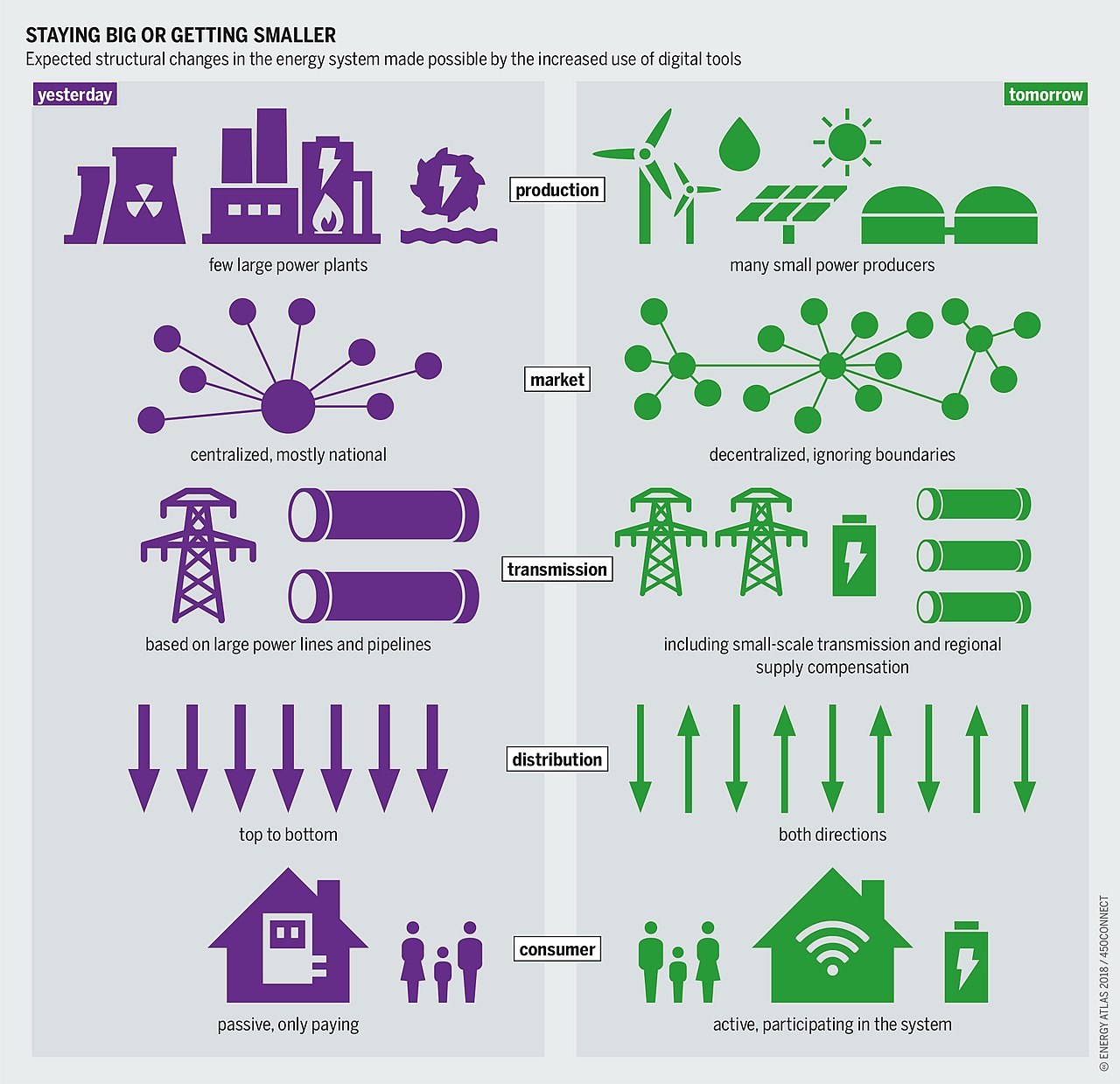
Characteristics and typical components
Distributed generation installations vary widely in size and technology. Common elements include rooftop solar photovoltaic arrays, small wind turbines, combined heat and power (CHP) plants, microturbines, fuel cells, and battery storage. These units can be installed on homes, commercial buildings, industrial sites or community facilities. The electricity they produce often serves local loads first and may export surplus to the wider network; more detail about the energy flow is available at electricity resources.
History and development
Historically, electricity systems favored large centralized generating stations and long transmission networks. During the late 20th and early 21st centuries, advances in materials, power electronics, and policy incentives — plus the falling cost of solar and batteries — encouraged wider adoption of distributed generators. Regulatory changes and smart-grid technologies further enabled two-way power flows and more active participation by consumers.
Uses, benefits and importance
- Improved resilience and local reliability: distributed units can keep essential services running during wider outages and strengthen system security.
- Reduced transmission and distribution losses by generating near demand centers and supporting peak loads.
- Facilitation of renewable integration and decarbonization through local solar and storage.
- Economic opportunities for consumers, communities and businesses that adopt behind‑the‑meter generation.
Challenges and notable distinctions
Integrating many small generators creates technical and regulatory challenges: maintaining voltage and frequency stability, coordinating protection systems, managing two‑way power flows, and ensuring fair interconnection rules. Microgrids and community energy projects are special cases of distributed generation that combine multiple local resources and controls to operate as an integrated unit. Behind‑the‑meter systems differ from utility‑scale distributed resources in ownership, incentives and visibility to grid operators.
As countries modernize grids, distributed generation plays a growing role alongside central plants. Its expansion depends on policy frameworks, technological developments in storage and controls, and standards that allow safe, economic interconnection with the broader electrical grid, often accessed through the local electrical grid.
Related articles
Author
AlegsaOnline.com Distributed generation: decentralized electricity production and microgeneration Leandro Alegsa
URL: https://en.alegsaonline.com/art/27742