
Jet engine: principles, types, history and uses
Overview of jet engines: how they produce thrust, main components and types (turbojet, turbofan, turboprop, ramjet, pulse jet, rocket), history, performance, uses and environmental considerations.
A jet engine produces thrust by accelerating a mass of fluid—most commonly air mixed with combustion products—rearward so that the vehicle experiences an equal and opposite force. Simple demonstrations, such as a released inflated balloon, illustrate the reaction principle and are useful introductions (balloon example). The general concept of a device that produces thrust by expelling a fluid is sometimes referred to broadly as a jet engine.
Image gallery
10 Images


Basic principle and main components
Air‑breathing jet engines are typically gas turbines. Incoming air is slowed and compressed, fuel is added and burned to raise temperature and pressure, and the expanding hot gases pass through a turbine before leaving through a nozzle. The turbine extracts some energy to drive the compressor and any front fan. Typical components include:
- Intake: ducts and inlets that deliver smooth airflow to the compressor.
- Compressor: rotating and stationary blade rows that increase air pressure and density (compressor basics).
- Combustion chamber: where fuel is mixed with compressed air and ignited; careful design controls temperature and emissions (fuel and combustion).
- Turbine: extracts mechanical energy from hot gases to drive the compressor and accessory systems (turbine function).
- Nozzle: converts pressure into high‑velocity exhaust to generate thrust.
Common types of jet engines
Different families of jet engines are optimized for particular speed ranges, efficiency goals and applications:
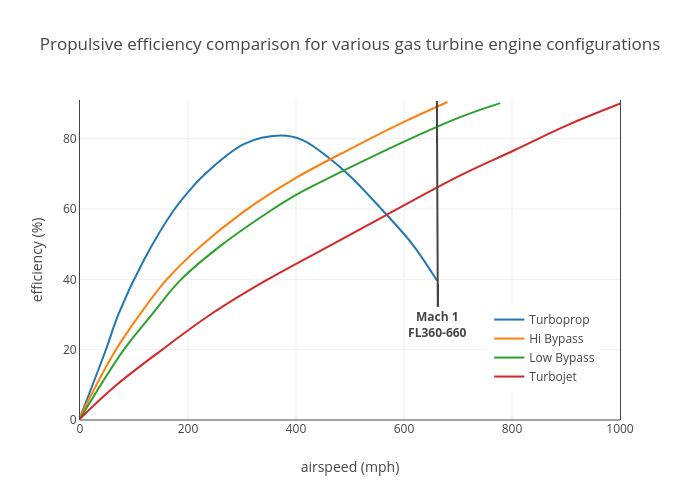
- Turbojet: a direct gas‑turbine design where most thrust comes from high exhaust velocity; efficient at high speeds but less so at subsonic cruise.
- Turbofan: features a large front fan that bypasses some air around the engine core; high‑bypass turbofans give better fuel efficiency and lower noise for subsonic airliners.
- Turboprop: a gas turbine that drives a propeller; effective for lower‑speed aircraft where propulsive efficiency is important.
- Ramjet and pulse jet: simple or valved designs that rely on the vehicle's speed to compress incoming air; used in high‑speed missiles, target drones and some experimental applications.
- Rocket engines: carry their own oxidizer and propellant, do not rely on atmospheric air, and are used where operation outside the atmosphere or very high thrust is required.
Performance and operating concepts
Key performance measures include thrust, specific fuel consumption and specific impulse (especially for rockets). For air‑breathing engines, bypass ratio (the mass of air bypassing the core compared with the mass passing through the core) strongly affects efficiency and noise. Afterburners can temporarily increase thrust for military aircraft by injecting fuel into the exhaust stream, but at high fuel cost. Propulsive efficiency varies with flight speed; designers match engine type to mission profile to balance fuel use, weight and noise.
History and development
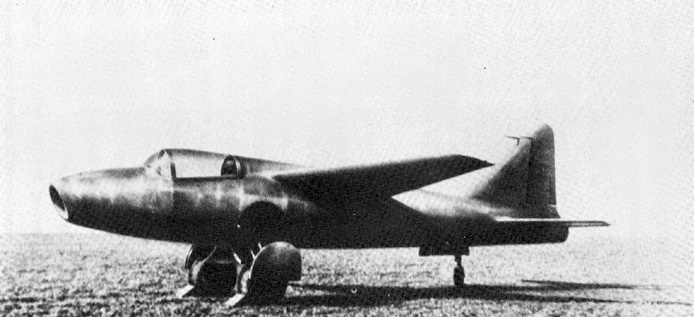
The practical turbojet emerged in the 1930s and 1940s through independent work by pioneers such as Sir Frank Whittle and Hans von Ohain, leading to the first jet‑powered aircraft. Since then, advances in materials, high‑temperature alloys, cooling techniques, aerodynamics and computer controls have steadily improved reliability, thrust‑to‑weight ratios and fuel efficiency. Variants and incremental innovations—such as the high‑bypass turbofan and geared turbofan concepts—have shaped modern commercial and military propulsion.
Applications and examples
Jet engines power a wide range of vehicles and systems: commercial airliners and freighters, military fighters and bombers, business jets, helicopters using turboshaft variants, cruise missiles and sounding rockets. Industrial gas turbines derived from aircraft engines are used for power generation and mechanical drive. Rockets enable launch vehicles and spacecraft by providing high thrust in and beyond the atmosphere (rocket propulsion).
Environmental, operational and safety considerations
Jet engines produce noise, carbon dioxide and other combustion byproducts; these impacts drive regulation, operational procedures and research into cleaner fuels and quieter designs. Maintenance and inspection are critical due to high temperatures, rotating parts and safety margins; modern engines incorporate health monitoring and modular components to reduce downtime. Fire safety, foreign object ingestion protection and redundancy are important aspects of design and certification.
Variants, experimental concepts and future trends
Research continues into higher‑efficiency cycles, alternative and sustainable aviation fuels, hybrid‑electric and electrically assisted propulsion, and hypersonic concepts such as scramjets. Improvements in materials, additive manufacturing and digital engine controls support lighter, more efficient and more easily maintained engines. For accessible overviews of particular components and engine types see resources on turbojets, the compressor and turbine sections, and introductory material on jet propulsion.
Further reading and introductory guides: general introductions (jet engine basics), engine families and history (turbojet and turbofan overview), fuel and combustion topics (fuel systems), and high‑speed propulsion examples such as ramjets and pulse jets.
Related articles
Author
AlegsaOnline.com Jet engine: principles, types, history and uses Leandro Alegsa
URL: https://en.alegsaonline.com/art/50088