
Dictatorship: definition, forms, mechanisms, and historical patterns
Overview of dictatorships: definitions, common features, how they arise and consolidate power, variations of authoritarian regimes, impacts on society, resistance and transitions, and avenues for further study.
Overview
A dictatorship is a form of government in which political power is concentrated in the hands of a single individual or a small group that is not meaningfully constrained by rival institutions or by regular, free and competitive elections. The person who exercises such concentrated authority is commonly called a dictator. When the ruling group consists primarily of military officers, the regime is often described as a junta or military dictatorship. Some hereditary systems, such as an absolute monarchy in which a king or queen retains unchecked authority, can resemble dictatorships in practice though they differ in origin, tradition and claims of legitimacy.
Image gallery
10 Images


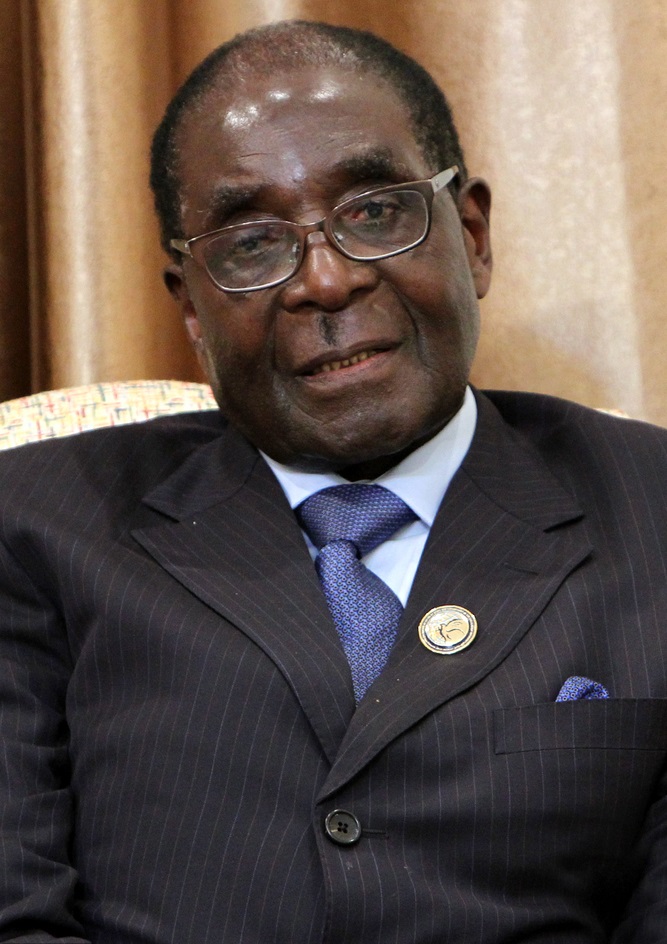

Core characteristics
Dictatorships share a set of common institutional and behavioural features even when they differ in ideology, leadership style and social base. Typical attributes include the restriction or elimination of competitive party politics, control or suppression of independent media and civil society, and the neutralization of legislative or judicial checks on the executive. Rulers often reconfigure or suspend constitutional arrangements to make their authority appear lawful, for instance by rewriting a constitution or staging controlled elections. Political parties and organizations that threaten the regime are frequently banned, co-opted or otherwise dismantled.
- Institutional control: co-option or replacement of parliaments, courts and election management bodies to prevent effective oversight (for example weakening the parliament or congress).
- Repressive apparatus: deployment of state terrorism, secret police forces (secret police), and occasionally organized death squads or paramilitary units.
- Societal restrictions: prohibition or tight control of unions and civic groups, limits on academic freedom and curfews such as night curfew orders.
How dictatorships arise
Dictators frequently emerge in moments of crisis or rapid change. Economic shocks such as rising inflation or acute unemployment, political paralysis, violent conflict, or a perceived threat to public order create openings for leaders who promise stability and decisive action. At times intellectual or ideological frameworks also justify extraordinary rule; for example, some revolutionary movements articulated a temporary dictatorship of the proletariat as a transitional stage in theory, while other thinkers contrasted regimes based on whether they could be changed without violence, a distinction emphasized by critics such as Karl Popper.
Historical processes play a role as well. After decolonization many states in Africa and elsewhere experienced political centralization and one-party or personalist rule. In Latin America, coups by military officers established a number of juntas that displaced civilian governments. Earlier models such as the office of the Roman dictator were conceived as temporary emergency roles appointed during an emergency, but the idea of extraordinary powers has sometimes been extended or abused to create long-standing personal rule.
Consolidation and everyday mechanisms of control
Once in power, rulers try to consolidate control by removing opponents, reshaping institutions and securing loyalties. Political rivals may be imprisoned, exiled or killed; independent parties and civic organizations are often dissolved and their resources seized. Regimes may use indefinite detention without trial (indefinite arrest), torture systems (torture), detention centres and camps to intimidate or eliminate dissent. Claims about an internal threat can be amplified or fabricated: regimes sometimes invent an internal enemy and assert they are at war, arguing that extraordinary measures are required for national survival.
- Remove or neutralize rivals through imprisonment, exile, execution, or co-optation.
- Control information by censoring media, restricting the press and disbanding organizations that monitor rights, such as groups focused on civil rights or human rights.
- Secure the loyalty of security forces and the bureaucracy by placing loyalists in key positions and by offering patronage.
Variations of authoritarian rule
Not every dictatorship is identical. Major types include:
- Personalist regimes: power revolves around a single dominant leader and a narrow circle of supporters.
- Military regimes: the officer corps rules directly and often justifies rule as necessary for order or national development.
- Single-party states: one political party dominates state institutions and political life, sometimes retaining the appearance of collective leadership.
- Monarchic dictatorships: hereditary rulers concentrate power, which may be ceremonial or absolute depending on the system.
Some regimes attempt to maintain a veneer of legality, for example by amending or replacing the constitution, staging managed elections or creating controlled opposition that legitimizes the regime without threatening it. Repression frequently targets vulnerable or marginalized groups, including the urban poor, members of the working class, residents of informal settlements such as shanty towns, ethnic or religious minorities, and organized labour or teacher associations (teachers) that might mobilize opposition.
Social and political consequences
The impacts of dictatorships extend across politics, law, the economy and everyday life. Political pluralism and independent institutions tend to weaken. Human rights abuses can be widespread where oversight is absent. Economic performance under dictators varies: some regimes pursue rapid development policies while others produce stagnation or corruption. The long-term legacy of authoritarian rule often includes weakened civic institutions, polarized societies, and difficulties in rebuilding trust and democratic practices after transitions.
Resistance, transition and international response
Resistance to dictatorial rule can take many forms: underground political organizing, mass protests, strikes by labour movements, nonviolent civil disobedience, and at times armed rebellion. Transitions away from dictatorship have followed negotiated settlements, mass uprisings, international pressure, splits within ruling elites, or electoral processes when openings appear. International actors may respond through diplomacy, sanctions, conditional aid, or support for civil society and independent media, though external interventions have mixed results and may exacerbate conflict.
Historical patterns and examples
Throughout modern history, dictatorships have appeared in diverse regions and contexts. Military juntas were prominent in Latin America in the mid to late twentieth century. In Europe and elsewhere, fascist and totalitarian movements produced highly repressive regimes in the interwar and wartime periods with catastrophic human consequences. In the post-colonial era numerous newly independent states experienced periods of one-party or personalist rule as leaders centralized power in the name of stability and development. Some dictatorships lasted for decades, while others were relatively brief; transitions often required sustained internal and external efforts to reconstruct accountable governance.
Restoring accountable governance
Restoration of accountable, pluralistic governance typically involves rebuilding independent institutions, ensuring the rule of law, protecting fundamental freedoms, promoting inclusive economic policies, and creating mechanisms for reconciliation and transitional justice where atrocities have occurred. Civil society, an independent judiciary and free media play a central role in preventing a return to autocracy. International norms and human-rights frameworks can support these efforts, but durable change usually depends on domestic political will and broad public engagement.
Further reading and resources
For readers seeking more detailed treatment of particular cases, theories and legal frameworks, the following links provide starting points for comparative and historical study. These are presented as placeholders that point to specialized sources and scholarly works:
- Dictator — overview and definitions
- Military rule and armed forces in politics
- Junta and coup d'état studies
- Monarchy and absolute sovereignty
- Kings and monarchical institutions
- Queens and royal authority
- Roman dictators—historical precedent
- Emergency powers and their limits
- Marx and political theory
- Dictatorship of the proletariat — conceptual discussion
- Popper and the critique of authoritarianism
- Unemployment and political instability
- Inflation and economic shocks
- Working class movements and repression
- Urban poverty and informal settlements
- Latin America: patterns of authoritarian governance
- Exile and the fate of political opponents
- Democratic institutions and their protection
- Parliamentary institutions in comparative perspective
- Congress and legislative checks
- Civil rights organizations and monitoring
- Human rights groups and documentation
- Professional associations and teachers' federations
- Constitutions and constitutional change
- State terrorism and coercive politics
- Secret police and surveillance
- Death squads and extrajudicial violence
- Curfews and emergency measures
- Arbitrary detention and legal safeguards
- Torture and international law
- Manufactured internal enemies in propaganda
- War rhetoric and justification of repression
These topics intersect with comparative politics, legal studies, human-rights scholarship and history. Readers are encouraged to consult academic monographs, impartial human-rights reports and primary historical documents to explore how these themes have unfolded in particular countries and periods.
Related articles
Author
AlegsaOnline.com Dictatorship: definition, forms, mechanisms, and historical patterns Leandro Alegsa
URL: https://en.alegsaonline.com/art/27231