
Roman dictator (Republican magistracy)
Temporary supreme magistrate of the Roman Republic with concentrated authority for a specific task or emergency; legally limited in scope and duration, distinct from later autocratic dictatorships.
Overview
The Roman dictator was a special, extraordinary magistrate of the Roman Republic appointed to exercise concentrated authority over the state for a limited purpose. In republican practice the office was constitutional: it granted the holder supreme imperium within a defined sphere to resolve crises, lead armies, or perform key public duties that exceeded the capacity of ordinary magistrates. The dictator was, in origin and concept, the senior among Rome’s elected officials, a temporary counterpart to the regular magistrate system rather than a permanent sovereign.
Image gallery
4 Images


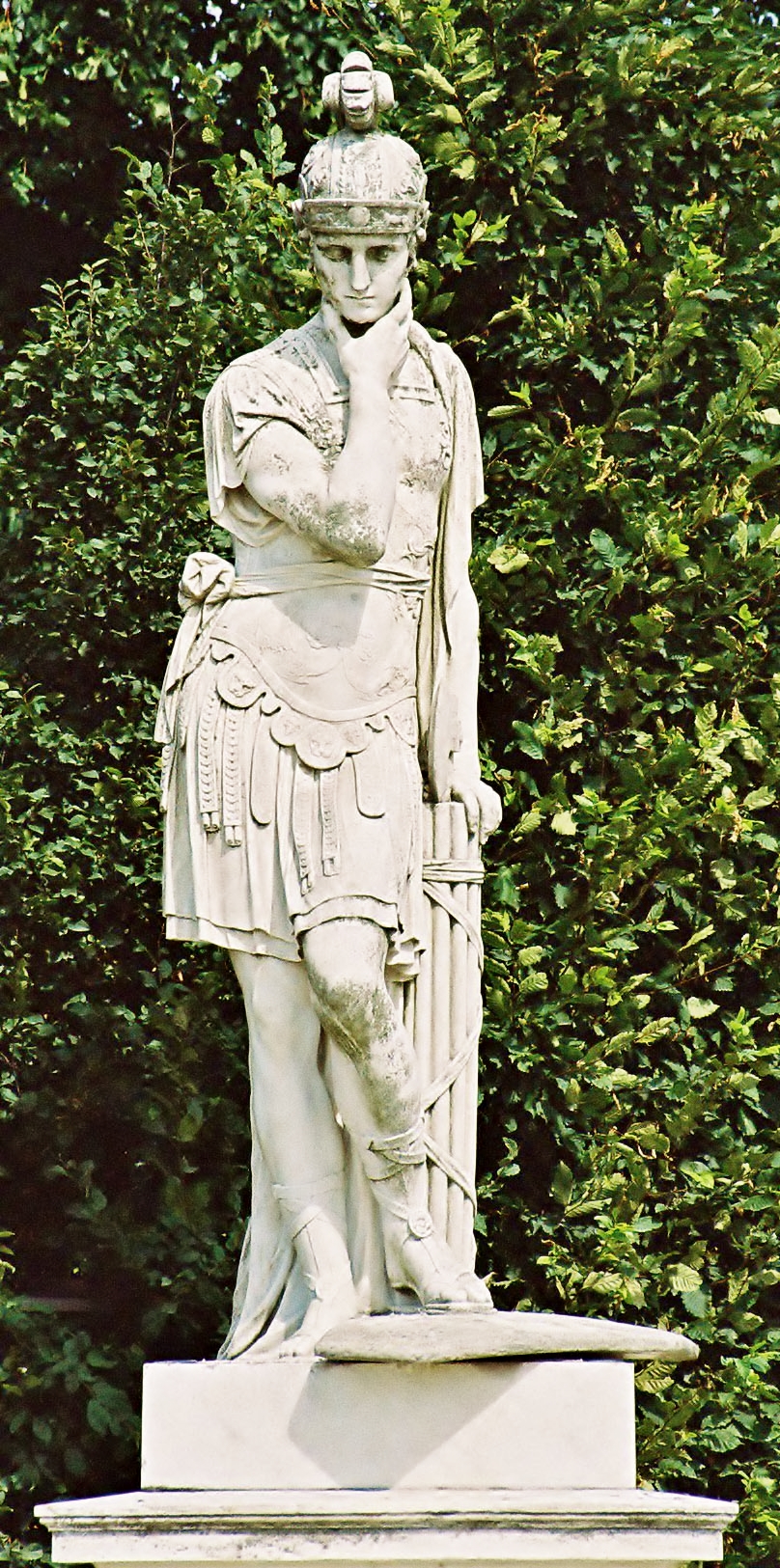
Appointment and powers
When urgent action was needed—commonly a military emergency—the senate would authorize the nomination of a dictator, and one of the consuls would appoint him. The dictator possessed overarching command authority and could override other magistrates within the specific remit assigned as his causa (reason). He normally named a deputy, the magister equitum, who acted as lieutenant and commanded the cavalry. The office freed commanders from the procedural constraints that could slow ordinary magistrates, and it allowed the state to concentrate decision-making for efficient response.
Limitations and legal safeguards
Despite the extensive powers, the dictatorship was bounded by clear legal and customary limits. Most famously, the term was short—traditionally six months—or until the dictator’s task was completed. His authority was confined to the explicit purpose for which he was appointed; he was expected to lay down power once that purpose was achieved. The rights of the Tribune of the plebs to block actions were curtailed in practice while a lawful dictator served, and the normal veto mechanisms were of limited effect against him, though extreme abuse could provoke political backlash.
Key features
- Temporary, extraordinary magistracy with supreme imperium within a defined scope.
- Usually appointed by a consul with senatorial approval for emergencies or special tasks.
- Typically limited to six months or the completion of a specified task.
- Supported by a magister equitum as deputy and often surrounded by traditional religious and legal formalities.
History and notable examples
Dictators were used from the early Republic through the period around the Second Punic War, when Rome’s military strains made the office useful. Famous early examples illustrate both the office’s purpose and its moral ideal: the semi-legendary Cincinnatus was called from his farm to lead Rome, then promptly resigned and returned to private life, becoming a model of civic virtue. After a long interval with few or no appointments, the dictatorship reappeared in a transformed, more dangerous guise in the late Republic. Sulla assumed near-absolute powers after civil war and used the title to enact sweeping constitutional changes; later Caesar accepted extended and then perpetual dictatorship, measures that unsettled republican norms and helped trigger his assassination. These later uses showed how the office could be converted from temporary emergency instrument to vehicle for personal rule.
Decline, abolition and legacy
After Caesar’s death the traditional republican dictatorship was formally abolished and not revived under the subsequent Empire, where imperial authority made the separate office redundant. In historical memory the Roman dictator thus exists in two distinct senses: the early republican magistrate, a constitutionally temporary remedy for crises, and the later autocratic figures whose behaviour lent the word “dictator” the negative connotations it carries today. Modern discussions of dictatorship often contrast the Roman practice—legal, limited, and episodic—with later, indefinite personal rule that ignores institutional constraints.
Further reading and resources
For summaries of constitutional procedure, military command, and the political culture surrounding the office, consult standard works on the Roman Republic and biographies of prominent holders such as Sulla and Caesar. Primary and secondary treatments examine how an emergency magistracy designed to protect the state could, under different conditions, be transformed into a tool for individual domination. See also entries on the magistracy, the Roman Republic, and the role of the Tribune of the plebs for context.
Questions and answers
Q: What was the role of a dictator in the Roman Republic?
A: A dictator was the senior magistrate of the Roman Republic who had the full authority of the state to deal with a military emergency or to undertake a specific duty.
Q: How long could a dictator hold their position?
A: A dictator had to resign once their task was done, or after six months.
Q: What was the power of the Tribune of the Plebs over a dictator?
A: The power of the Tribune of the Plebs to veto a dictator's actions was extremely limited.
Q: Why were limitations placed on a dictator's powers?
A: Limitations were placed on a dictator's powers to prevent the dictatorship from threatening the state itself.
Q: When were no dictators appointed for over a century in the Roman Republic?
A: No dictators were appointed for over a century after the Second Punic War.
Q: Who revived the idea of appointing dictators in the Roman Republic after over a century?
A: The idea of appointing dictators was revived by Sulla and later by Caesar.
Q: Was the office of a dictator formally abolished in the Roman Republic?
A: Yes, the office of a dictator was formally abolished after the death of Caesar and was not revived under the Empire.
Related articles
Author
AlegsaOnline.com Roman dictator (Republican magistracy) Leandro Alegsa
URL: https://en.alegsaonline.com/art/83850