
Storm history of Hurricane Ivan (2004)
Comprehensive meteorological history of Hurricane Ivan (2004), covering its origins, intensification, track through the Caribbean and Gulf Coast, regeneration, and notable records from its long Atlantic lifespan.
Overview
Hurricane Ivan was one of the most long-lived and complex storms of the 2004 Atlantic hurricane season. Its meteorological history includes a classic tropical-wave origin, multiple episodes of rapid intensification and weakening, a lengthy steered westward track across the tropical Atlantic and Caribbean, a Gulf Coast landfall, extratropical transition, and an unusual re-intensification of its remnant circulation. Detailed analyses and reports on the storm structure and lifecycle are available from a variety of post-storm studies and summaries, which examine the dynamics that shaped Ivan's behavior meteorological analysis and the general storm chronology storm summary. Ivan is often discussed in reviews of long-duration Atlantic cyclones tropical cyclone record and seasonal context 2004 season review.
Image gallery
9 Images




Origins and early development
The system that became Ivan began as a tropical wave that moved off the west coast of Africa at the end of August. Satellite imagery and surface observations trace the wave's progression across the eastern Atlantic beginning on August 31, when it emerged from the African coast African easterly wave. Moving westward beneath a subtropical ridge that steered many systems that season steering patterns, the wave gradually consolidated convection. Environmental factors — warm sea surface temperatures, low vertical wind shear, and a moist mid-troposphere — allowed the system to organize into Tropical Depression Nine on September 2 in the deep tropical Atlantic depression genesis and begin its long life initial track.
Intensification to major hurricane
After slow strengthening during the first days, the developing cyclone underwent a period of rapid deepening around September 5, when central pressures fell quickly and sustained winds increased rapid deepening study. By that time Ivan reached major hurricane status on the Saffir–Simpson scale and set a record as one of the most southerly major hurricanes observed at that time southernmost major. Dry air intrusions produced temporary weakening episodes, but the storm reorganized and maintained a powerful inner core as it moved through the central Caribbean Sea intensity fluctuations.
Peak intensity and Caribbean passage
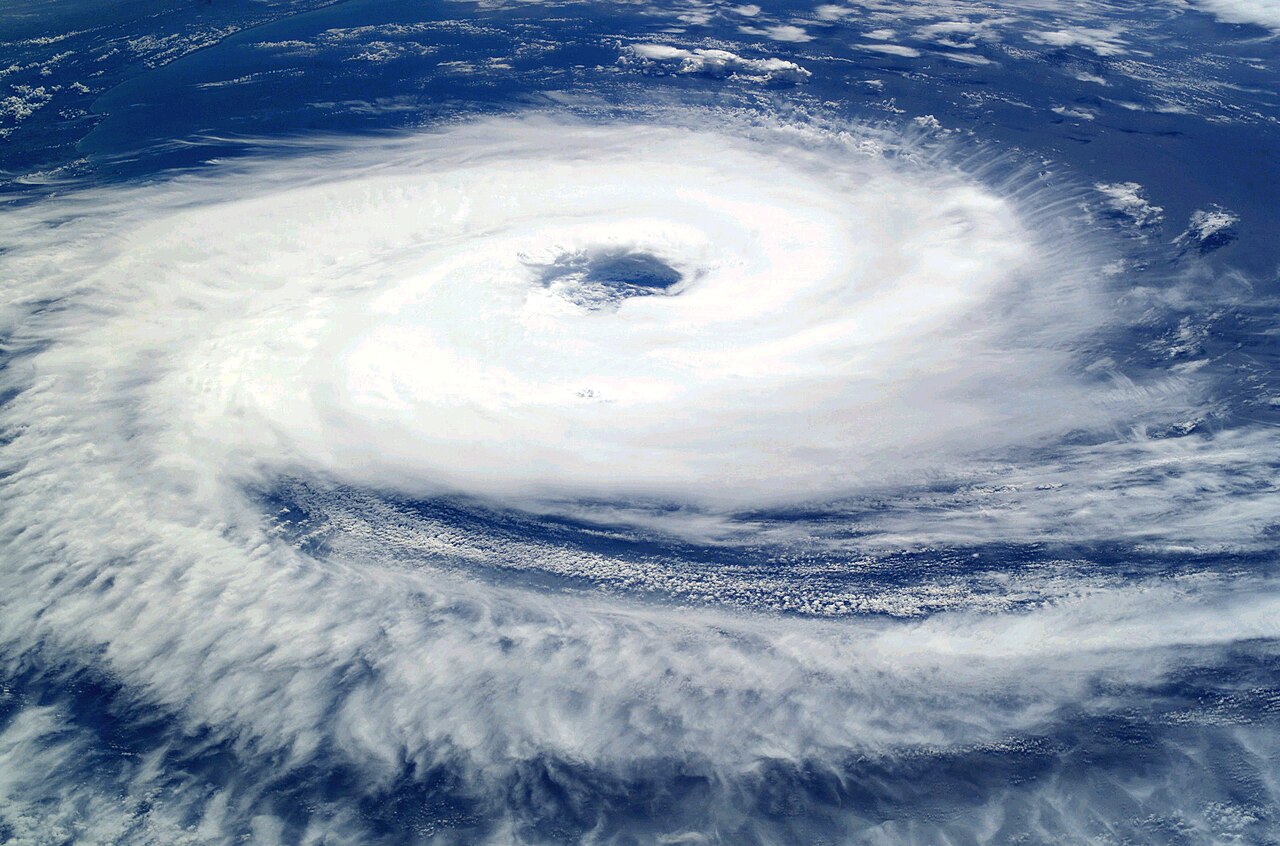
Ivan intensified to Category 5 strength in the central Caribbean, attaining its peak intensity during a window of very favorable oceanic and atmospheric conditions peak intensity. During the following days its eyewall underwent cycles of contraction and replacement, a common process in very intense hurricanes that causes stepwise changes in maximum winds and eye size eyewall replacement. The hurricane passed just south of Grenada as a major hurricane on September 7 Grenada proximity, then tracked west-northwest brushing Jamaica Jamaica passage, the Cayman Islands Cayman proximity, and the western end of Cuba Cuba approach while remaining at or near extreme intensity.
Turn north, U.S. landfall, and transition
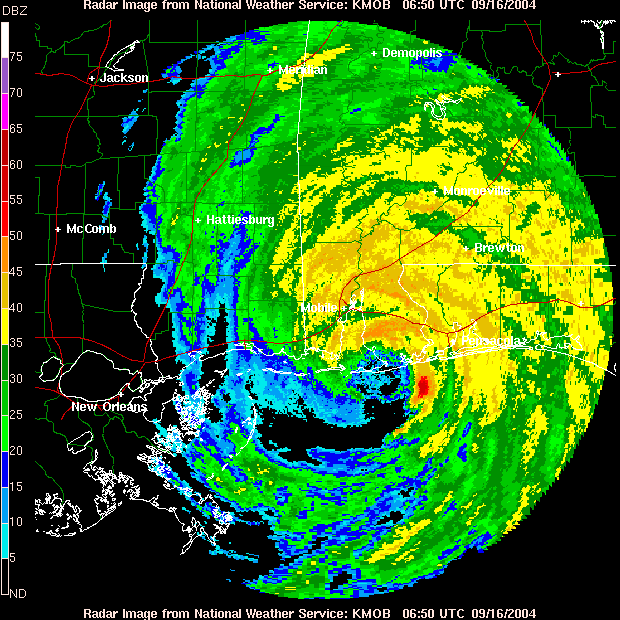
After the Caribbean phase Ivan began a gradual turn toward the north and north-northwest as it encountered changing steering currents and increasing shear turning mechanisms. The hurricane weakened from peak strength but remained a powerful system when it moved into the southeastern Gulf of Mexico. On September 16 Ivan made landfall just west of Gulf Shores, Alabama, with sustained winds estimated near 120 mph (195 km/h) and caused extensive coastal impacts along the northern Gulf Coast landfall analysis. The circulation quickly lost tropical characteristics over land, diminished to a tropical depression, and transitioned into an extratropical cyclone by September 18 as it moved eastward over cooler seas and into stronger mid-latitude flow extratropical transition.
Remnant regeneration and final dissipation
Unusually, the low-level remnant of Ivan remained coherent as it tracked southward and southwestward after its extratropical phase. Crossing Florida on September 21, the remnant found improved conditions over the Gulf of Mexico and regained tropical characteristics, redeveloping into a tropical depression on September 22 to the southeast of Louisiana remnant crossing. The regenerated system briefly strengthened to near 60 mph (95 km/h) before weakening and making landfall along southwestern Louisiana as a tropical depression regeneration and second landfall. Ivan's circulation finally dissipated after moving into Texas on September 25 final dissipation, ending a complex lifecycle that included multiple phases of tropical and extratropical behavior lifecycle review.
Timeline and notable records
- August 31 — Tropical wave emerges off Africa.
- September 2 — Classified as Tropical Depression Nine in the deep tropical Atlantic.
- September 5 — Rapid deepening to Category 4 and later Category 5 in the central Caribbean.
- September 7–10 — Passage south of Grenada, Jamaica, the Cayman Islands, and western Cuba.
- September 16 — Gulf Coast landfall near Gulf Shores, Alabama.
- September 18–22 — Extratropical transition, remnant crossing of Florida, and regeneration southeast of Louisiana.
- September 25 — Final dissipation after moving into Texas.
Ivan set or tied several intensity and positional records for that era and ranked among the longest-lasting Atlantic hurricanes on record. Its complex behavior — strong intensification, repeated eyewall cycles, and post-landfall regeneration — has made it a subject of continued interest in hurricane dynamics research and in assessments of forecast challenges during multi-phase tropical cyclone lifecycles research review and operational summary.
Questions and answers
Q: What was the meteorological history of Hurricane Ivan?
A: The meteorological history of Hurricane Ivan began on August 31 when it developed from a tropical wave off the coast of Africa. It slowly intensified until September 5, when it underwent rapid deepening and reached Category 4 status. Over the next few days its intensity changed due to eyewall replacement cycles, and it passed south of Jamaica, the Cayman Islands, and western Cuba with winds at or slightly below Category 5 status. It then made landfall just west of Gulf Shores, Alabama on September 16 with winds of 120 mph (195 km/h). After crossing Florida on September 21 it regained tropical characteristics and became a tropical depression again on September 22 before moving ashore along southwestern Louisiana as a tropical depression; its circulation dissipated after crossing into Texas on September 25.
Q: When did Hurricane Ivan first develop?
A: Hurricane Ivan first developed from a tropical wave off the coast of Africa on August 31.
Q: How strong was Hurricane Ivan when it made landfall in Alabama?
A: When Hurricane Ivan made landfall in Alabama, it had winds of 120 mph (195 km/h).
Q: Where did Hurricane Ivan pass through before making landfall in Alabama?
A: Before making landfall in Alabama, Hurricane Ivan passed south of Jamaica, the Cayman Islands, and western Cuba with winds at or slightly below Category 5 status.
Q: What was unique about Hurricane Ivan's intensity records?
A: The intensity records set by Hurricane Ivan were unique because they were some of the southernmost major hurricane records ever recorded.
Q: How long did Hurricanes last for during 2004 Atlantic hurricane season? A: The duration for hurricanes during 2004 Atlantic hurricane season varied but one particular storm -Hurricane Ivan- lasted for 10 days which is considered to be one of the longest durations recorded for an Atlantic hurricane.
Q: When did Hurrican Ivan transition into an extratropical cyclone?
A:Hurricane transitioned into an extratropical cyclone on September 18th
Related articles
Author
AlegsaOnline.com Storm history of Hurricane Ivan (2004) Leandro Alegsa
URL: https://en.alegsaonline.com/art/94100
Sources
- nhc.noaa.gov : "Hurricane Ivan Tropical Cyclone Report"
- nhc.noaa.gov : "Tropical Depression Nine Discussion One"
- nhc.noaa.gov : "Tropical Depression Nine Discussion Two"
- nhc.noaa.gov : "Tropical Storm Ivan Discussion Five"
- nhc.noaa.gov : "Tropical Storm Ivan Discussion Eight"
- nhc.noaa.gov : "Tropical Storm Ivan Discussion Ten"
- nhc.noaa.gov : "Hurricane Ivan Discussion Ten"
- nhc.noaa.gov : "Hurricane Ivan Discussion Fifteen"
- nhc.noaa.gov : "Hurricane Ivan Discussion Seventeen"
- nhc.noaa.gov : "Hurricane Ivan Discussion Nineteen"
- nhc.noaa.gov : "Hurricane Ivan Discussion Eighteen"
- nhc.noaa.gov : "Hurricane Ivan Discussion Twenty"
- nhc.noaa.gov : "Hurricane Ivan Discussion Twenty-Four"
- nhc.noaa.gov : "Hurricane Ivan Discussion Twenty-Eight"
- nhc.noaa.gov : "Hurricane Ivan Discussion Thirty-Seven"