
Swamp: forested wetland — types, ecology, and notable examples
Swamps are forested wetlands saturated with fresh, brackish, or salt water. They host rich biodiversity, store carbon, reduce floods, and filter water. Major examples include the Pantanal and Everglades.
Overview
A swamp is a kind of wetland characterized by persistent surface or near-surface water and a dominance of trees and woody vegetation. As a working ecosystem, swamps provide habitat for many species and link aquatic and terrestrial landscapes through seasonal flooding, vegetation structure, and hydrological exchange.
Image gallery
10 Images


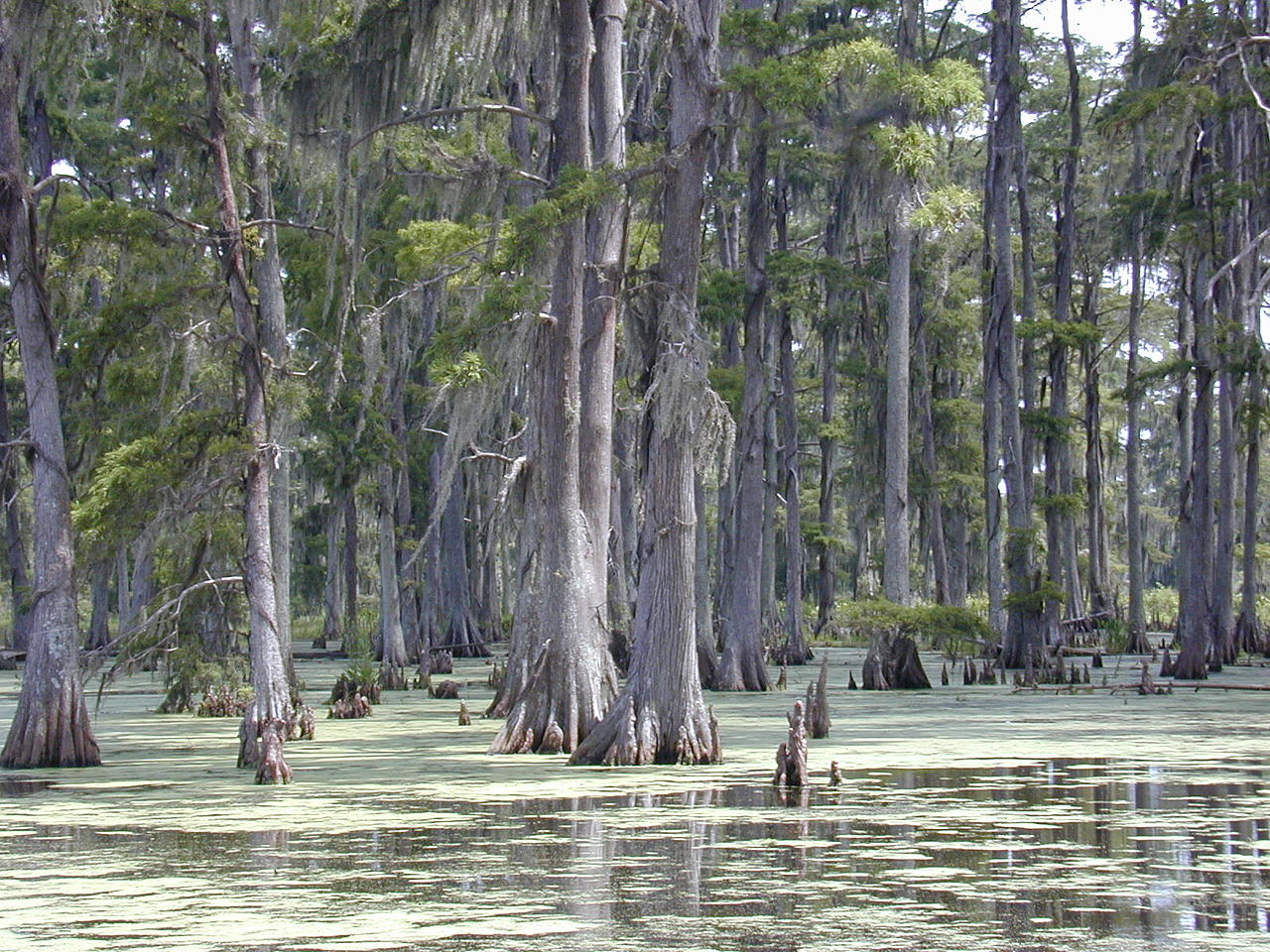
Characteristics and types
Swamps vary by water source and salinity. Some are fed by rivers and groundwater and are effectively fresh water systems; others receive tidal inputs and are brackish water or saltwater. Typical features include waterlogged soils, slow decomposition that can lead to accumulation of peat, and a canopy or thicket of trees such as mangroves in coastal swamps or cypress and willows inland.
Ecology and functions
Swamps support high biodiversity: they are important nesting and breeding grounds for birds and habitat for other animals, including amphibians, reptiles, mammals, and a variety of aquatic invertebrates and plants. Functionally, swamps act as natural filters, trapping sediments and improving water quality before it reaches rivers and aquifers, and they interact with groundwater to regulate local hydrology. By storing organic material and slowing decomposition under anoxic conditions they also sequester carbon, which has implications for the global carbon cycle.
Distribution and notable swamps
Swamps occur on every continent except Antarctica and are prominent along major rivers, coastal plains, and in lowland basins. Some well-known examples include:
- The Pantanal, a vast wetland in South America shared by Brazil, Bolivia, and Paraguay; it is often cited as the largest seasonal tropical wetland on Earth and is sometimes compared in size to Greece.
- The Everglades of Florida, a mosaic of sawgrass marsh and tree-dotted swamp that supports diverse wildlife and unique hydrology.
- The Okefenokee Swamp in the southeastern United States, an extensive peat-rich basin important for regional ecology.
- The Sundarbans, a coastal mangrove swamp straddling India and Bangladesh noted for its mangrove forests and endangered wildlife.
- Large swamp and floodplain systems associated with major rivers such as the Amazon, the Mississippi, and the Congo, where seasonal inundation shapes habitats and livelihoods.
Human uses, threats, and conservation
People have long used swamps for resources such as timber, fishing, and turf or peat, and some have been drained for agriculture or development. Drainage, pollution, invasive species, and climate-driven sea-level rise threaten swamp ecosystems and the services they provide. Because of their ecological importance many swamps are protected under international frameworks and national conservation laws, and restoration efforts often aim to re-establish natural water regimes and native vegetation.
Terminology and distinctions
In common usage, "swamp" refers to a wetland with woody plants, whereas a "marsh" is dominated by herbaceous vegetation and a "bog" is a peat-accumulating wetland fed primarily by precipitation. These categories overlap and vary by region and scientific tradition, but the distinctions help guide management and conservation priorities.
Understanding swamps as dynamic, productive landscapes highlights their role in biodiversity, water management, and climate regulation. For more introductory resources see the linked topics above.
Related articles
Author
AlegsaOnline.com Swamp: forested wetland — types, ecology, and notable examples Leandro Alegsa
URL: https://en.alegsaonline.com/art/95418
Sources
- nwrc.usgs.gov : Swamp
- ramsar.org : "Pantanal in South America declared "Threatened Lake of the Year 2007""